
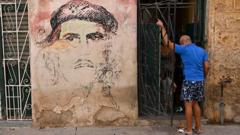
Trump sets his sights on crisis-hit Cuba after Iran action
#Trump #Cuba #Iran #sanctions #foreign policy #crisis #diplomacy
📌 Key Takeaways
- Trump administration shifts focus to Cuba following actions on Iran.
- Cuba is described as facing a crisis, indicating potential policy changes.
- The move suggests a continued hardline stance on countries opposing U.S. interests.
- This could involve new sanctions or diplomatic measures targeting Cuba.
🏷️ Themes
Foreign Policy, U.S.-Cuba Relations
📚 Related People & Topics

Cuba
Country in the Caribbean
Cuba, officially the Republic of Cuba, is an island country in the Caribbean. It comprises the eponymous main island as well as 4,195 islands, islets, and cays. Situated at the convergence of the Caribbean Sea, Gulf of Mexico, and Atlantic Ocean, Cuba is located east of the Yucatán Peninsula, south ...

Iran
Country in West Asia
# Iran **Iran**, officially the **Islamic Republic of Iran** and historically known as **Persia**, is a sovereign country situated in West Asia. It is a major regional power, ranking as the 17th-largest country in the world by both land area and population. Combining a rich historical legacy with a...

Donald Trump
President of the United States (2017–2021; since 2025)
Donald John Trump (born June 14, 1946) is an American politician, media personality, and businessman who is the 47th president of the United States. A member of the Republican Party, he served as the 45th president from 2017 to 2021. Born into a wealthy New York City family, Trump graduated from the...
Entity Intersection Graph
Connections for Cuba:
Mentioned Entities
Deep Analysis
Why It Matters
This development matters because it signals a potential shift in U.S. foreign policy toward Cuba, which could have significant economic and humanitarian consequences for the Cuban people already facing crisis conditions. It affects Cuban citizens who rely on remittances and trade, U.S. businesses with interests in Cuba, and the geopolitical balance in Latin America. The move also demonstrates the Trump administration's continued use of sanctions as a primary foreign policy tool, following similar actions against Iran.
Context & Background
- U.S.-Cuba relations have been strained since the 1959 Cuban Revolution and the subsequent U.S. embargo established in 1960.
- The Obama administration began normalizing relations with Cuba in 2014, reopening embassies and easing travel and trade restrictions.
- The Trump administration has progressively rolled back Obama-era policies since 2017, tightening travel rules and sanctioning Cuban entities.
- Cuba is currently experiencing its worst economic crisis in decades, with food shortages, power outages, and increased migration.
What Happens Next
The U.S. will likely announce specific new sanctions or policy restrictions targeting Cuba within the coming weeks. These may include further limitations on remittances, travel, or economic transactions. Cuba will probably respond with diplomatic protests and seek support from allies like Russia, China, and Venezuela. The policy could become an issue in the upcoming U.S. presidential election debates.
Frequently Asked Questions
Potential actions include designating Cuba as a state sponsor of terrorism again, restricting remittances further, limiting travel categories, and sanctioning specific Cuban officials or entities. These would build on existing Trump administration restrictions that reversed Obama-era openings.
Ordinary Cubans will likely face increased economic hardship due to reduced remittances from abroad and potentially tighter restrictions on humanitarian goods. This comes during an existing crisis where many struggle with food and medicine shortages.
This suggests a pattern of using maximum pressure campaigns against governments the administration views as adversarial. It may also be politically motivated to appeal to Cuban-American voters in Florida ahead of elections.
Cuba will likely condemn the actions as aggression and seek stronger alliances with countries like Russia and China. They may also restrict U.S. diplomatic activities in Havana and potentially increase support for leftist movements in Latin America.
Yes, similar to how Trump reversed Obama's policies, a future president could restore engagement with Cuba. However, frequent policy shifts create uncertainty for businesses and families with ties to Cuba.