
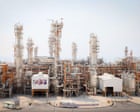
Trump threatens to ‘blow up’ all of Iran’s South Pars gasfield if Tehran strikes Qatar
#Trump #Iran #South Pars #gasfield #Qatar #threat #Persian Gulf
📌 Key Takeaways
- Trump threatens to destroy Iran's South Pars gasfield if Iran attacks Qatar.
- The threat escalates tensions in the Persian Gulf region.
- South Pars is a critical natural gas resource for Iran's economy.
- The statement highlights ongoing geopolitical conflicts involving the U.S., Iran, and Gulf states.
📖 Full Retelling
🏷️ Themes
Geopolitical Tensions, Energy Security
📚 Related People & Topics

Qatar
Country in West Asia
Qatar, officially the State of Qatar, is a country in West Asia. It occupies the Qatar Peninsula on the northeastern coast of the Arabian Peninsula in the Middle East; it shares its sole land border with Saudi Arabia to the south, with the rest of its territory surrounded by the Persian Gulf. The Gu...

Iran
Country in West Asia
# Iran **Iran**, officially the **Islamic Republic of Iran** and historically known as **Persia**, is a sovereign country situated in West Asia. It is a major regional power, ranking as the 17th-largest country in the world by both land area and population. Combining a rich historical legacy with a...
South Pars/North Dome Gas-Condensate field
Natural gas field in the Persian Gulf
The South Pars/North Dome field is a natural-gas condensate field located in the Persian Gulf. It is by far the world's largest natural gas field, with ownership of the field shared between Iran and Qatar. According to the International Energy Agency (IEA), the field holds an estimated 1,800 trillio...

Persian Gulf
Arm of the Indian Ocean in West Asia
The Persian Gulf, sometimes called the Arabian Gulf, is a mediterranean sea in West Asia. The body of water is an extension of the Arabian Sea and the larger Indian Ocean located between the Arabian Peninsula and Iran (Persia). It is connected to the Gulf of Oman in the east by the Strait of Hormuz.

Donald Trump
President of the United States (2017–2021; since 2025)
Donald John Trump (born June 14, 1946) is an American politician, media personality, and businessman who is the 47th president of the United States. A member of the Republican Party, he served as the 45th president from 2017 to 2021. Born into a wealthy New York City family, Trump graduated from the...
Entity Intersection Graph
Connections for Qatar:
View full profileMentioned Entities
Deep Analysis
Why It Matters
This threat escalates tensions in the Persian Gulf region, potentially destabilizing global energy markets since the South Pars gasfield is the world's largest natural gas reservoir shared by Iran and Qatar. It directly affects Iran's economy, which relies heavily on energy exports, and Qatar's security as a major LNG exporter. The statement also impacts U.S. allies in the region and could trigger broader military conflict, affecting international shipping through the Strait of Hormuz where 20% of global oil passes.
Context & Background
- The South Pars/North Dome gasfield is the world's largest natural gas field, shared between Iran (South Pars) and Qatar (North Dome), containing approximately 1,800 trillion cubic feet of gas.
- U.S.-Iran relations have been severely strained since 2018 when the Trump administration withdrew from the Iran nuclear deal and reimposed sanctions.
- Qatar hosts the largest U.S. military base in the Middle East (Al Udeid Air Base) while maintaining diplomatic relations with Iran, creating complex regional alliances.
- The Persian Gulf has seen multiple incidents of tanker attacks and drone strikes since 2019, with the U.S. and Iran frequently exchanging threats.
- Iran has previously threatened to close the Strait of Hormuz in response to sanctions, which would severely disrupt global oil shipments.
What Happens Next
Iran will likely issue a formal diplomatic protest and may conduct military exercises near the gasfield as a show of force. The U.S. Navy's Fifth Fleet in Bahrain will probably increase patrols in the Persian Gulf. International energy markets may see price volatility as traders assess supply risks. The UN Security Council could convene an emergency session if tensions escalate further. Qatar will likely intensify diplomatic efforts to prevent conflict near its critical energy infrastructure.
Frequently Asked Questions
South Pars contains about 40% of Iran's total natural gas reserves and accounts for approximately 75% of Iran's gas production. It's crucial for both domestic energy needs and export revenue, particularly as Iran faces severe economic sanctions.
Qatar maintains strategic ties with the U.S. by hosting the largest American military base in the Middle East, while simultaneously maintaining working relations with Iran due to shared gas fields and regional diplomacy. This balancing act makes Qatar vulnerable in U.S.-Iran conflicts.
Military experts consider such an attack highly unlikely due to the catastrophic environmental consequences and global energy market disruption. However, targeted strikes on infrastructure are possible, similar to previous attacks on Saudi oil facilities attributed to Iran.
Global natural gas prices would spike dramatically, affecting European and Asian markets most severely. Oil prices would also surge due to regional instability, potentially triggering a global economic slowdown and energy crisis.
Gulf Cooperation Council members like Saudi Arabia and UAE typically support U.S. actions against Iran, while Oman and Kuwait often call for de-escalation. Russia and China generally condemn U.S. threats and advocate for diplomatic solutions through multilateral forums.