

Trump v Supreme Court: The battle over birthright citizenship
📚 Related People & Topics
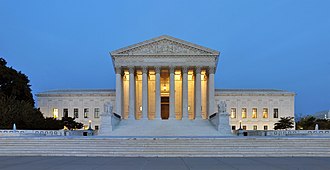
Supreme court
Highest court in a jurisdiction
In most legal jurisdictions, a supreme court, also known as a court of last resort, apex court, high (or final) court of appeal, and court of final appeal, is the highest court within the hierarchy of courts. Broadly speaking, the decisions of a supreme court are binding on all other courts in a nat...

Donald Trump
President of the United States (2017–2021; since 2025)
Donald John Trump (born June 14, 1946) is an American politician, media personality, and businessman who is the 47th president of the United States. A member of the Republican Party, he served as the 45th president from 2017 to 2021. Born into a wealthy New York City family, Trump graduated from the...
Entity Intersection Graph
Connections for Supreme court:
Mentioned Entities
Deep Analysis
Why It Matters
This news matters because it challenges the 14th Amendment's guarantee of birthright citizenship, a foundational principle of American identity and immigration policy since 1868. It directly affects millions of immigrant families, their U.S.-born children, and could reshape the nation's demographic future. The outcome could create a constitutional crisis between presidential authority and judicial interpretation, with profound implications for civil rights and the separation of powers.
Context & Background
- The 14th Amendment's Citizenship Clause (Section 1) was ratified in 1868 to guarantee citizenship to formerly enslaved people and their descendants.
- Birthright citizenship has been consistently upheld by courts for over 150 years, including in the landmark 1898 Supreme Court case United States v. Wong Kim Ark.
- Previous attempts to challenge birthright citizenship through legislation or executive action have failed due to constitutional constraints.
- The debate gained renewed political traction during Trump's 2016 campaign when he first proposed ending birthright citizenship by executive order.
- Approximately 300,000-400,000 children are born annually to undocumented immigrants in the U.S., representing about 7-8% of all U.S. births.
What Happens Next
The Supreme Court will likely need to hear this case if Trump attempts to implement his policy through executive action, potentially in 2025 if he wins the election. Legal challenges would immediately emerge from immigrant rights organizations and states opposing the change. Congressional Republicans may attempt to pass supporting legislation, though overcoming Senate filibusters would be difficult. The judicial process could take 2-4 years to reach a final Supreme Court decision.
Frequently Asked Questions
Most constitutional scholars argue no—the 14th Amendment's language is clear and requires either a constitutional amendment or a Supreme Court reinterpretation. However, some conservative legal theorists argue the amendment doesn't apply to children of undocumented immigrants, creating the legal dispute.
Their status would likely be protected under constitutional prohibitions against ex post facto laws and due process rights. The main impact would be prospective, affecting future births, though legal uncertainty could create temporary chaos in documentation systems.
The U.S. is one of about 30 countries with unconditional birthright citizenship, mostly in the Americas. A change could influence policy debates in Canada, Mexico, and other nations, potentially creating a domino effect in immigration policy across the Western Hemisphere.
Studies suggest it could create an undocumented underclass of U.S.-raised children without legal status, reducing tax revenue and increasing enforcement costs. Supporters argue it would reduce 'birth tourism' and immigration incentives, though evidence on the scale of such tourism is disputed.
Ireland ended birthright citizenship via referendum in 2004, requiring at least one parent to be an Irish citizen or legal resident. The Dominican Republic's 2013 court ruling stripping citizenship from children of undocumented immigrants created a stateless population crisis, offering a cautionary example.