
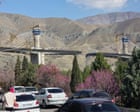
Trump warns Tehran ‘more to follow’ after strike destroys Iran’s largest bridge
📖 Full Retelling
📚 Related People & Topics

Iran
Country in West Asia
# Iran **Iran**, officially the **Islamic Republic of Iran** and historically known as **Persia**, is a sovereign country situated in West Asia. It is a major regional power, ranking as the 17th-largest country in the world by both land area and population. Combining a rich historical legacy with a...

Tehran
Capital and largest city of Iran
Tehran is the capital and largest city of Iran. It is also the capital of Tehran province and the administrative center for Tehran County and its Central District. With a population of around 9 million in the city, and 16.8 million in the metropolitan area, Tehran is the most populous city in Iran a...

Donald Trump
President of the United States (2017–2021; since 2025)
Donald John Trump (born June 14, 1946) is an American politician, media personality, and businessman who is the 47th president of the United States. A member of the Republican Party, he served as the 45th president from 2017 to 2021. Born into a wealthy New York City family, Trump graduated from the...
Entity Intersection Graph
Connections for Iran:
Mentioned Entities
Deep Analysis
Why It Matters
This development matters because it represents a significant escalation in U.S.-Iran tensions, potentially destabilizing the entire Middle East region. It directly affects Iranian infrastructure and civilians, while signaling to global energy markets and regional allies that conflict could intensify. The warning of 'more to follow' suggests this may be part of a broader military campaign rather than an isolated incident.
Context & Background
- U.S.-Iran relations have been hostile since the 1979 Iranian Revolution and subsequent hostage crisis
- The Trump administration withdrew from the Iran nuclear deal (JCPOA) in 2018 and implemented 'maximum pressure' sanctions
- Tensions escalated dramatically in January 2020 with the U.S. drone strike that killed Iranian General Qasem Soleimani
- Iran has supported proxy forces across the Middle East that have attacked U.S. interests and allies
- Iran's bridge infrastructure is crucial for both civilian transportation and military logistics across the country
What Happens Next
Iran will likely respond with either direct military action or through proxy forces against U.S. interests in the region. The UN Security Council will convene emergency sessions, while European powers will attempt diplomatic de-escalation. Oil prices will spike due to concerns about Strait of Hormuz security, and regional allies like Israel and Saudi Arabia will heighten military readiness.
Frequently Asked Questions
Strategic bridges serve dual military-civilian purposes, disrupting both economic activity and military supply lines. Such strikes demonstrate capability to hit critical infrastructure while avoiding direct attacks on population centers that might cause higher casualties.
Iran typically responds asymmetrically through proxy forces in Iraq, Syria, or Yemen rather than direct confrontation. They might target U.S. bases in the region, attack shipping in the Persian Gulf, or accelerate their nuclear program in retaliation.
Immediate price spikes are likely as Iran controls the Strait of Hormuz through which 20% of global oil passes. Long-term stability depends on whether conflict escalates to disrupt shipping lanes or damage regional production facilities.
European allies will likely condemn the unilateral action and urge restraint, while regional partners like Israel and Saudi Arabia may privately support the strike but publicly call for calm to avoid being drawn into broader conflict.
Both sides have historically avoided direct conventional war due to Iran's asymmetric capabilities and the catastrophic regional consequences. However, miscalculation or escalation through proxies could potentially spiral into broader conflict.