
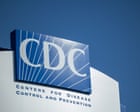
Trump’s Maha agenda stalled as top CDC and surgeon general roles sit empty
📖 Full Retelling
📚 Related People & Topics

Centers for Disease Control and Prevention
United States government public health agency
The Centers for Disease Control and Prevention (CDC) is the national public health agency of the United States. It is a United States federal agency under the Department of Health and Human Services (HHS), and is headquartered in Atlanta, Georgia. The agency's main goal is the protection of public h...

Donald Trump
President of the United States (2017–2021; since 2025)
Donald John Trump (born June 14, 1946) is an American politician, media personality, and businessman who is the 47th president of the United States. A member of the Republican Party, he served as the 45th president from 2017 to 2021. Born into a wealthy New York City family, Trump graduated from the...
Entity Intersection Graph
Connections for Centers for Disease Control and Prevention:
Mentioned Entities
Deep Analysis
Why It Matters
This news matters because it reveals significant gaps in the U.S. public health leadership during a critical period, potentially impacting the nation's ability to respond to health crises. The absence of permanent leaders at the CDC and Surgeon General's office creates uncertainty in public health policy implementation and emergency preparedness. This affects all Americans who rely on these agencies for disease prevention guidance, health emergency responses, and evidence-based public health recommendations. The vacancies also signal potential challenges in the administration's ability to advance its health policy agenda effectively.
Context & Background
- The Centers for Disease Control and Prevention (CDC) is the nation's leading public health agency, established in 1946 to protect public health and safety
- The Surgeon General serves as the nation's doctor and leads the U.S. Public Health Service Commissioned Corps, a position dating back to 1871
- Previous administrations have typically filled these positions within their first year, recognizing their importance for public health governance
- The CDC director position requires Senate confirmation, while the Surgeon General is appointed by the President with Senate approval
- These vacancies come at a time when public health agencies face numerous challenges including pandemic preparedness and chronic disease prevention
What Happens Next
The administration will likely face increased pressure from public health advocates and Congress to nominate qualified candidates for these positions. Senate confirmation hearings could become contentious depending on the nominees' backgrounds and policy positions. If vacancies persist, acting officials will continue making critical public health decisions without the authority and stability of permanent leadership. The timeline for filling these positions remains uncertain but will likely become a focus during upcoming congressional oversight hearings.
Frequently Asked Questions
The CDC vacancy affects national disease surveillance, emergency response coordination, and public health guideline development. The Surgeon General vacancy impacts the leadership of the Public Health Service Commissioned Corps and the authority to issue official public health advisories to the American public.
Typically, deputy directors or senior officials within these agencies serve as acting leaders when positions are vacant. These acting officials have limited authority and may hesitate to make major policy changes without permanent appointment confirmation.
State and local health departments rely on federal leadership for coordination, funding guidance, and technical support during health emergencies. Vacancies create uncertainty in federal-state partnerships and may delay coordinated responses to emerging health threats.
CDC directors typically have medical or public health backgrounds with extensive leadership experience. Surgeons General are usually physicians with public health expertise who can provide nonpartisan scientific guidance to the public and policymakers.
While acting leaders can maintain basic operations, they often lack the authority and longevity to implement major initiatives or make controversial decisions. Permanent leaders provide stability and clear accountability during complex health crises.