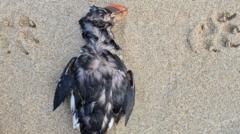
Mass seabird deaths occurring across UK and European coastlines
Puffins are the most affected species with thousands reported dead
This appears to be one of the largest seabird wrecks in recent European history
UK seabirds are already in crisis with two-thirds of species in decline
Conservation organizations calling for better marine protection and management
📖 Full Retelling
Wildlife charities and the RSPB are reporting hundreds of dead and dying seabirds washing up on British beaches in the wake of this winter's severe storms, with even higher casualties reported along the Atlantic coastlines of France, Spain and Portugal, raising fears of a catastrophic seabird 'wreck' caused by the brutal weather conditions. Cornwall Wildlife Trust has recorded over 270 dead puffins just on Cornish beaches this year compared to only two in the entire previous year, while France's main bird protection charity Ligue de Protection des Oiseaux reports more than 20,000 bird strandings since February 1st, with most being puffins. The RSPB's senior marine officer Samuel Wrobel expressed deep concern about the sheer volume of reports, noting that this is the first seabird wreck on this scale since 2014, when over 50,000 seabirds washed up on Europe's Atlantic coast. The true death toll is believed to be far higher than reported since most birds that die at sea are never found. This latest mass mortality event has been attributed to the series of brutal storms including Goretti, Ingrid and Chandra that have battered the Atlantic coast since January, leaving birds too exhausted or starved to survive. The episode is considered particularly alarming given that UK seabirds are already in crisis, with two-thirds of species in decline and ten of the UK's 25 breeding seabird species now on the conservation Red List, including puffins and kittiwakes. Conservation experts like Katie-jo Luxton from the RSPB emphasize how these mass deaths highlight the fragility of seabird populations and the urgent need to build resilience through better marine protection, sustainable fishing practices, and more careful consideration of offshore wind farm development in sensitive habitats.
🏷️ Themes
Wildlife conservation, Climate change impacts, Marine ecosystem health
The ocean is the body of salt water that covers approximately 70.8% of Earth. The ocean is conventionally divided into large bodies of water, which are also referred to as oceans (in descending order by area: the Pacific Ocean, the Atlantic Ocean, the Indian Ocean, the Antarctic/Southern Ocean, and ...
A winter storm (also known as snow storm) is an event in which wind coincides with varieties of precipitation that only occur at freezing temperatures, such as snow, mixed snow and rain, or freezing rain. In temperate continental and subarctic climates, these storms are not necessarily restricted to...
Practice of protecting wild plant and animal species and their habitats
Wildlife conservation refers to the practice of protecting wild species and their habitats in order to maintain healthy wildlife species or populations and to restore, protect or enhance natural ecosystems. Major threats to wildlife include habitat destruction, degradation, fragmentation, overexploi...
Mass seabird strandings caused by winter storms highlight the vulnerability of marine bird populations to extreme weather and raise concerns about long term population declines. The event underscores how climate change can amplify storm intensity and disrupt breeding cycles, threatening species already in decline.
Context & Background
Over 20,000 seabirds stranded along the Atlantic coast since February
Puffins, guillemots and razorbills are the most affected species
The RSPB calls this the largest seabird wreck in recent European history
Two thirds of UK seabird species are currently in decline
What Happens Next
Scientists will monitor returning birds to assess population impacts and determine if breeding success is affected. Policy makers may review fishing practices, marine protected area coverage and offshore wind development to reduce future risks.
Frequently Asked Questions
What is a seabird wreck?
A seabird wreck is a mass mortality event where large numbers of birds are stranded after severe storms, often due to exhaustion or starvation.
Why are puffins especially affected?
Puffins winter in the Atlantic and are vulnerable to rough seas, making them more likely to be caught in storms and strand.
What can the public do to help?
Report dead or injured birds to Defra or Dera, avoid touching them, and log sightings on BirdTrack to aid conservation efforts.
Will this event affect future breeding success?
The full impact will not be known until the birds return to breeding sites, but the high mortality rate could reduce population numbers and breeding success.
}
Original Source
UK Puffins in peril as winter storms threaten mass seabird 'wreck' 2 hours ago Share Save Justin Rowlatt Climate Editor Share Save Hundreds of dead and dying seabirds - including puffins, guillemots and razorbills - are washing up on British beaches in the wake of this winter's severe storms, according to wildlife charities. The death toll is even higher in France and Spain, where many of the seabird populations that breed in the UK spend the winter, raising fears of catastrophic seabird "wreck". France's main bird protection charity says more than 20,000 bird strandings – most of them puffins – have been reported along the Atlantic coastline since 1 February. Since most birds that die at sea are never found, the true death toll is thought to be far higher. Cornwall Wildlife Trust has recorded more than 270 dead puffins just on Cornish beaches this year - compared to just two in the whole of last year. Other sightings of dead puffins have been reported in Scotland and England's North East . Samuel Wrobel, senior marine officer at the RSPB, the UK's leading bird charity, said "the sheer volume of reports coming in gives great cause for concern." The RSPB believes this is evidence of a seabird 'wreck' - a mass mortality event caused when winter storms leave birds too exhausted or starved to survive. "The last time we saw a wreck on this scale was 2014," Wrobel added, "and after the impact of avian flu this is the last thing our seabirds need". In that year more than 50,000 seabirds washed up on the Europe's Atlantic coast. The episode is believed to be one of the largest seabird wrecks in recent European history. This latest wreck is believed to have been caused by the series of brutal storms that have battered the Atlantic coast of the UK and Europe since January. Storms Goretti, Ingrid and Chandra in particular caused floods and devastation for both humans and wildlife. The full impact on seabird populations won't be known until the birds return to their breeding si...