
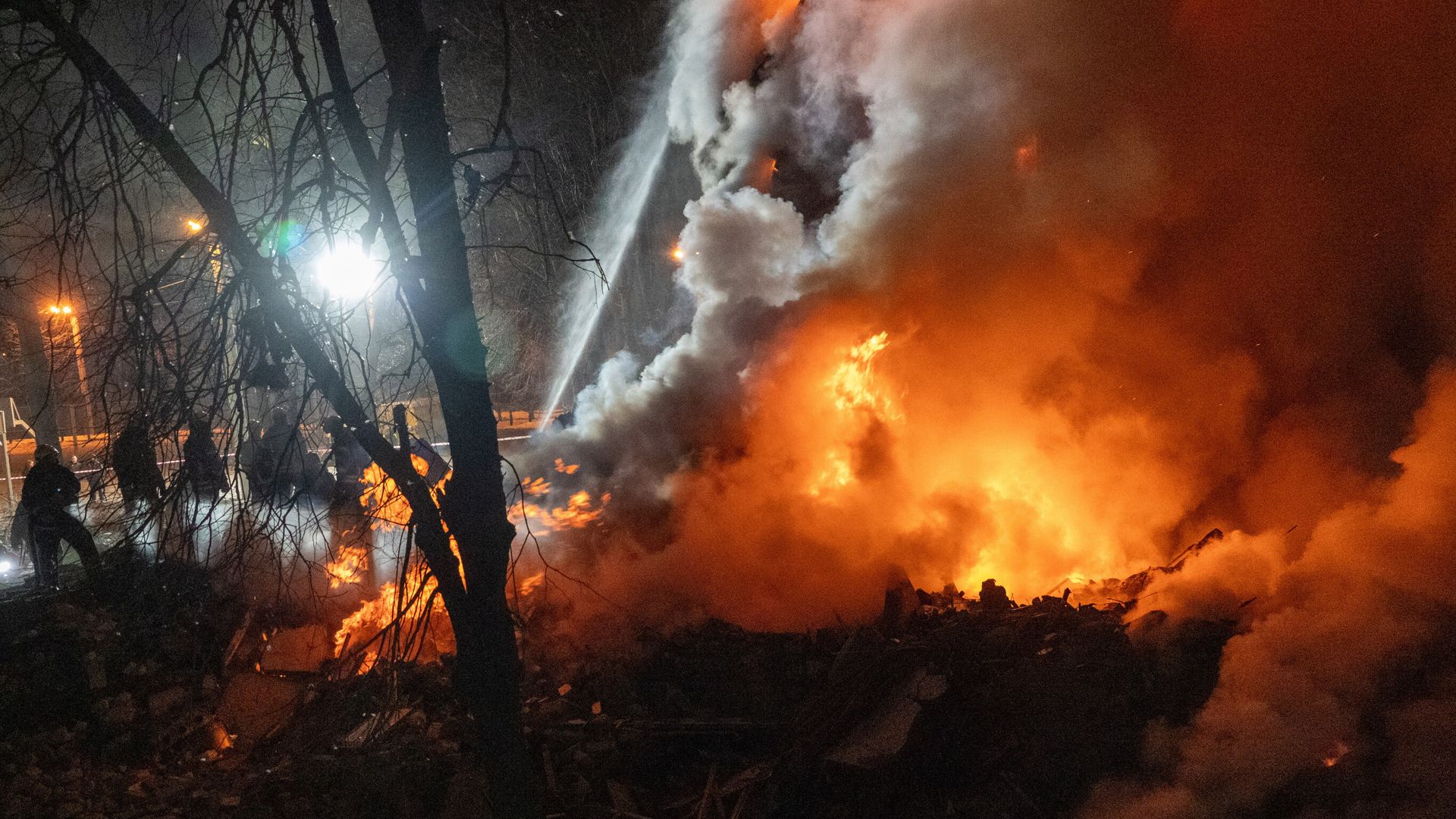
Ukraine's second largest city hit by deadly Russian missile attack
#Kharkiv attack #Russian missile strikes #Ukrainian civilian casualties #War crimes #Urban warfare #International condemnation #Air defense systems #Humanitarian crisis
📌 Key Takeaways
- Russian missile strikes killed at least 10 people in Kharkiv
- Kharkiv has been repeatedly targeted despite being far from the front lines
- The attack represents an escalation in Russia's strategy of targeting civilian infrastructure
- International condemnation has been swift with calls to treat the attacks as war crimes
- Medical facilities are on high alert as fears grow of further attacks
📖 Full Retelling
🏷️ Themes
Civilian casualties, Military escalation, International response, Urban warfare
📚 Related People & Topics

War crime
Act violating the laws of war
A war crime is a serious violation of the laws and customs applicable in armed conflict, known as international humanitarian law (IHL) and the laws of war, which gives rise to criminal responsibility under international law. Examples of actions committed by combatants in the conduct of war that can ...

Urban warfare
Warfare in urban areas
Urban warfare is warfare in urban areas such as towns and cities. Urban combat differs from combat in the open at both operational and the tactical levels. Complicating factors in urban warfare include the presence of civilians and the complexity of the urban terrain.
Entity Intersection Graph
Connections for War crime:
Mentioned Entities
Deep Analysis
Why It Matters
This attack on Kharkiv demonstrates Russia's continued strategy of targeting civilian infrastructure far from the front lines, causing significant loss of life and suffering among Ukrainian civilians. The escalation in attacks on urban centers like Kharkiv affects millions of residents who live in constant fear and without adequate shelter. International condemnation of such war crimes is crucial for maintaining global support for Ukraine's defense and potential future accountability measures against Russian leadership.
Context & Background
- Kharkiv, Ukraine's second-largest city, has been a strategic target since the beginning of Russia's full-scale invasion in February 2022
- The city experienced particularly heavy bombardment during the initial phase of the invasion when Russian forces attempted to capture it
- Kharkiv is located approximately 40 kilometers from the Russian border, making it vulnerable to cross-border attacks
- Throughout the conflict, Russian forces have repeatedly targeted civilian infrastructure including residential buildings, hospitals, schools, and energy facilities
- The International Criminal Court (ICC) and various human rights organizations have documented numerous alleged war crimes in Kharkiv and other Ukrainian cities
- Previous attacks on Kharkiv have resulted in significant civilian casualties and widespread destruction of civilian areas
What Happens Next
Following this attack, we can expect increased international condemnation and potential discussions about additional sanctions against Russia. Ukrainian authorities will likely continue documenting these incidents as potential war crimes for future legal proceedings. Residents of Kharkiv will remain under heightened alert as fears grow of further attacks, with local authorities likely to reinforce shelter systems and emergency response capabilities. The international community may accelerate discussions about providing more advanced air defense systems to Ukraine to protect cities like Kharkiv from missile strikes.
Frequently Asked Questions
Kharkiv is strategically significant as Ukraine's second-largest city and a major cultural and economic center. Its proximity to the Russian border makes it vulnerable to attacks, and targeting it serves both military and psychological purposes by demonstrating Russia's reach and causing civilian suffering.
Deliberate attacks on civilian populations and civilian infrastructure, such as residential buildings, are considered war crimes under international humanitarian law. The targeting of non-combatants and civilian objects violates the principle of distinction in armed conflict.
Previous attacks have caused significant civilian casualties, widespread destruction of residential areas, and forced many residents to flee. The city's infrastructure, including energy systems and medical facilities, has been repeatedly damaged, complicating humanitarian response and daily life for remaining residents.
We can expect swift condemnation from Western governments and international organizations. This may lead to discussions about additional sanctions against Russia, increased military aid to Ukraine including air defense systems, and further documentation of potential war crimes for future legal proceedings.
While Kharkiv itself is not currently under direct ground assault, the surrounding areas have seen ongoing fighting. The city remains within range of Russian artillery and missile systems, making it vulnerable to attacks despite being relatively far from the current frontline positions.