
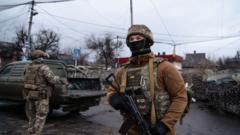
Ukraine's urgent fight on the financial frontline
#Ukraine #financial crisis #economic support #international aid #conflict #stability #loans
📌 Key Takeaways
- Ukraine is facing a critical financial crisis due to ongoing conflict and economic strain.
- The country is actively seeking international financial support to stabilize its economy.
- Efforts include securing loans and aid packages from global partners and institutions.
- Financial stability is crucial for sustaining military operations and public services.
📖 Full Retelling
🏷️ Themes
Economic Crisis, International Aid
📚 Related People & Topics

Ukraine
Country in Eastern Europe
# Ukraine **Ukraine** is a country located in Eastern Europe. It is the second-largest country in Europe by area, after Russia. Known for its extensive fertile plains, the nation serves as a critical global exporter of grain and is considered a middle power in international affairs. ## Geography a...
Entity Intersection Graph
Connections for Ukraine:
Mentioned Entities
Deep Analysis
Why It Matters
This news is critically important because Ukraine's financial stability directly impacts its ability to defend itself against Russian aggression and maintain essential government functions. It affects Ukrainian citizens who rely on public services, international donors and lenders providing financial support, and global markets concerned about regional economic instability. Without adequate funding, Ukraine risks being unable to pay soldiers, purchase military equipment, or provide basic social services, potentially undermining its war effort and long-term recovery prospects.
Context & Background
- Ukraine has been engaged in a full-scale war with Russia since February 2022, requiring massive financial resources for defense and humanitarian needs
- The Ukrainian economy contracted by approximately 30% in 2022 and faces ongoing challenges including infrastructure destruction and population displacement
- International financial support has been crucial, with the EU approving €50 billion in aid and the US providing over $75 billion in assistance since the war began
- Ukraine's public debt has surged during the conflict, reaching over 90% of GDP by some estimates, raising concerns about long-term sustainability
What Happens Next
Ukraine will likely continue negotiations with international partners for additional financial packages in the coming months, with particular focus on EU funding disbursements and potential new US aid packages. The Ukrainian government may need to implement additional austerity measures or economic reforms to secure continued international support. Upcoming international summits and donor conferences will be crucial for securing commitments, with the next major EU review of Ukraine's funding scheduled for early 2025.
Frequently Asked Questions
Ukraine requires funding to maintain basic government functions including paying public sector salaries, pensions, healthcare services, and rebuilding critical infrastructure destroyed in the war. These non-military expenses are essential for social stability and preventing economic collapse while the country defends itself.
The United States and European Union are Ukraine's primary financial backers, providing billions in grants, loans, and military assistance. International financial institutions like the IMF and World Bank also play significant roles, along with individual countries including the UK, Canada, Japan, and others contributing to various support packages.
Insufficient funding could force Ukraine to print money, leading to hyperinflation and economic collapse, or default on debt payments damaging its international credibility. This would severely weaken Ukraine's war effort by undermining military funding and causing domestic instability through unpaid salaries and collapsed public services.
Financial stability directly enables military effectiveness by funding soldier salaries, equipment purchases, ammunition production, and logistical support. Economic collapse would force Ukraine to divert resources from the front lines to address domestic crises, potentially creating vulnerabilities Russia could exploit militarily.
International assistance typically requires Ukraine to implement anti-corruption measures, economic reforms, and transparency in fund usage. The EU specifically requires judicial reforms and anti-oligarch measures, while IMF programs mandate fiscal discipline, energy sector reforms, and strengthened governance institutions.