
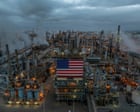
US has caused $10tn worth of climate damage since 1990, research finds
#US #climate damage #$10 trillion #1990 #research #emissions #economic impact #climate policy
📌 Key Takeaways
- The US has caused an estimated $10 trillion in global climate damage since 1990.
- This figure highlights the significant economic impact of US emissions on worldwide climate-related losses.
- The research quantifies the financial responsibility of the US for climate change effects over three decades.
- The findings may influence discussions on climate reparations and international climate policy.
📖 Full Retelling
🏷️ Themes
Climate Damage, Economic Impact
📚 Related People & Topics

United States
Country primarily in North America
The United States of America (USA), also known as the United States (U.S.) or America, is a country primarily located in North America. It is a federal republic of 50 states and a federal capital district, Washington, D.C. The 48 contiguous states border Canada to the north and Mexico to the south, ...
Entity Intersection Graph
Connections for United States:
Mentioned Entities
Deep Analysis
Why It Matters
This research quantifies the staggering economic impact of US climate contributions, providing concrete evidence for international climate justice claims. It affects developing nations disproportionately impacted by climate change, US policymakers facing pressure for reparations, and global climate negotiations where financial responsibility is a key issue. The findings could influence future climate litigation and international agreements on loss and damage funding.
Context & Background
- The 1992 UN Framework Convention on Climate Change established the principle of 'common but differentiated responsibilities' for climate action
- Developing nations have long argued that wealthy countries should compensate for historical emissions through climate finance mechanisms
- The US is historically the largest cumulative emitter of greenhouse gases, responsible for about 25% of all CO2 emissions since the Industrial Revolution
- The 2015 Paris Agreement included provisions for addressing 'loss and damage' from climate impacts but without liability or compensation mechanisms
- Climate attribution science has advanced significantly, allowing researchers to link specific damages to emissions from particular countries
What Happens Next
The research will likely be cited in upcoming COP29 climate negotiations in Baku (November 2024) during discussions about the new loss and damage fund. Climate-vulnerable nations may use these figures to demand increased climate finance from the US. The findings could also influence ongoing climate litigation cases seeking compensation from fossil fuel companies and governments.
Frequently Asked Questions
Researchers likely used climate attribution models to link specific climate damages globally to US emissions since 1990, then calculated economic costs of extreme weather events, sea level rise, agricultural losses, and health impacts. The methodology would involve complex modeling of counterfactual scenarios without US emissions.
While the research quantifies damages, there's no legal mechanism requiring payment. The findings provide moral and political arguments for climate finance but don't establish legal liability. International climate negotiations would determine any actual compensation arrangements.
1990 is significant because it's the baseline year for the Kyoto Protocol and many climate agreements. Scientific consensus about human-caused climate change was established by this time, meaning countries could no longer claim ignorance about the consequences of their emissions.
The US has pledged about $11 billion in international climate finance, less than 0.1% of the estimated damages. The Biden administration committed to $11.4 billion annually by 2024, but Congress has appropriated far less, creating a massive gap between calculated damages and actual contributions.
Research typically shows developing nations in tropical regions, small island states, and low-income countries bear disproportionate impacts despite contributing least to emissions. Countries like Bangladesh, Mozambique, and Pacific island nations face severe climate impacts relative to their economies.