
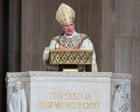
US military archbishop says Iran conflict does not meet ‘just war’ standard
📖 Full Retelling
📚 Related People & Topics
United States Armed Forces
Combined military forces of the United States
The United States Armed Forces are the military forces of the United States. U.S. federal law names six armed forces: the Army, Marine Corps, Navy, Air Force, Space Force, and Coast Guard, each assigned their role and domain. From their inception during the American Revolutionary War, the Army and...
List of wars involving Iran
This is a list of wars involving the Islamic Republic of Iran and its predecessor states. It is an unfinished historical overview.
Entity Intersection Graph
Connections for United States Armed Forces:
Mentioned Entities
Deep Analysis
Why It Matters
This statement matters because it represents a significant religious and ethical challenge to potential US military action against Iran from within the military's own spiritual leadership. It affects military personnel who must reconcile their Catholic faith with potential combat orders, policymakers considering military options, and the broader public debate about the morality of conflict. The archbishop's position could create moral dilemmas for Catholic service members and influence the discourse around the justification for war.
Context & Background
- The 'just war' theory is a Catholic ethical framework dating back to St. Augustine (4th-5th century) that outlines conditions for morally permissible warfare.
- The US military has Catholic chaplains serving all branches, with Archbishop Timothy Broglio currently leading the Archdiocese for the Military Services, USA.
- Tensions between the US and Iran have escalated since the US withdrawal from the Iran nuclear deal in 2018, with periodic confrontations in the Persian Gulf region.
- Previous US military actions in the Middle East have faced similar ethical scrutiny from religious leaders, including during the Iraq War debates.
What Happens Next
Military chaplains may need to provide additional moral guidance to Catholic service members if tensions escalate further. The statement could influence congressional debates about authorizing military force. The Department of Defense may need to address how religious objections are handled within the chain of command. Future statements from other religious leaders and ethicists on the Iran situation are likely to follow.
Frequently Asked Questions
The just war theory requires that military action meet specific criteria including just cause, legitimate authority, right intention, probability of success, proportionality, and last resort. It's a moral framework for evaluating whether warfare can be ethically justified.
Archbishop Timothy Broglio leads the Archdiocese for the Military Services, which provides Catholic pastoral care to all US military personnel worldwide. While he doesn't command troops, he holds significant moral authority over Catholic service members' spiritual lives.
Catholic service members may face moral conflicts if ordered to participate in actions their religious leader deems unjust. They would need to consult with chaplains and possibly seek conscientious objector status, though this is rarely granted for specific conflicts rather than all war.
Yes, many Catholic leaders, including Pope John Paul II, strongly opposed the 2003 Iraq War. The US Conference of Catholic Bishops frequently questions the morality of military interventions, though individual bishops' positions vary.
While unlikely to directly change military decisions, it adds to ethical pressure on policymakers and could influence congressional support for military action. It also ensures moral considerations remain part of the public debate about Iran policy.