

US supreme court to weigh whether Trump can deny birthright citizenship
📖 Full Retelling
📚 Related People & Topics
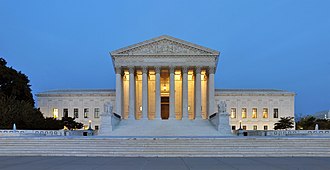
Supreme court
Highest court in a jurisdiction
In most legal jurisdictions, a supreme court, also known as a court of last resort, apex court, high (or final) court of appeal, and court of final appeal, is the highest court within the hierarchy of courts. Broadly speaking, the decisions of a supreme court are binding on all other courts in a nat...

Donald Trump
President of the United States (2017–2021; since 2025)
Donald John Trump (born June 14, 1946) is an American politician, media personality, and businessman who is the 47th president of the United States. A member of the Republican Party, he served as the 45th president from 2017 to 2021. Born into a wealthy New York City family, Trump graduated from the...
Entity Intersection Graph
Connections for Supreme court:
Mentioned Entities
Deep Analysis
Why It Matters
This case challenges the 14th Amendment's guarantee that anyone born in the United States is automatically a citizen, a principle established after the Civil War to ensure equality. If the Supreme Court rules in favor of allowing denial of birthright citizenship, it could affect millions of children born to undocumented immigrants, potentially creating a permanent underclass without citizenship rights. The decision would have profound implications for immigration policy, constitutional interpretation, and the legal status of future generations, impacting families, communities, and the nation's identity.
Context & Background
- The 14th Amendment, ratified in 1868, states: 'All persons born or naturalized in the United States, and subject to the jurisdiction thereof, are citizens of the United States and of the State wherein they reside.'
- Birthright citizenship has been upheld by the Supreme Court in cases like United States v. Wong Kim Ark (1898), which affirmed citizenship for children born to non-citizen parents legally residing in the U.S.
- Former President Donald Trump has long advocated ending birthright citizenship, arguing it encourages 'anchor babies' and illegal immigration, though legal scholars debate whether this can be done without a constitutional amendment.
- Approximately 300,000 to 400,000 children are born to undocumented immigrants in the U.S. annually, many of whom rely on birthright citizenship for legal status and access to benefits.
What Happens Next
The Supreme Court will hear arguments in the coming months, with a decision likely by June 2025. If the Court rules to allow denial of birthright citizenship, it could trigger immediate legal challenges and legislative actions at state and federal levels. Implementation would depend on executive orders or new laws, potentially leading to confusion over citizenship status for newborns and retroactive effects.
Frequently Asked Questions
Most legal experts argue that ending birthright citizenship would require a constitutional amendment, as the 14th Amendment's language is clear. However, some conservatives contend that executive action or legislation could reinterpret 'subject to the jurisdiction thereof' to exclude children of undocumented immigrants, though this is untested and controversial.
Children denied citizenship could become stateless or depend on their parents' immigration status, limiting access to passports, voting rights, and federal benefits. They might face deportation risks and barriers to education or employment, creating long-term social and economic disparities.
The U.S. is one of about 30 countries with unconditional birthright citizenship, including Canada and Mexico. Most nations, like those in Europe and Asia, base citizenship on parentage (jus sanguinis) or residency requirements, making the U.S. an outlier in its approach.
Ending birthright citizenship could deter undocumented immigrants from coming to the U.S. to give birth, but it might also increase family separations and humanitarian concerns. Legal immigration could be affected if families seek alternatives, potentially reshaping demographic trends and border policies.