
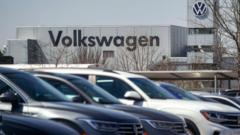
Volkswagen to cut 50,000 jobs as profits drop
#Volkswagen #job cuts #layoffs #profits #automotive #restructuring #cost reduction
📌 Key Takeaways
- Volkswagen plans to eliminate 50,000 jobs due to declining profits.
- The job cuts are a response to financial challenges facing the company.
- This move aims to reduce costs and improve profitability.
- The decision reflects broader pressures in the automotive industry.
🏷️ Themes
Corporate Restructuring, Automotive Industry
📚 Related People & Topics

Volkswagen
German automobile manufacturer
Volkswagen (VW; German pronunciation: [ˈfɔlksˌvaːɡŋ̍] ) is a German automobile manufacturer based in Wolfsburg, Lower Saxony, Germany. Established in 1937 by the German Labour Front, it was revived after World War II by British Army officer Ivan Hirst and over the 81 years since grew into the global...
Entity Intersection Graph
Connections for Volkswagen:
View full profileMentioned Entities
Deep Analysis
Why It Matters
This news is significant because Volkswagen is one of the world's largest automakers, employing over 600,000 people globally. The job cuts affect tens of thousands of workers and their families, potentially impacting local economies where Volkswagen plants operate. It signals broader challenges in the automotive industry, particularly for traditional manufacturers transitioning to electric vehicles. The profit decline reflects competitive pressures, supply chain issues, and changing consumer preferences that could affect investors, suppliers, and the entire automotive ecosystem.
Context & Background
- Volkswagen is Europe's largest automaker and the world's second-largest vehicle manufacturer by production volume
- The company has been undergoing a major transformation toward electric vehicles, investing billions in EV development and battery technology
- Volkswagen faced significant challenges following the 2015 diesel emissions scandal that cost the company over $30 billion in fines and settlements
- The automotive industry has been struggling with semiconductor shortages, supply chain disruptions, and increased competition from EV startups like Tesla
- Volkswagen previously announced plans to reduce costs and improve efficiency as part of its 'ACCELERATE' strategy for electrification and digital transformation
What Happens Next
Volkswagen will likely begin implementing the job cuts through voluntary separation programs, early retirement offers, and attrition rather than immediate layoffs. The company will face negotiations with labor unions, particularly Germany's powerful IG Metall, which has historically resisted large-scale job reductions. Volkswagen may announce more details about which locations and departments will be most affected in the coming weeks. The automaker will need to demonstrate how these cuts will improve profitability while continuing its massive investments in electric vehicle development.
Frequently Asked Questions
Volkswagen is cutting jobs primarily due to declining profits and the need to reduce costs as it transitions to electric vehicle production. The company faces intense competition, supply chain challenges, and significant investments required for EV technology. These cuts are part of a broader restructuring to improve efficiency and maintain competitiveness in a changing automotive market.
Germany will likely be most affected since Volkswagen's largest operations and headquarters are there, though specific locations haven't been announced. Other European countries with Volkswagen plants may also see reductions. The company will probably try to minimize cuts in growth markets like China where it has strong sales performance.
The job cuts are intended to free up resources for Volkswagen's massive EV investments, not slow them down. The company plans to continue its transition to electric vehicles while becoming more efficient. However, labor unrest or implementation challenges could potentially disrupt production timelines for new EV models.
Volkswagen's cuts signal that even major traditional automakers are struggling with profitability during the industry transition. This could pressure other manufacturers to implement similar cost-cutting measures. The move highlights the financial challenges of simultaneously maintaining combustion engine operations while investing heavily in electric vehicle development.
Yes, Volkswagen typically offers generous severance packages, early retirement options, and retraining programs in such restructuring efforts. The company will likely negotiate specific terms with labor unions. German labor laws and strong union representation generally ensure substantial support for displaced workers.