
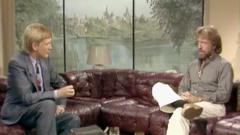
Watch: BBC Breakfast Time speaks to Chuck Norris in 1985
#Chuck Norris #BBC Breakfast Time #1985 #interview #action star #martial arts #television history
📌 Key Takeaways
- Chuck Norris appeared on BBC Breakfast Time in 1985
- The interview highlighted his rising fame in action films
- He discussed his career and martial arts background
- The segment reflects early media coverage of his public persona
🏷️ Themes
Celebrity Interview, Media History
📚 Related People & Topics
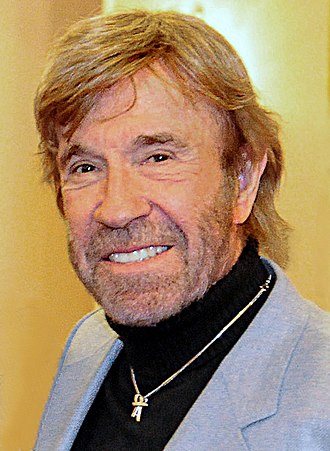
Chuck Norris
American martial artist and actor (1940–2026)
Carlos Ray "Chuck" Norris (March 10, 1940 – March 19, 2026) was an American martial artist and actor. He was a black belt in Karate, Taekwondo, Tang Soo Do, Brazilian jiu jitsu, and judo. After serving in the United States Air Force, Norris won many martial arts championships and later founded his o...
Breakfast Time
Topics referred to by the same term
Breakfast Time may refer to: Breakfast Time (1957 TV program), early morning TV program hosted by Wee Willie Webber broadcast on WFIL-TV in Philadelphia from 1957 to 1963 Breakfast Time (British TV programme), a breakfast television programme, broadcast in the UK on BBC1 between 1983 and 1989.
Breakfast Time (British TV programme)
Television series
Breakfast Time is British television's first national breakfast television programme. It was broadcast from 17 January 1983 until 29 September 1989 on BBC1 across the United Kingdom. It was broadcast for the first time just over two weeks before TV-am, the commercial breakfast television station.
Entity Intersection Graph
Connections for Chuck Norris:
Mentioned Entities
Deep Analysis
Why It Matters
This archival footage matters because it preserves a cultural moment when Chuck Norris was transitioning from martial arts champion to mainstream entertainment figure, offering insights into early celebrity television interviews. It affects pop culture historians, media scholars, and fans of 1980s television who study how celebrities were presented in early morning programming. The interview captures Norris at a career inflection point, just as his action film career was gaining momentum and before his internet meme fame decades later.
Context & Background
- BBC Breakfast Time launched in 1983 as the BBC's first national breakfast television program, competing with ITV's TV-am
- Chuck Norris was primarily known in 1985 for martial arts films like 'Missing in Action' and had not yet achieved his later status as an internet meme phenomenon
- Morning television interviews in the 1980s were often more formal and less entertainment-focused than contemporary talk shows
What Happens Next
This archival footage will likely circulate among nostalgia-focused social media channels and television history websites. Media archives may digitize more similar content from the 1980s as broadcasters continue to release historical programming. No specific upcoming events are tied to this particular interview beyond continued digital preservation efforts.
Frequently Asked Questions
Archival footage often resurfaces during anniversaries or when media organizations digitize their historical collections. This specific clip may have been rediscovered as part of BBC's ongoing archive preservation projects or shared by television historians.
In 1985, Norris was likely promoting his film 'Code of Silence' or his television work. He was establishing himself as an action star following successful films like 'Missing in Action' the previous year.
1980s morning television interviews were typically shorter, more formal, and less focused on personal revelations than contemporary talk shows. The production style would have been simpler with fewer camera angles and less interactive elements.
BBC Breakfast Time was the corporation's first attempt at morning television, launching a new format that combined news with lighter features. It represented a major expansion of BBC's programming into previously untapped time slots.
Norris transformed from a martial arts film star in the 1980s to an internet meme phenomenon in the 2000s with 'Chuck Norris facts.' His later career included television series like 'Walker, Texas Ranger' and political activism.