
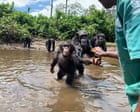
‘We cannot replace USAID, but we can do big things’: conservation plots a future without American money
#USAID #conservation #funding #alternative finance #partnerships #self-reliance #environmental projects
📌 Key Takeaways
- Conservation groups are planning strategies to operate without USAID funding.
- The focus is on achieving significant conservation goals despite reduced financial support.
- There is an emphasis on leveraging alternative funding sources and partnerships.
- The article highlights a shift towards self-reliance in conservation efforts.
📖 Full Retelling
🏷️ Themes
Conservation Funding, Strategic Planning
📚 Related People & Topics

United States Agency for International Development
De jure independent foreign aid agency
The United States Agency for International Development (USAID) is a de jure agency of the executive branch of the United States federal government. USAID was formerly the world's largest foreign aid agency, but it received major cutbacks in 2025 with its remaining functions being transferred to the ...
Entity Intersection Graph
Connections for United States Agency for International Development:
Mentioned Entities
Deep Analysis
Why It Matters
This news matters because it signals a major shift in global conservation funding as organizations prepare for reduced U.S. government support, which could reshape environmental protection efforts worldwide. It affects conservation NGOs, local communities dependent on environmental programs, and biodiversity hotspots that rely on international funding. The transition away from USAID funding creates both challenges for maintaining current conservation projects and opportunities for developing more sustainable, locally-driven financing models. This shift also reflects broader geopolitical changes in international development assistance patterns.
Context & Background
- USAID (United States Agency for International Development) has been a primary funder of global conservation projects for decades, with environmental programs receiving billions in funding
- Many conservation organizations in developing countries have become heavily dependent on U.S. government funding, creating sustainability concerns
- U.S. foreign aid priorities have shifted over time, with conservation funding sometimes facing political pressure and budget cuts
- Global conservation faces a massive funding gap estimated at hundreds of billions annually to meet international biodiversity targets
- Previous transitions away from donor funding have shown mixed results, with some organizations successfully diversifying while others collapsed
What Happens Next
Conservation organizations will likely accelerate efforts to develop alternative funding streams including ecotourism revenue, carbon credit markets, corporate partnerships, and local philanthropy. Expect increased mergers and collaborations between NGOs to achieve economies of scale. Within 6-12 months, we may see announcements of new financing mechanisms and potential program reductions in regions most dependent on USAID funding. International conservation conferences in 2024 will likely feature this funding transition as a major theme.
Frequently Asked Questions
While not explicitly stated in the article, USAID funding shifts typically reflect changing U.S. political priorities, budget constraints, or strategic reallocations to other development sectors like health or economic growth. Conservation funding often faces particular vulnerability during budget negotiations.
Organizations are exploring multiple alternatives including sustainable tourism revenue, payments for ecosystem services, carbon offset programs, corporate partnerships, impact investing, and increased engagement with local philanthropists and governments. Each alternative presents different challenges in terms of scalability and reliability.
Some projects may face reductions or closures, particularly those in less economically viable areas. Organizations will likely prioritize 'flagship' projects with clearer revenue potential. There may be increased pressure to demonstrate tangible economic benefits alongside environmental outcomes to attract alternative funding.
Potentially yes, as over-reliance on single donors creates vulnerability. Diversified funding could lead to more sustainable, locally-appropriate conservation models. However, the transition period poses significant risks, and some important but less economically attractive conservation work may struggle to find replacement funding.
Regions with high biodiversity but limited domestic resources will likely be most impacted, particularly parts of Africa, Southeast Asia, and Latin America. Countries with stronger economies and established conservation tourism may adapt more successfully to the funding transition.