
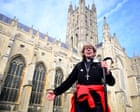
Wednesday briefing: Can Sarah Mullally steer the Church of England back into safer waters?
#Sarah Mullally #Church of England #leadership #same-sex marriage #declining attendance #stability #public trust
📌 Key Takeaways
- Sarah Mullally is tasked with leading the Church of England through a period of significant challenges.
- The Church faces internal divisions over issues like same-sex marriage and declining attendance.
- Mullally's leadership aims to restore stability and public trust in the institution.
- Her approach involves balancing traditional values with modern societal expectations.
📖 Full Retelling
🏷️ Themes
Religious Leadership, Institutional Reform
📚 Related People & Topics

Sarah Mullally
Archbishop of Canterbury since 2026
Dame Sarah Elisabeth Mullally (née Bowser; born 26 March 1962) is an Anglican bishop and former nurse who has served as the 106th archbishop of Canterbury since 28 January 2026. As archbishop, she is the leader of the Church of England and ceremonial head of the Anglican Communion. By virtue of her ...

Church of England
Anglican church in England
The Church of England (C of E) is the established Christian church in England and the Crown Dependencies. It was the initial church of the Anglican tradition. The church traces its history to the Christian hierarchy recorded as existing in the Roman province of Britain by the 3rd century and to the ...
Entity Intersection Graph
Connections for Sarah Mullally:
Mentioned Entities
Deep Analysis
Why It Matters
This news matters because the Church of England is facing significant challenges including declining attendance, internal divisions over LGBTQ+ rights and women's roles, and questions about its relevance in modern British society. Bishop Sarah Mullally's leadership could influence the direction of one of England's most important cultural institutions, affecting millions of Anglicans and shaping national conversations about faith and morality. Her approach to navigating these turbulent waters will determine whether the church can maintain its influence or risks further marginalization.
Context & Background
- The Church of England has experienced steady decline in regular attendance since the mid-20th century, with Sunday attendance dropping from over 1 million in the 1960s to approximately 690,000 in 2019.
- Sarah Mullally became the first woman to serve as Bishop of London in 2018, one of the most senior positions in the Church of England, following decades of debate about women's ordination.
- The church has faced ongoing internal conflict over same-sex marriage and LGBTQ+ clergy, with traditionalist and progressive factions deeply divided on these issues.
- The Church of England remains the established church in England, with the monarch as its Supreme Governor and 26 bishops sitting in the House of Lords, giving it unique constitutional status.
- Recent years have seen growing calls for the church to address its historical links to slavery and colonialism, adding to its contemporary challenges.
What Happens Next
Bishop Mullally will likely focus on implementing the Living in Love and Faith process outcomes regarding same-sex relationships, expected to be debated at General Synod in February 2024. She will also oversee preparations for the Lambeth Conference of Anglican bishops in 2025, where global divisions over sexuality may surface. Additionally, she will need to address ongoing financial pressures as declining membership affects church resources, potentially leading to restructuring of dioceses and parish networks.
Frequently Asked Questions
Sarah Mullally is the Bishop of London and previously served as England's Chief Nursing Officer. Her leadership is significant because she holds one of the most senior positions in the Church of England and represents a new generation of leadership that must navigate complex social issues while addressing institutional decline.
The Church faces declining attendance, deep internal divisions over LGBTQ+ rights and women's roles, questions about its relevance in increasingly secular Britain, financial pressures from shrinking congregations, and the need to address historical issues including links to slavery and colonialism.
The Church's complex governance structure involving General Synod, dioceses, and parishes makes reform slow and difficult. As the established church, it also faces unique constitutional constraints and must balance tradition with contemporary social expectations, creating inherent tensions in decision-making processes.
Living in Love and Faith is a multi-year consultation process the Church of England initiated to address questions about identity, sexuality, relationships, and marriage. It represents the church's attempt to find a way forward on deeply divisive issues that have caused significant internal conflict.
Her nursing and healthcare management background suggests she may bring practical problem-solving skills, experience in managing large institutions under pressure, and a focus on pastoral care. This could influence her approach to church governance and how she addresses the institution's various crises.