
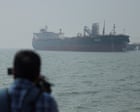
What is the strait of Hormuz and can the US stop Iran from blocking it?
#Strait of Hormuz #Iran #US military #oil transit #blockade #global trade #naval chokepoint
📌 Key Takeaways
- The Strait of Hormuz is a critical global oil transit chokepoint, with about 20% of the world's oil passing through it.
- Iran has repeatedly threatened to block the strait, leveraging its strategic location for geopolitical influence.
- The U.S. maintains a military presence in the region to deter and respond to any attempts to close the strait.
- Blocking the strait would severely disrupt global oil supplies and likely trigger a significant international crisis.
- The U.S. capability to prevent a blockade involves naval power, but success is uncertain and would be highly complex.
📖 Full Retelling
🏷️ Themes
Geopolitics, Energy Security, Military Strategy
📚 Related People & Topics
United States Armed Forces
Combined military forces of the United States
The United States Armed Forces are the military forces of the United States. U.S. federal law names six armed forces: the Army, Marine Corps, Navy, Air Force, Space Force, and Coast Guard, each assigned their role and domain. From their inception during the American Revolutionary War, the Army and...

Iran
Country in West Asia
# Iran **Iran**, officially the **Islamic Republic of Iran** and historically known as **Persia**, is a sovereign country situated in West Asia. It is a major regional power, ranking as the 17th-largest country in the world by both land area and population. Combining a rich historical legacy with a...

Strait of Hormuz
Strait between the Gulf of Oman and the Persian Gulf
The Strait of Hormuz ( Persian: تنگهٔ هُرمُز Tangeh-ye Hormoz , Arabic: مَضيق هُرمُز Maḍīq Hurmuz) is a strait between the Persian Gulf and the Gulf of Oman. It provides the only sea passage from the Persian Gulf to the open ocean and is one of the world's most strategically important choke points. ...
Entity Intersection Graph
Connections for United States Armed Forces:
Mentioned Entities
Deep Analysis
Why It Matters
The Strait of Hormuz is a critical global energy chokepoint through which approximately 21% of global petroleum liquids and 20% of global LNG pass daily. Any disruption would cause immediate oil price spikes, economic instability worldwide, and potential military conflict. This directly affects global economies, energy markets, shipping industries, and regional security in the Middle East. The situation impacts consumers through fuel prices and governments through energy security concerns.
Context & Background
- The Strait of Hormuz is a narrow waterway between Oman and Iran, only 21 miles wide at its narrowest point, with shipping lanes just 2 miles wide in each direction
- Iran has threatened to close the strait multiple times since the 1979 revolution, most notably during the 1980-1988 Iran-Iraq 'Tanker War' when both sides attacked oil tankers
- The U.S. Fifth Fleet is based in Bahrain, approximately 300 miles from the strait, with significant naval assets dedicated to keeping the waterway open
- Approximately 17-20 million barrels of oil pass through daily, representing about one-third of all seaborne traded oil globally
- The U.S. has maintained a policy of keeping the strait open since the 1979 Carter Doctrine declared the Persian Gulf a vital U.S. interest
What Happens Next
The U.S. will likely increase naval patrols and surveillance in the region while coordinating with allies like Saudi Arabia and the UAE. Diplomatic efforts through intermediaries may attempt to de-escalate tensions. Military analysts predict Iran would use asymmetric warfare tactics like mines, small boat swarms, and anti-ship missiles rather than attempting a complete physical blockade. The situation could escalate quickly if any military incidents occur, potentially triggering broader regional conflict.
Frequently Asked Questions
Iran uses the threat as leverage in geopolitical disputes, particularly regarding sanctions and regional influence. Controlling the strait represents Iran's most powerful economic and military card against Western powers and Gulf Arab states.
A complete closure could cause oil prices to spike by 50-100% within days, potentially reaching $150-200 per barrel. Even temporary disruptions typically cause immediate price increases of 10-20% as markets react to supply concerns.
The U.S. maintains carrier strike groups, mine-countermeasure ships, and aircraft in the region specifically for this mission. The Navy has specialized equipment and training for clearing mines and defending against small boat attacks in confined waters.
While never completely closed, Iran has conducted military exercises simulating closures and has harassed shipping numerous times. During the Iran-Iraq War, both countries attacked tankers but kept the waterway technically open to maintain some oil exports.
Limited alternatives include Saudi Arabia's East-West Pipeline, UAE pipelines bypassing the strait, and increased use of the Bab el-Mandeb strait, but these cannot handle the volume currently passing through Hormuz. Most Gulf oil would have no practical export route.