| United Kingdom
| politics
| ✓ Verified - theguardian.com
What the US–Israeli strikes on Iran mean for the price of oil
#US-Israel strikes#Iran#Strait of Hormuz#Oil prices#Global economy#Military escalation#Energy security#Geopolitics
📌 Key Takeaways
US-Israeli strikes on Iran have raised fears of oil price surges
Iran has warned of blocking the Strait of Hormuz, a critical oil trade route
Oil prices could potentially surge from $72 to $100 per barrel
Even partial disruptions could have significant global economic impacts
Iran's strategic location gives it significant geopolitical leverage
📖 Full Retelling
The US and Israel launched coordinated strikes against Iran on Saturday morning, escalating military tensions in the Middle East and raising concerns about potential disruptions to global oil supplies through the strategically vital Strait of Hormuz. Within hours of the attacks, Iran's Revolutionary Guard reportedly warned tankers not to pass through the narrow waterway, which handles approximately 15 million barrels of oil daily, threatening to block the world's most critical oil trade route. The military intervention comes amid heightened regional tensions, with experts warning that any sustained disruption could send global oil prices soaring from current levels around $72 per barrel to potentially $100 or more, exacerbating inflationary pressures worldwide. The US initiated 'major combat operations' shortly after Israel's strike against Tehran, marking a significant escalation in the conflict that could have far-reaching economic consequences beyond the immediate theater of operations. As tankers reportedly became 'stuck' in the waterway and shipping companies diverted vessels, analysts warned that even partial closures or disruptions could trigger significant price volatility in global energy markets, particularly affecting developed economies still grappling with post-pandemic inflation and cost-of-living crises. The situation remains fluid, with Iran yet to formally confirm a complete blockade, though its Revolutionary Guard has already issued warnings to international shipping, creating immediate uncertainty in global energy supply chains that could impact everything from gasoline prices to manufacturing costs across multiple continents.
🏷️ Themes
Geopolitical Conflict, Energy Security, Economic Impact, Middle East Tensions
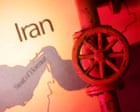
# Iran
**Iran**, officially the **Islamic Republic of Iran** and historically known as **Persia**, is a sovereign country situated in West Asia. It is a major regional power, ranking as the 17th-largest country in the world by both land area and population. Combining a rich historical legacy with a...
Strait between the Gulf of Oman and the Persian Gulf
The Strait of Hormuz ( Persian: تنگهٔ هُرمُز Tangeh-ye Hormoz , Arabic: مَضيق هُرمُز Maḍīq Hurmuz) is a strait between the Persian Gulf and the Gulf of Oman. It provides the only sea passage from the Persian Gulf to the open ocean and is one of the world's most strategically important choke points. ...
The price of oil, or the oil price, generally refers to the spot price of a barrel (159 litres) of benchmark crude oil—a reference price for buyers and sellers of crude oil such as West Texas Intermediate (WTI), Brent Crude, Dubai Crude, OPEC Reference Basket, Tapis crude, Bonny Light, Urals oil, Is...
The world economy or global economy is the economy of all humans in the world, referring to the global economic system, which includes all economic activities conducted both within and between nations, including production, consumption, economic management, work in general, financial transactions an...
Explainer What the US–Israeli strikes on Iran mean for the price of oil A halt on trade flows through the strait of Hormuz could spell trouble for many developed economies US-Israel war on Iran – latest updates The US-Israeli war on Iran has ignited fears that escalating military aggression in the Middle East could send oil prices soaring, push up prices at the pump and drive a global economic downturn. The US began “major combat operations” in Iran on Saturday morning, shortly after Israel launched a strike against Tehran. Within hours of the US-Israeli strikes, tankers in the strait of Hormuz were reportedly warned by Iran’s Revolutionary Guard that no ship would be allowed to pass through the world’s most critical oil trade route. Iran has not formally confirmed a block on the narrow waterway, which would be an unprecedented escalation in the region, but any halt on trade flows through the strait could block up to 15m barrels a day of crude oil from reaching their destinations. In a worst case scenario, experts have warned that oil market prices could surge from about $72 a barrel now to $100. This would spell trouble for many developed economies, including the US, which have struggled to shrug off the impact of inflation on growth and productivity which has left households facing a cost of living crisis. Bjarne Schieldrop, the chief commodities analyst at the financial services group SEB, said: “It has become quite clear now that this is the biggest bluff in history and it has gone horribly wrong. Now it is difficult for Trump to back down and pull out all his gunboats and fighter jets without losing face.” Will Iran formally shut the strait? For years, Tehran has warned that it could use its location to shut the strait in retaliation to military aggression against Iran, but has stopped short of a prolonged block on the trade route. Experts believe this time may be different. Jorge León, the head of geopolitical analysis at Rystad Energy, said Iran had retaliate...