
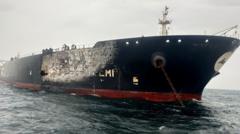
What we know about the oil tanker hit off Dubai
📖 Full Retelling
📚 Related People & Topics

Middle East
Transcontinental geopolitical region
The Middle East is a geopolitical region encompassing the Arabian Peninsula, Egypt, Iran, Iraq, the Levant, and Turkey. The term came into widespread usage by Western European nations in the early 20th century as a replacement of the term Near East (both were in contrast to the Far East). The term ...

Dubai
City in the United Arab Emirates
Dubai is the most populous city in the United Arab Emirates and the capital of the Emirate of Dubai. It is on a creek on the southeastern coast of the Persian Gulf. As of 2025, its population stands at 4 million, 92% of whom are expatriates.
Entity Intersection Graph
Connections for Middle East:
Mentioned Entities
Deep Analysis
Why It Matters
This incident threatens vital shipping lanes through the Strait of Hormuz, through which about 20% of global oil consumption passes. It raises immediate concerns about regional maritime security and potential environmental damage from oil spills. The attack affects global energy markets, regional stability, and international trade routes, potentially increasing insurance costs and shipping delays.
Context & Background
- The Strait of Hormuz is a critical chokepoint for global oil shipments, with approximately 21 million barrels of oil passing through daily.
- The Persian Gulf region has experienced multiple attacks on commercial shipping since 2019, often linked to regional tensions between Iran and Western powers.
- Previous attacks on tankers in the area have led to increased military presence and heightened security measures by international naval forces.
- The UAE has positioned itself as a major global logistics and energy hub, making maritime security crucial to its economic stability.
- Tanker attacks in recent years have frequently occurred during periods of heightened U.S.-Iran tensions or nuclear negotiations.
What Happens Next
International investigations will likely be launched to determine responsibility, with results expected within weeks. Regional naval patrols will probably increase, particularly by U.S. and allied forces. Oil prices may experience short-term volatility as markets assess supply chain risks. Diplomatic tensions could escalate depending on attribution findings, potentially affecting ongoing nuclear negotiations.
Frequently Asked Questions
While no group has claimed responsibility, similar past incidents have been attributed to Iranian-backed forces or regional proxies. Investigations will examine forensic evidence and intelligence to determine the exact perpetrators and their motivations.
The attack may cause temporary price spikes due to supply concerns, but sustained impact depends on whether shipping routes remain secure. Major producers have sufficient capacity to offset short-term disruptions if the Strait of Hormuz remains navigable.
Multiple naval forces patrol the area, including U.S. Fifth Fleet based in Bahrain and coalition task forces. Commercial vessels often employ armed guards and follow recommended transit corridors, though attacks still occur despite these precautions.
While possible, past incidents have typically resulted in increased naval presence rather than direct conflict. Response depends on attribution—attacks clearly linked to state actors carry higher escalation risks than those by non-state groups.
Damaged tankers risk oil spills that could harm marine ecosystems and coastal communities. The region's sensitive coral reefs and fishing grounds would be particularly vulnerable, though modern tankers have double hulls to reduce spill risks.