
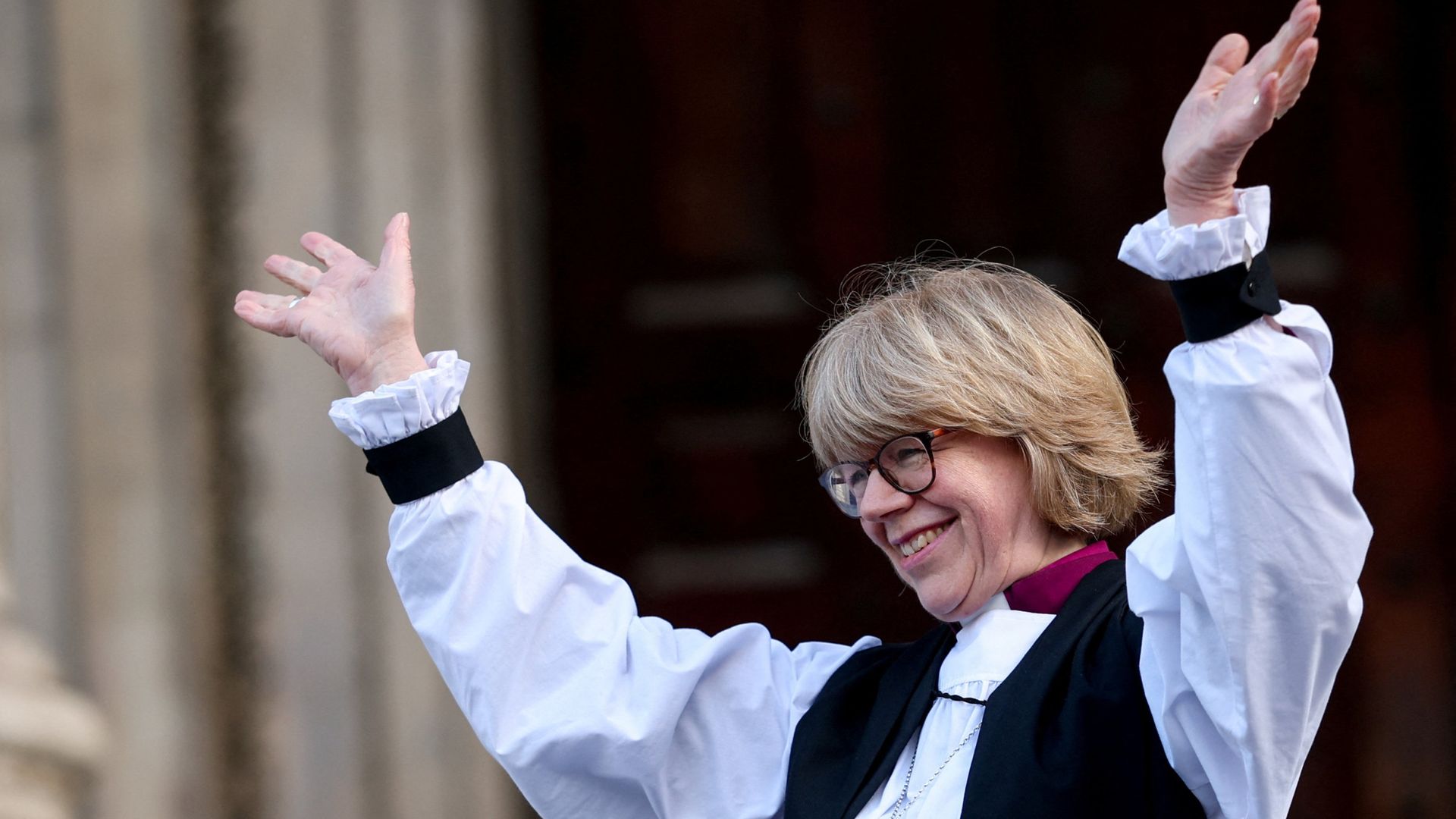
Who is Dame Sarah Mullally, the first ever female Archbishop of Canterbury?
#Sarah Mullally #Archbishop of Canterbury #female archbishop #Church of England #religious milestone #gender equality #bishop appointment #religious reform
📌 Key Takeaways
- Dame Sarah Mullally has been appointed as the first female Archbishop of Canterbury in history.
- This appointment marks a significant milestone for gender equality within the Church of England.
- Mullally's background includes previous roles as a bishop and a career in nursing and healthcare leadership.
- Her selection is expected to influence the church's approach to modern social issues and internal reforms.
📖 Full Retelling
🏷️ Themes
Religious Leadership, Gender Equality
📚 Related People & Topics

Sarah Mullally
Archbishop of Canterbury since 2026
Dame Sarah Elisabeth Mullally (née Bowser; born 26 March 1962) is an Anglican bishop and former nurse who has served as the 106th archbishop of Canterbury since 28 January 2026. As archbishop, she is the leader of the Church of England and ceremonial head of the Anglican Communion. By virtue of her ...
Archbishop of Canterbury
Principal leader of the Church of England
The archbishop of Canterbury is the senior bishop and a principal leader of the Church of England, the ceremonial head of the worldwide Anglican Communion, the bishop of the diocese of Canterbury and metropolitan of the Province of Canterbury. By virtue of their office the archbishop is also a Lord ...

Church of England
Anglican church in England
The Church of England (C of E) is the established Christian church in England and the Crown Dependencies. It was the initial church of the Anglican tradition. The church traces its history to the Christian hierarchy recorded as existing in the Roman province of Britain by the 3rd century and to the ...
Entity Intersection Graph
Connections for Sarah Mullally:
Mentioned Entities
Deep Analysis
Why It Matters
This appointment marks a historic milestone for the Church of England, breaking centuries of male-only leadership in its highest office. It affects millions of Anglicans worldwide, particularly women in religious leadership who see this as progress toward gender equality. The decision signals significant theological and cultural shifts within the global Anglican Communion, potentially influencing other denominations. It also impacts the Church's public role in British society, where it faces declining attendance and relevance debates.
Context & Background
- The Archbishop of Canterbury is the senior bishop and principal leader of the Church of England, a position dating back to 597 AD with Augustine of Canterbury.
- Women were first ordained as priests in the Church of England in 1994, following decades of contentious debate and legislative battles.
- The first female bishops in the Church of England were appointed in 2015, with Libby Lane becoming the first woman consecrated as a bishop.
- The current Archbishop of Canterbury, Justin Welby, has served since 2013 and has been supportive of women's ordination while navigating global Anglican divisions on the issue.
- The Anglican Communion has 85 million members worldwide, with significant conservative opposition to women's ordination in some African and Asian provinces.
What Happens Next
Dame Sarah Mullally will undergo formal nomination processes and likely be confirmed as Archbishop within the coming months. She will need to address immediate challenges including declining church attendance, internal divisions over LGBTQ+ inclusion, and maintaining unity within the global Anglican Communion. Her leadership style and initial policy directions will be closely watched during her first year, particularly regarding social issues and church modernization.
Frequently Asked Questions
This marks the first time in over 1,400 years that a woman will lead the Church of England as Archbishop of Canterbury. It represents the culmination of decades of struggle for women's ordination and represents a major shift in Anglican leadership traditions.
While progressive provinces will celebrate this milestone, conservative Anglican churches in Africa and elsewhere may further distance themselves. This could intensify existing tensions over women's ordination and LGBTQ+ issues within the worldwide communion.
As former Chief Nursing Officer for England and current Bishop of London, she brings unique experience in both healthcare leadership and senior church administration. Her background combines practical management skills with theological training and episcopal experience.
The Archbishop's role is primarily about leadership rather than unilateral doctrine changes, but her perspective will influence church direction. Doctrinal changes require complex processes involving General Synod and broader consultation within the Anglican Communion.
Some traditionalist clergy and parishes may seek alternative oversight or consider leaving the Church of England. However, provisions for alternative episcopal oversight already exist for those who cannot accept women's ordination.