
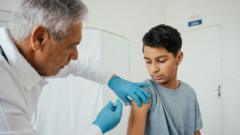
Why is MenB vaccine not given to teenagers in UK and should they be offered it?
#MenB vaccine #teenagers #UK #meningitis #vaccination program #cost-effectiveness #public health debate
📌 Key Takeaways
- The MenB vaccine is not routinely offered to teenagers in the UK, unlike infants.
- This is due to cost-effectiveness decisions based on lower disease incidence in older age groups.
- There is debate about whether expanding the program to teens would be beneficial.
- Experts note that while cases are rarer in teens, the disease can be severe and fatal.
📖 Full Retelling
🏷️ Themes
Vaccination Policy, Public Health
📚 Related People & Topics

United Kingdom
Country in northwestern Europe
The United Kingdom of Great Britain and Northern Ireland, commonly known as the United Kingdom (UK) or Britain, is a country in northwestern Europe, off the coast of the continental mainland. It comprises England, Scotland, Wales and Northern Ireland, with a population of over 69 million in 2024. Th...
Entity Intersection Graph
Connections for United Kingdom:
View full profileMentioned Entities
Deep Analysis
Why It Matters
This news matters because meningococcal B (MenB) disease is a serious, potentially fatal bacterial infection that can cause meningitis and septicemia, with teenagers and young adults being particularly vulnerable due to lifestyle factors like close contact in educational settings. The current UK vaccination program only offers MenB to infants, leaving adolescents unprotected during a high-risk period, creating a significant public health gap. This affects parents, teenagers, healthcare providers, and policymakers who must balance disease prevention with budget constraints in the National Health Service.
Context & Background
- The MenB vaccine (Bexsero) was introduced into the UK's routine childhood immunization schedule in September 2015 for infants at 2, 4, and 12 months old.
- The UK's Joint Committee on Vaccination and Immunisation (JCVI) previously determined that a universal adolescent MenB vaccination program wasn't cost-effective based on 2014 data showing relatively low disease incidence in that age group.
- Meningitis B causes approximately 1,200 cases annually in the UK, with about 10% being fatal and 20-30% of survivors experiencing serious long-term complications like limb loss, hearing loss, or brain damage.
- Several other countries including Italy, Australia, and parts of Canada have implemented adolescent MenB vaccination programs, creating international policy comparisons.
- The MenB vaccine was fast-tracked for approval following a high-profile case in 2015 where a petition for universal vaccination gained over 800,000 signatures after a toddler died from the disease.
What Happens Next
The JCVI is expected to review new evidence on MenB disease burden in adolescents and potential vaccine effectiveness in early 2025, with a decision possibly announced by mid-2025. If approved, a teenage vaccination program could begin as early as the 2025-2026 school year, likely targeting 13-15 year olds through school-based immunization. Pharmaceutical companies may increase lobbying efforts for expanded recommendations, while parent advocacy groups will likely intensify pressure on the Department of Health for policy change.
Frequently Asked Questions
The JCVI determined it wasn't cost-effective for the NHS based on 2014 data showing relatively low disease incidence in adolescents compared to infants. The committee also noted uncertainty about how long vaccine protection lasts and whether it would prevent carriage and transmission in teenage populations.
Teenagers have the second highest incidence of MenB disease after infants, with increased risk due to close contact in schools and universities. Vaccinating adolescents could create herd protection for unvaccinated populations and prevent tragic outcomes in a demographic where disease often progresses rapidly.
Studies show the vaccine is approximately 80-90% effective against most circulating MenB strains in adolescents. Protection appears strong for at least 2-3 years after vaccination, though longer-term data is still being collected.
Yes, the vaccine is available privately through travel clinics and some pharmacies at a cost of approximately £100-£150 per dose, with two doses typically recommended for optimal protection in adolescents.
Key symptoms include fever with cold hands/feet, severe headache, stiff neck, dislike of bright lights, vomiting, drowsiness, confusion, and a distinctive rash that doesn't fade under pressure. Symptoms can develop rapidly within hours, requiring immediate medical attention.