
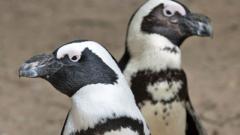
Why Namibia's green energy dream could be a red flag for penguins
#Namibia hydrogen project #Green energy #Tsau ǁKhaeb National Park #African penguins #Environmental impact #Economic development #Colonial legacy #Biodiversity conservation
📌 Key Takeaways
- Namibia plans massive green hydrogen facility in pristine national park
- Project promises significant economic benefits and job creation
- Conservationists warn of severe environmental impacts on unique ecosystems
- Concerns raised about colonial-era double standards in environmental protection
- Project carries both economic hope and environmental risk for the region
📖 Full Retelling
🏷️ Themes
Green Energy Development, Environmental Conservation, Economic Development, Colonial Legacy
📚 Related People & Topics

Sustainable energy
Energy that responsibly meets social, economic, and environmental needs
Energy is sustainable if it "meets the needs of the present without compromising the ability of future generations to meet their own needs." Definitions of sustainable energy usually look at its effects on the environment, the economy, and society. These impacts range from greenhouse gas emissions a...

African penguin
Species of bird
The African penguin (Spheniscus demersus), also known as Cape penguin or South African penguin, is a species of penguin confined to southern African waters. It is the only penguin found in the Old World. Like all penguins, it is flightless, with a streamlined body and wings stiffened and flattened i...

Environmental issues
Concerns and policies regarding the biophysical environment
Environmental issues are disruptions in the usual function of ecosystems. Further, these issues can be caused by humans (human impact on the environment) or they can be natural. These issues are considered serious when the ecosystem cannot recover in the present situation, and catastrophic if the ec...
Economic development
Process and policies to improve economic well-being
In economics, economic development (or economic and social development) is the process by which the economic well-being and quality of life of a nation, region, local community, or an individual are improved according to targeted goals and objectives. The term has been used frequently in the 20th an...
Entity Intersection Graph
Connections for Sustainable energy:
Mentioned Entities
Deep Analysis
Why It Matters
This news highlights a critical tension between economic development and environmental conservation in the global green energy transition. Namibia's ambitious green hydrogen project could significantly boost its economy (addressing 44% youth unemployment) but risks damaging unique ecosystems and threatening endangered African penguins. This case represents a broader dilemma faced by developing countries seeking renewable energy benefits while preserving natural heritage, potentially setting precedents for similar projects globally.
Context & Background
- Namibia is one of Africa's driest countries with abundant solar and wind resources, making it well-positioned for green hydrogen production
- The country has been actively seeking to diversify its economy beyond mining and tourism, with green hydrogen emerging as a key strategic priority
- African penguins are classified as endangered by the IUCN, with populations declining due to food scarcity, climate change, and human activities
- Tsau ǁKhaeb National Park is one of Africa's most biodiverse areas, home to rare succulents and unique desert-adapted wildlife
- Green hydrogen is increasingly seen as a critical component of global decarbonization strategies, with many countries and companies investing heavily in this technology
- The global green hydrogen market is projected to grow substantially, with developed countries seeking secure supply chains from resource-rich developing countries
What Happens Next
The final investment decision for the Hygreen project is expected by the end of 2026. Before then, we can expect continued environmental impact assessments, potential legal challenges from conservation groups, and further negotiations between stakeholders. If approved, construction would likely begin in 2027, with the facility aiming to produce one million tonnes of green hydrogen annually by 2028. The project's development will be closely watched globally as a case study for balancing renewable energy development with environmental protection.
Frequently Asked Questions
Green hydrogen is produced through electrolysis using renewable energy sources like solar and wind power. For Namibia, it represents a strategic opportunity to leverage its abundant natural resources for economic diversification, potentially creating thousands of jobs and positioning the country as a major player in the emerging global green hydrogen market.
The project threatens African penguins through potential disruption of their marine ecosystem in the adjacent Namibian Islands' Marine Protected Area. Industrial development could lead to habitat destruction, pollution, and disturbance of breeding grounds, which are already critical for the survival of this endangered species.
The project promises to create 15,000 construction jobs and 3,000 permanent positions, directly addressing Namibia's 44% youth unemployment rate. It could also transform the isolated coastal town of Lüderitz into a major industrial hub and represents over $10 billion in investment in a country with an annual GDP of just $13 billion.
Alternatives include developing the project in less environmentally sensitive areas, implementing stricter environmental protections, creating buffer zones around protected areas, investing in biodiversity offset programs, or pursuing smaller-scale, phased development that allows for better environmental monitoring and mitigation.
The project aligns with global climate goals by producing clean energy that can replace fossil fuels. However, it highlights the complexity of the energy transition, showing that even 'green' energy projects can have significant environmental impacts that need careful management to ensure true sustainability.