
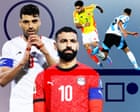
World Cup 2026: which countries have qualified and how did they do it?
📖 Full Retelling
📚 Related People & Topics

World cup
International sports competition where competitors represent their nation
A world cup is a global sporting competition in which the participant entities – usually international teams or individuals representing their countries – compete for the title of world champion. The event most associated with the name is the FIFA World Cup for association football, which dates back...
Entity Intersection Graph
Connections for World cup:
View full profileMentioned Entities
Deep Analysis
Why It Matters
The 2026 World Cup qualification process matters because it determines which nations will compete in the first expanded 48-team tournament, significantly increasing global participation. This affects football federations worldwide by offering more countries a chance to qualify, potentially boosting national pride and economic opportunities through tourism and investment. Fans and players benefit from greater diversity and new rivalries, while host nations (USA, Canada, Mexico) prepare for an unprecedented logistical and cultural event.
Context & Background
- The 2026 World Cup will be the first tournament with 48 teams, expanded from 32, increasing matches from 64 to 104.
- It will be jointly hosted by the United States, Canada, and Mexico, marking the first three-nation hosting in World Cup history.
- Qualification processes vary by continental confederation (e.g., UEFA, CONMEBOL, CAF), with some regions using direct qualification and others playoffs.
- The expansion aims to promote global football development by including more nations from underrepresented regions like Africa and Asia.
What Happens Next
Qualification matches will continue through 2025, with final berths decided by mid-2026. Draw ceremonies will group teams in early 2026, followed by team preparations and host city infrastructure tests. Expect increased marketing campaigns and ticket sales phases leading up to the June 2026 kickoff.
Frequently Asked Questions
As of now, only the three host nations (USA, Canada, Mexico) have automatically qualified. All other spots will be determined through continental qualification tournaments running through 2025.
Africa receives the largest increase, going from 5 to 9.5 slots, while Asia jumps from 4.5 to 8.5. Europe still has the most slots (16), up from 13.
Yes, the expanded tournament requires redesigned qualification paths. Some confederations use group stages followed by playoffs, while others incorporate intercontinental playoffs for the final spots.
All three host nations qualify automatically, using three of North America's 6.5 allocated slots. This leaves 3.5 slots for other CONCACAF nations to compete for through regional qualification.