
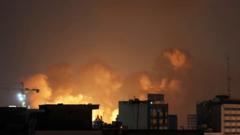
'Worst night' of Israeli strikes so far, Tehran residents tell BBC
#Israeli strikes #Tehran #BBC #escalation #residents #conflict #Iran
📌 Key Takeaways
- Israeli strikes on Tehran described as the worst night of attacks so far by residents
- BBC reports firsthand accounts from Tehran residents detailing the intensity of the strikes
- The strikes mark a significant escalation in the ongoing conflict between Israel and Iran
- Residents express fear and concern over the increasing severity of military actions
📖 Full Retelling
🏷️ Themes
Military Conflict, Regional Tensions
📚 Related People & Topics

Iran
Country in West Asia
# Iran **Iran**, officially the **Islamic Republic of Iran** and historically known as **Persia**, is a sovereign country situated in West Asia. It is a major regional power, ranking as the 17th-largest country in the world by both land area and population. Combining a rich historical legacy with a...

Israeli Air Force
Aerial and space service branch of the Israel Defense Forces
The Israeli Air Force (IAF; Hebrew: זְרוֹעַ הָאֲוִיר וְהֶחָלָל, romanized: Zroa HaAvir VeHahalal, lit. 'Air and Space Arm', commonly known as חֵיל הָאֲוִיר, Kheil HaAvir, "Air Corps") operates as the aerial and space warfare branch of the Israel Defense Forces (IDF). It was founded on May 28, 1948,...
BBC
British public service broadcaster
# British Broadcasting Corporation (BBC) The **British Broadcasting Corporation (BBC)** is the national broadcaster of the United Kingdom. Headquartered at **Broadcasting House** in London, it holds the distinction of being the world's oldest national broadcasting organization and the largest broad...

Tehran
Capital and largest city of Iran
Tehran is the capital and largest city of Iran. It is also the capital of Tehran province and the administrative center for Tehran County and its Central District. With a population of around 9 million in the city, and 16.8 million in the metropolitan area, Tehran is the most populous city in Iran a...
Entity Intersection Graph
Connections for Iran:
Mentioned Entities
Deep Analysis
Why It Matters
This escalation represents a significant expansion of the Israel-Iran conflict beyond proxy warfare into direct state-on-state military strikes, raising immediate risks of regional war. It affects Iranian civilians experiencing unprecedented attacks, Israeli citizens facing potential retaliation, and global energy markets vulnerable to Middle East instability. The direct targeting of Tehran marks a dangerous threshold crossing that could reshape security dynamics across the Middle East and test international diplomatic efforts to contain the conflict.
Context & Background
- Israel and Iran have engaged in shadow warfare for decades through proxies like Hezbollah and Hamas, with occasional direct strikes but rarely on this scale
- Tensions escalated dramatically after Iran's April 13 drone and missile attack on Israel, which itself was retaliation for an alleged Israeli strike on Iran's consulate in Damascus
- The U.S. has maintained military support for Israel while urging restraint, creating complex diplomatic pressures on all regional actors
What Happens Next
Iran will likely announce retaliatory measures within 24-48 hours, potentially targeting Israeli diplomatic facilities or assets abroad. The UN Security Council will convene emergency sessions this week, with Russia and China likely blocking Western-led resolutions. Regional allies including Hezbollah may escalate attacks on Israel's northern border, while oil prices could spike 5-10% on Monday markets.
Frequently Asked Questions
Israel appears to be establishing deterrence by responding proportionally to Iran's April 13 attack, while signaling it will not tolerate future threats to its territory. The timing suggests calculated escalation before international pressure for de-escalation becomes overwhelming.
All nuclear diplomacy is now frozen indefinitely. The 2015 JCPOA revival talks were already stalled, but direct military conflict makes any near-term agreement impossible and could incentivize Iran to accelerate nuclear advancement.
The U.S. publicly urged Israel not to retaliate but continues military support, creating ambiguity about American red lines. Washington now faces pressure to either restrain its ally more forcefully or risk being drawn into broader conflict.
The risk is now substantially higher as Iran's response will determine whether conflict remains bilateral or draws in proxies. Hezbollah's next moves are particularly crucial, as sustained attacks could open a second front against Israel.