
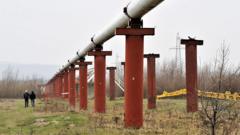
Zelensky accuses EU allies of 'blackmail' in oil pipeline row
#Zelensky #EU #blackmail #oil pipeline #Ukraine #energy #diplomacy #supply routes
📌 Key Takeaways
- Ukrainian President Zelensky accuses EU allies of 'blackmail' over oil pipeline issues.
- The dispute centers on energy infrastructure and supply routes amid ongoing tensions.
- Zelensky's remarks highlight diplomatic friction between Ukraine and some EU member states.
- The row could impact energy security and cooperation in the region.
📖 Full Retelling
🏷️ Themes
Diplomatic Tensions, Energy Security
📚 Related People & Topics

Volodymyr Zelenskyy
President of Ukraine since 2019
Volodymyr Oleksandrovych Zelenskyy (born 25 January 1978) is a Ukrainian politician and former entertainer who has served as the sixth president of Ukraine since 2019. He took office five years after the start of the Russo-Ukrainian War with Russia's annexation of Crimea and invasion of the Donbas, ...

Ukraine
Country in Eastern Europe
# Ukraine **Ukraine** is a country located in Eastern Europe. It is the second-largest country in Europe by area, after Russia. Known for its extensive fertile plains, the nation serves as a critical global exporter of grain and is considered a middle power in international affairs. ## Geography a...

European Union
Supranational political and economic union
The European Union (EU) is a supranational political and economic union of 27 member states that are located primarily in Europe. The union has a total area of 4,233,255 km2 (1,634,469 sq mi) and an estimated population of more than 450 million as of 2025. The EU is often described as a sui generis ...
Entity Intersection Graph
Connections for Volodymyr Zelenskyy:
Mentioned Entities
Deep Analysis
Why It Matters
This news matters because it reveals growing tensions between Ukraine and its European allies during a critical period of war against Russia. It affects Ukraine's ability to secure energy resources and maintain international support, potentially weakening its position. The accusation of 'blackmail' could damage diplomatic relations and unity among EU members supporting Ukraine, which is crucial for military aid and sanctions against Russia. This dispute may also impact European energy security and the broader geopolitical strategy against Russian aggression.
Context & Background
- Ukraine has been at war with Russia since the 2014 annexation of Crimea, escalating with the full-scale invasion in February 2022.
- The EU has provided significant military, financial, and humanitarian aid to Ukraine, but internal disagreements on energy policies have occasionally surfaced.
- Oil pipelines from Russia to Europe have been a point of contention, with Ukraine historically serving as a transit route, affecting both energy security and revenue.
- Previous disputes include the Nord Stream pipeline controversies, where Ukraine and some EU members opposed projects bypassing Ukrainian territory.
- Energy dependence on Russia has been a long-standing issue for the EU, leading to sanctions and efforts to diversify sources since the war began.
What Happens Next
Expect emergency EU-Ukraine talks to address the accusations and prevent a diplomatic rift. The EU may review its energy policies or offer concessions to maintain unity. If unresolved, this could delay or reduce future aid packages to Ukraine, impacting its war efforts. Monitoring upcoming EU summits and bilateral meetings for resolutions or further escalations is crucial.
Frequently Asked Questions
The row involves disputes over oil pipeline operations or policies between Ukraine and EU allies, likely related to transit routes, sanctions, or energy supplies. Specific details aren't provided, but it centers on accusations of 'blackmail' by Zelensky, suggesting EU actions are pressuring Ukraine unfairly.
EU allies might prioritize their own energy security or economic interests, potentially conflicting with Ukraine's needs. This could stem from internal EU disagreements or efforts to balance support for Ukraine with mitigating energy crises, leading to tough negotiations perceived as 'blackmail' by Ukraine.
It could weaken Western unity, reducing the effectiveness of sanctions and aid to Ukraine. If tensions escalate, it might distract from military coordination and embolden Russia, potentially prolonging the conflict or undermining Ukraine's strategic position.
Similar disputes include past conflicts over gas pipelines like Nord Stream, where Ukraine and some EU members clashed over bypass routes. Energy has long been a tool in geopolitical tensions, with Russia using pipelines for leverage, and allies sometimes prioritizing national interests over solidarity.
Ukraine can engage in diplomatic talks to clarify accusations and seek compromises, possibly involving third-party mediation. Strengthening alliances with supportive EU members and highlighting shared security interests may help de-escalate the situation and secure continued support.
It could increase volatility in oil markets if pipeline operations are disrupted or sanctions are affected. Uncertainty over EU-Ukraine relations might influence energy prices and supply chains, particularly in Europe, as stakeholders adjust to potential shifts in policy or cooperation.