
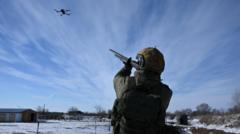
Zimbabwe says 15 nationals killed after being lured to fight for Russia
📖 Full Retelling
📚 Related People & Topics

Russia
Country in Eastern Europe and North Asia
Russia, or the Russian Federation, is a country in Eastern Europe and North Asia. It is the largest country in the world, spanning eleven time zones and sharing land borders with fourteen countries. With a population of over 140 million, Russia is the most populous country in Europe and the ninth-mo...

List of wars involving Ukraine
The following is a list of major conflicts fought by Ukraine, by Ukrainian people or by regular armies during periods when independent states existed on the modern territory of Ukraine, from the Kievan Rus' times to the present day. It also includes wars fought outside Ukraine by Ukrainian military....

Zimbabwe
Country in Southeastern Africa
Zimbabwe, officially the Republic of Zimbabwe, is a landlocked country in Southeast Africa, between the Zambezi and Limpopo River, bordered by South Africa to the south, Botswana to the southwest, Zambia to the north, and Mozambique to the east. The capital and largest city is Harare, and the second...
Entity Intersection Graph
Connections for Russia:
Mentioned Entities
Deep Analysis
Why It Matters
This news matters because it reveals how Russia's recruitment of foreign fighters extends beyond neighboring regions to distant African nations, potentially exploiting economic vulnerabilities. It affects Zimbabwean families who have lost loved ones, Zimbabwe-Russia diplomatic relations, and raises concerns about international mercenary recruitment practices. The incident also highlights how global conflicts can draw in participants from unexpected regions, creating complex geopolitical and humanitarian consequences.
Context & Background
- Russia has been recruiting foreign fighters since its 2022 invasion of Ukraine, initially focusing on neighboring countries and Middle Eastern regions
- Zimbabwe has maintained diplomatic ties with Russia since Soviet times, with recent economic cooperation agreements
- Many African nations face economic challenges that make their citizens vulnerable to foreign military recruitment offers
- The Wagner Group (now integrated into Russian military structures) previously recruited fighters from African conflict zones
- Zimbabwe has experienced significant economic migration patterns due to domestic unemployment and currency instability
What Happens Next
Zimbabwe will likely conduct diplomatic inquiries with Russia about the circumstances of these deaths and may implement warnings or restrictions against foreign military recruitment. International human rights organizations may investigate the recruitment practices. Russia may face increased scrutiny about its foreign fighter recruitment methods in Africa. Zimbabwean authorities might establish task forces to prevent further recruitment of citizens for foreign conflicts.
Frequently Asked Questions
Economic desperation likely plays a major role - Zimbabwe faces high unemployment and currency instability, making foreign military recruitment financially attractive. Some may have been misled about the nature of the work or the risks involved.
Recruiting foreign fighters exists in a legal gray area. While mercenary activities are restricted under international conventions, state-sponsored recruitment of foreign nationals for official military operations has fewer clear prohibitions, though ethical concerns remain significant.
This incident will strain diplomatic relations, potentially affecting existing economic cooperation agreements. Zimbabwe may demand explanations and compensation, while Russia might attempt to downplay the incident to preserve its strategic interests in Africa.
Yes, reports indicate fighters from several African nations have been recruited, primarily through private military companies with ties to Russia. Countries like Sudan, Central African Republic, and Libya have seen similar recruitment patterns.
Zimbabwe can implement public awareness campaigns about the dangers, strengthen border controls, create economic alternatives for vulnerable populations, and establish legal frameworks to prosecute recruiters operating within its territory.