
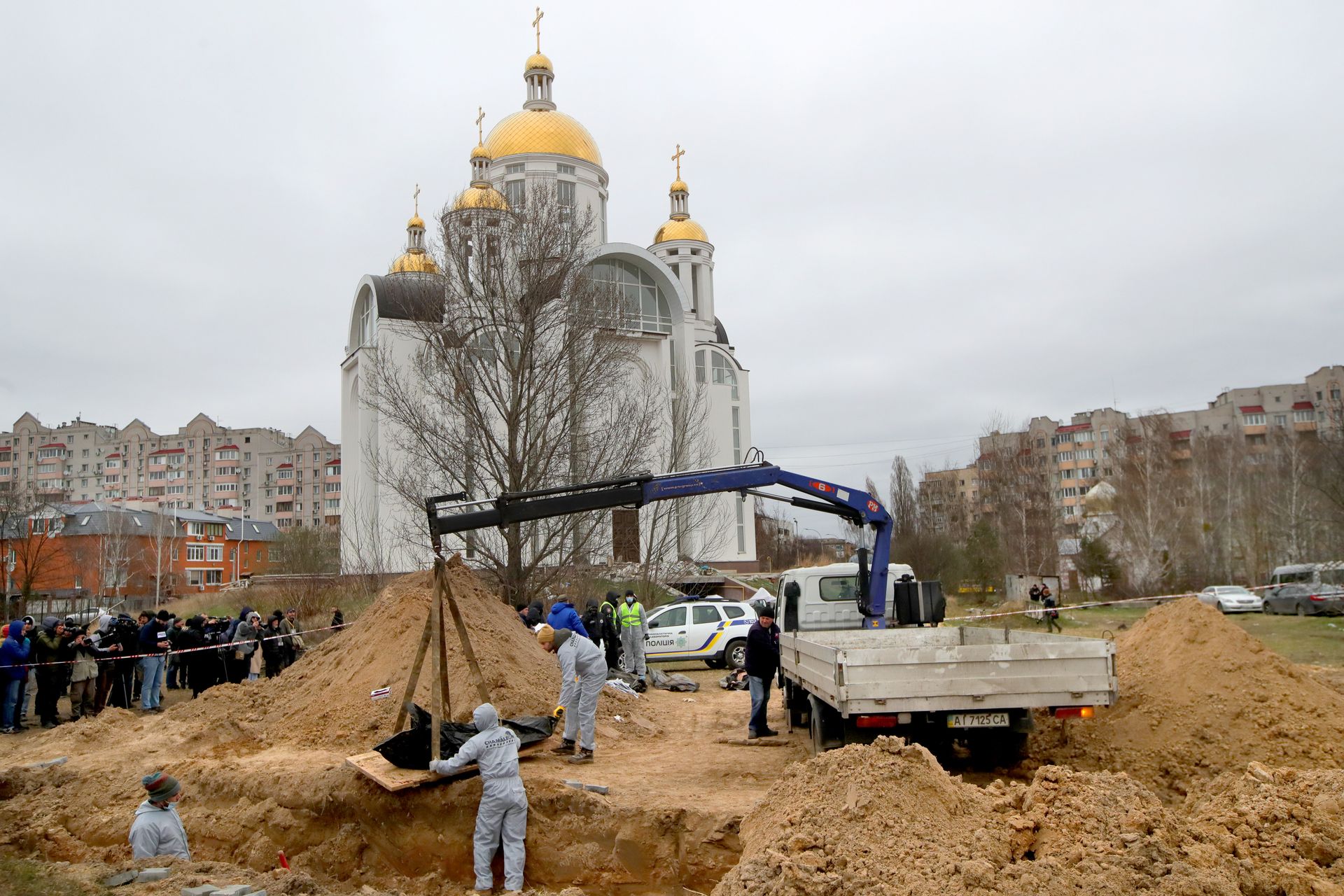
EU sanctions 9 Russians for war crimes committed in Bucha
#EU #Russia #sanctions #war crimes #Bucha #atrocities #accountability
📌 Key Takeaways
- EU imposes sanctions on 9 Russian individuals for war crimes in Bucha
- Sanctions target individuals directly involved in atrocities during the conflict
- Action reflects EU's commitment to holding perpetrators of war crimes accountable
- Bucha massacre remains a focal point in international condemnation of the war
📖 Full Retelling
🏷️ Themes
War Crimes, International Sanctions
📚 Related People & Topics

European Union
Supranational political and economic union
The European Union (EU) is a supranational political and economic union of 27 member states that are located primarily in Europe. The union has a total area of 4,233,255 km2 (1,634,469 sq mi) and an estimated population of more than 450 million as of 2025. The EU is often described as a sui generis ...

Russia
Country in Eastern Europe and North Asia
Russia, or the Russian Federation, is a country in Eastern Europe and North Asia. It is the largest country in the world, spanning eleven time zones and sharing land borders with fourteen countries. With a population of over 140 million, Russia is the most populous country in Europe and the ninth-mo...
Entity Intersection Graph
Connections for European Union:
Mentioned Entities
Deep Analysis
Why It Matters
This news matters because it represents the EU's continued legal and diplomatic response to alleged war crimes in Ukraine, signaling that international accountability for atrocities remains a priority. It affects the sanctioned individuals by freezing their assets and banning travel within the EU, while also impacting EU-Russia relations by maintaining pressure on Moscow. The move reinforces the principle that perpetrators of war crimes, even if not immediately prosecuted, face tangible consequences through coordinated international sanctions.
Context & Background
- The Bucha massacre refers to the killing of Ukrainian civilians by Russian forces in Bucha, a suburb of Kyiv, in early 2022, which sparked global condemnation and accusations of war crimes.
- The EU has imposed multiple rounds of sanctions on Russia since its full-scale invasion of Ukraine in February 2022, targeting individuals, entities, and sectors like energy and finance.
- International investigations into war crimes in Ukraine are ongoing, led by bodies such as the International Criminal Court (ICC) and the UN Independent International Commission of Inquiry on Ukraine.
- Sanctions are a key tool for the EU to exert pressure without military intervention, aiming to isolate Russia economically and diplomatically while supporting Ukraine.
What Happens Next
The sanctioned individuals may face further legal actions, including potential ICC indictments or national prosecutions under universal jurisdiction. The EU is likely to continue expanding sanctions lists in coordination with allies like the U.S. and U.K., possibly targeting more officials or entities linked to war crimes. Future developments could include increased efforts to seize frozen assets for Ukrainian reconstruction, though legal hurdles remain.
Frequently Asked Questions
EU sanctions typically freeze any assets the individuals hold in EU countries and ban them from entering or transiting through EU territory, effectively restricting their financial and travel freedoms in Europe.
The EU likely targeted these 9 based on evidence linking them directly to Bucha atrocities, such as military commanders or officials involved; the limited number reflects a focused approach to hold specific perpetrators accountable, though more may be added later.
While earlier sanctions often targeted broader economic sectors or high-level officials, these are specifically tied to war crimes, emphasizing individual criminal responsibility rather than general political or economic pressure.
Yes, sanctions can support prosecutions by drawing attention to evidence and encouraging investigations by bodies like the ICC, though trials depend on legal processes and whether suspects can be apprehended.
Direct military impact is minimal, but it reinforces international condemnation of Russian actions, potentially deterring future atrocities and bolstering Ukraine's morale and diplomatic support.