
Europe's centralized grid remains its vulnerability
📖 Full Retelling
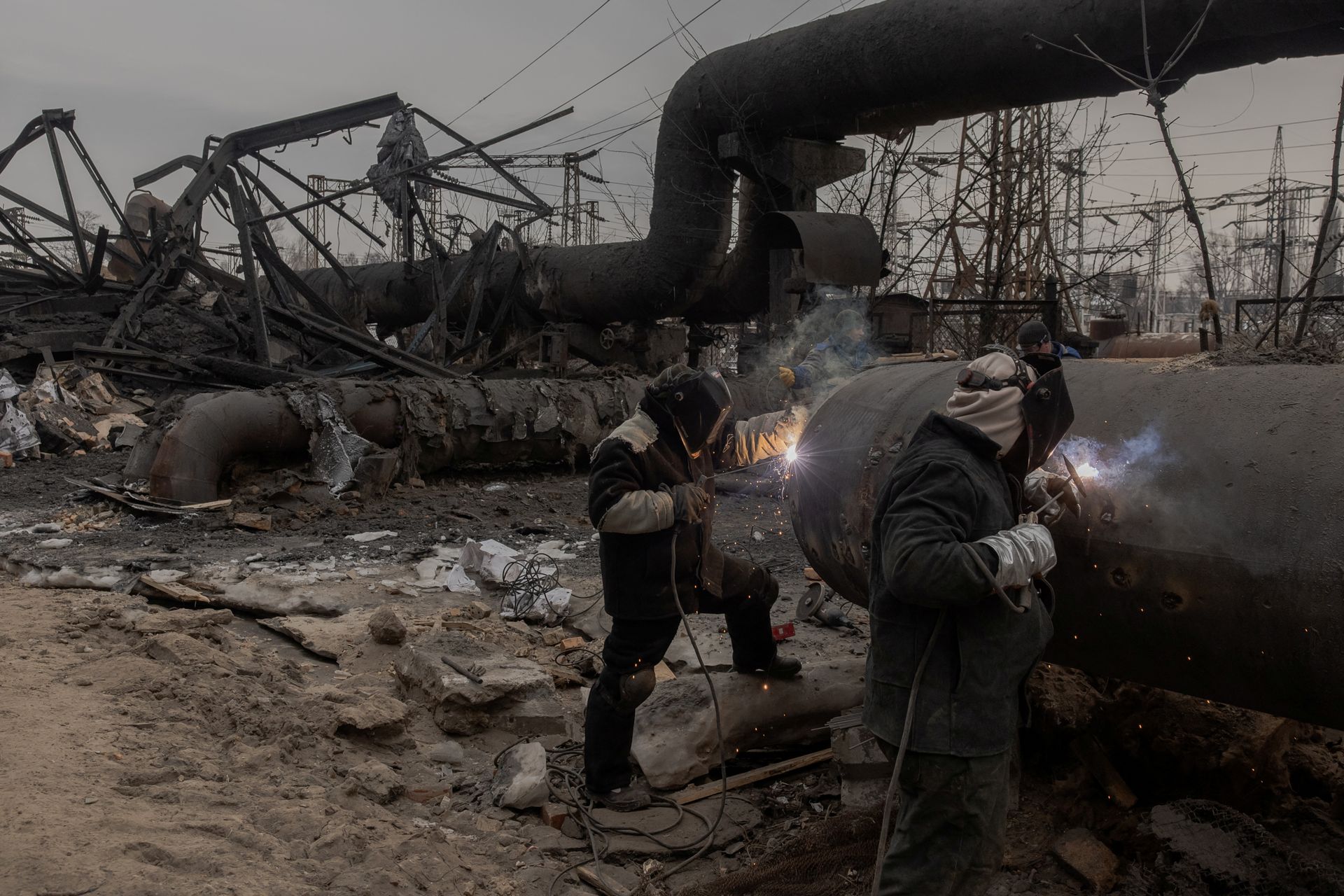
Ukraine has now survived four winters of systematic Russian strikes on its energy infrastructure. This past winter was especially challenging. The United Nations documented near-daily strikes on energy infrastructure across 17 regions in January alone. In Kyiv, repeated attacks on two combined heat and power plants cut central heating to
Entity Intersection Graph
No entity connections available yet for this article.
Original Source
Opinion Europe's centralized grid remains its vulnerability by Miro Sedlak April 2, 2026 9:39 PM 5 min read Employees repair sections of the Darnytska combined heat and power plant damaged by Russian airstrikes in Kyiv, Ukraine, on Feb. 4, 2026. (Roman Pilipey / AFP via Getty Images) Opinion Prefer on Google Miro Sedlak Senior energy sector executive Ukraine has now survived four winters of systematic Russian strikes on its energy infrastructure. This past winter was especially challenging. The United Nations documented near-daily strikes on energy infrastructure across 17 regions in January alone. In Kyiv, repeated attacks on two combined heat and power plants cut central heating to nearly 6,000 residential buildings each time. All 15 of Ukraine's thermal power plants have now been damaged or destroyed . Yet Ukraine managed to adapt — and built something Europe still lacks. Ukraine has now survived four winters of systematic Russian strikes on its energy infrastructure — and in doing so has begun developing something no European country possesses: an operational doctrine for keeping cities warm under attack. When centralized heat plants became high-value targets, Ukrainian operators pivoted to municipal cogeneration units — compact systems generating both electricity and heat independently of the wider grid. By November 2025, the district heating sector was operating 182 such units alongside 239 block-modular boilers, forming autonomous "energy islands" for hospitals, water utilities, and residential buildings. Where European procurement cycles measure deployment in years, Ukrainian operators install modules in days. They improvised under fire: pre-positioning spare parts, establishing emergency communication protocols, cutting through bureaucratic hierarchy with municipal-level decision-making. The IEA identifies these emergency response capabilities as among the most transferable elements of Ukraine's energy defense. Transferable — but to whom, and how fast? Acro...
Read full article at source