
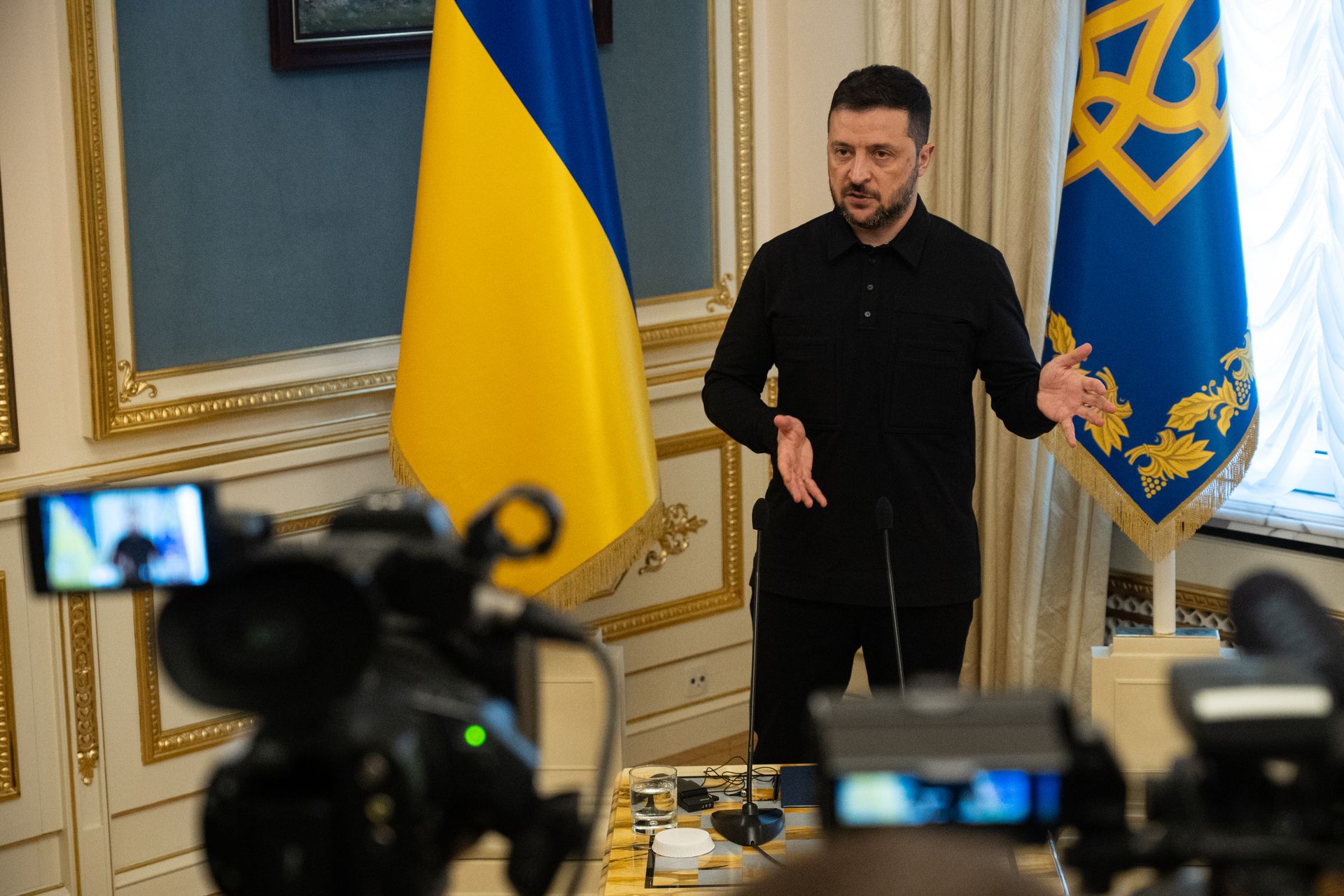
Government to hand out $34 per person to 13 million Ukrainians, Zelensky says
#Ukraine #Zelensky #financial assistance #humanitarian aid #economic relief #direct payments #government support
📌 Key Takeaways
- Ukrainian government plans to distribute $34 per person to 13 million citizens
- President Zelensky announced the direct financial assistance initiative
- The aid aims to support Ukrainians amid ongoing economic challenges
- The program targets a significant portion of the population for relief
📖 Full Retelling
🏷️ Themes
Humanitarian Aid, Economic Support
📚 Related People & Topics

Volodymyr Zelenskyy
President of Ukraine since 2019
Volodymyr Oleksandrovych Zelenskyy (born 25 January 1978) is a Ukrainian politician and former entertainer who has served as the sixth president of Ukraine since 2019. He took office five years after the start of the Russo-Ukrainian War with Russia's annexation of Crimea and invasion of the Donbas, ...

Ukraine
Country in Eastern Europe
# Ukraine **Ukraine** is a country located in Eastern Europe. It is the second-largest country in Europe by area, after Russia. Known for its extensive fertile plains, the nation serves as a critical global exporter of grain and is considered a middle power in international affairs. ## Geography a...
Entity Intersection Graph
Connections for Volodymyr Zelenskyy:
Mentioned Entities
Deep Analysis
Why It Matters
This direct cash transfer program is crucial for Ukraine's wartime economy as it provides immediate financial relief to nearly one-third of the population facing economic hardship due to Russia's invasion. The assistance affects vulnerable groups including pensioners, internally displaced persons, and low-income families who struggle with inflation and disrupted livelihoods. This humanitarian measure helps maintain social stability while demonstrating the government's commitment to supporting citizens during prolonged conflict. The program's scale represents a significant fiscal commitment that will impact Ukraine's budget and international aid allocation.
Context & Background
- Ukraine has been engaged in full-scale war with Russia since February 2022, causing massive economic disruption and displacement
- The Ukrainian economy contracted by approximately 30% in 2022 and faces ongoing challenges with inflation exceeding 20% in recent years
- Previous assistance programs have included pension supplements, housing subsidies, and targeted aid for internally displaced persons
- Ukraine relies heavily on international financial support from the IMF, World Bank, and bilateral partners to fund government operations and social programs
- Approximately 6.5 million Ukrainians have been internally displaced since the war began, creating additional strain on social services
What Happens Next
The government will need to establish distribution mechanisms and eligibility criteria in the coming weeks, with payments likely beginning within 1-2 months. International financial institutions will monitor how this expenditure affects Ukraine's fiscal stability and may adjust future aid packages accordingly. The program's effectiveness will be evaluated for potential expansion or modification based on Ukraine's evolving economic situation and available funding.
Frequently Asked Questions
While specific eligibility criteria haven't been fully detailed, the program targets approximately 13 million vulnerable Ukrainians including pensioners, internally displaced persons, and low-income families affected by the war. The government will likely establish verification processes to ensure aid reaches those most in need.
The program will be funded through Ukraine's state budget, which receives substantial support from international partners including the United States, European Union, and international financial institutions. This represents part of Ukraine's broader social protection spending during wartime.
While $34 may seem modest by international standards, it represents significant purchasing power in Ukraine's wartime economy where average monthly pensions are approximately $100-150. This amount can cover basic necessities like food, medicine, or utilities for vulnerable households.
This appears to be a broader, more standardized cash transfer compared to previous targeted programs. Earlier assistance was often category-specific (pension supplements, IDP support) rather than population-wide, making this one of Ukraine's most extensive direct cash distribution efforts since the war began.
Yes, international financial institutions like the IMF will assess how this expenditure aligns with Ukraine's fiscal commitments and economic reform program. The government will need to demonstrate that such social spending doesn't undermine macroeconomic stability or reform progress.