
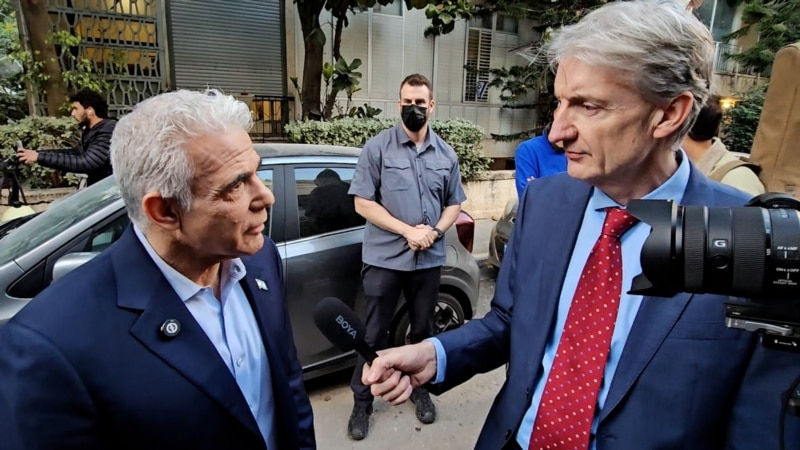
Israeli Opposition Leader Yair Lapid Tells RFE/RL Iran's Oil ‘Lifeline' Must Be Cut
#Yair Lapid #Iran oil #sanctions #Hezbollah #Hamas #nuclear program #Middle East #RFE/RL
📌 Key Takeaways
- Israeli opposition leader Yair Lapid calls for cutting Iran's oil exports to curb its regional influence.
- Lapid emphasizes that Iran uses oil revenue to fund proxies like Hezbollah and Hamas.
- He urges international pressure, particularly from the U.S., to enforce stricter sanctions on Iran.
- Lapid warns that failing to act allows Iran to advance its nuclear program and destabilize the Middle East.
📖 Full Retelling
🏷️ Themes
Iran Sanctions, Middle East Security
📚 Related People & Topics
Hezbollah
Islamist movement and militant group based in Lebanon
Hezbollah is a Shia Islamist Lebanese political party and paramilitary group. Hezbollah's paramilitary wing is the Jihad Council, and its political wing is the Loyalty to the Resistance Bloc party in the Lebanese Parliament. Its armed strength was assessed to be equivalent to that of a medium-sized ...

Yair Lapid
Prime Minister of Israel in 2022
Yair Lapid (Hebrew: יָאִיר לַפִּיד [jaˈʔiʁ laˈpid]; born 5 November 1963) is an Israeli politician of the centrist Yesh Atid party and a former journalist who has been the Leader of the Opposition since January 2023, having previously served in that role from 2020 to 2021. He had also previously ser...

Middle East
Transcontinental geopolitical region
The Middle East is a geopolitical region encompassing the Arabian Peninsula, Egypt, Iran, Iraq, the Levant, and Turkey. The term came into widespread usage by Western European nations in the early 20th century as a replacement of the term Near East (both were in contrast to the Far East). The term ...
Hamas
Islamist Palestinian political and paramilitary organization
The Islamic Resistance Movement, abbreviated Hamas (an acronym from the Arabic: حركة المقاومة الإسلامية, romanized: Ḥarakat al-Muqāwamah al-ʾIslāmiyyah), is a Sunni Islamist Palestinian nationalist political organisation with a military wing known as the al-Qassam Brigades. It has governed the Israe...
Entity Intersection Graph
Connections for Hezbollah:
View full profileMentioned Entities
Deep Analysis
Why It Matters
This statement matters because it highlights Israel's ongoing security concerns regarding Iran's nuclear program and regional influence, which affects Middle East stability and global energy markets. It demonstrates how Israeli opposition figures maintain hawkish positions on Iran regardless of political affiliation, influencing both domestic politics and international diplomacy. The call to cut Iran's oil revenue directly impacts global oil prices, international sanctions enforcement, and relations between Western powers and energy-importing nations that rely on Iranian crude.
Context & Background
- Iran and Israel have been engaged in a shadow war for decades, with Iran supporting proxy groups like Hezbollah and Hamas that threaten Israeli security
- The 2015 Iran nuclear deal (JCPOA) temporarily limited Iran's nuclear program in exchange for sanctions relief, but the U.S. withdrew in 2018 under President Trump
- Iran has significantly increased oil exports despite U.S. sanctions, with China being the primary buyer of discounted Iranian crude
- Israel has repeatedly conducted covert operations against Iran's nuclear facilities and assassinated Iranian nuclear scientists
- The current Israeli government under Prime Minister Netanyahu has made opposing Iran a central foreign policy priority
What Happens Next
Increased diplomatic pressure on China and other buyers of Iranian oil to comply with sanctions, potential covert Israeli actions against Iranian oil infrastructure, and continued debate within Israel about appropriate responses to Iran's nuclear advancements. The issue will likely feature prominently in upcoming Israeli elections and influence U.S.-Israel coordination on Iran policy.
Frequently Asked Questions
Israel believes cutting Iran's oil revenue would cripple its ability to fund proxy militaries across the Middle East and slow development of its nuclear program. Oil exports provide Iran with billions annually that support the Islamic Revolutionary Guard Corps and regional destabilization activities.
Completely cutting Iran's oil exports is challenging because China continues to purchase significant volumes despite sanctions. Enforcement requires global cooperation that has been inconsistent, with some countries prioritizing cheap energy over geopolitical concerns.
Severely reduced oil income could trigger economic crisis in Iran, potentially weakening the regime but also possibly making it more aggressive. Global oil prices would likely spike as Iranian crude disappears from markets, affecting economies worldwide.
There's little difference—both government and opposition figures in Israel generally agree on confronting Iran. Lapid's statement shows consensus across Israel's political spectrum regarding the Iranian threat, despite domestic disagreements on other issues.
China is currently Iran's largest oil customer, purchasing discounted crude that helps Iran circumvent Western sanctions. Any effective effort to cut Iran's oil revenue would require convincing China to comply, which presents diplomatic challenges given U.S.-China tensions.