
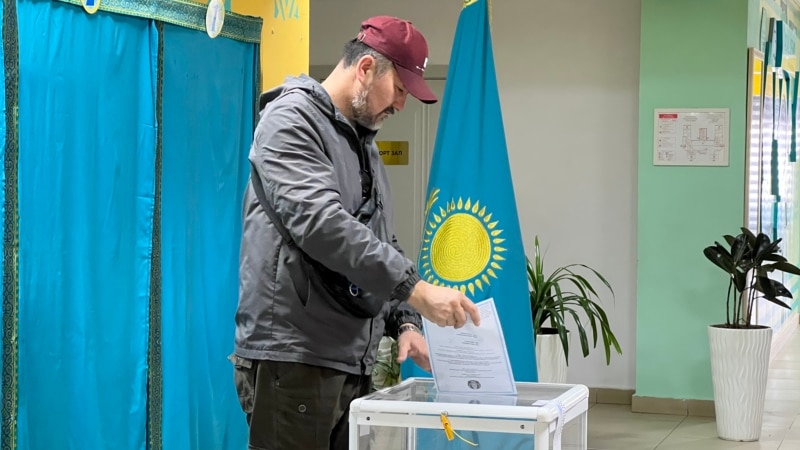
Journalists Detained As Kazakhstan Holds Controversial Referendum
📖 Full Retelling
Kazakhstan held a controversial constitutional referendum proposing sweeping political changes critics say could concentrate power in the presidency. The vote took place amid reports of media restrictions, journalist detentions and OSCE concerns about transparency.
Entity Intersection Graph
No entity connections available yet for this article.
Original Source
News Journalists Detained As Kazakhstan Holds Controversial Referendum By RFE/RL's Kazakh Service and Zamira Eshanova March 15, 2026 16:38 CET Journalists Detained As Kazakhstan Holds Controversial Referendum Share Share Print Kazakhstan held a controversial constitutional referendum on March 15 proposing sweeping political changes that critics say could further concentrate power in the presidency. The vote was held amid reports of media restrictions and the brief detention of journalists covering the referendum, which asked voters whether they approve a new constitution published in the media on February 12. The draft constitution introduces major political changes, including replacing the bicameral parliament with a single-chamber legislature, eliminating self-nomination for deputies, and creating a new advisory body -- the People’s Council -- with legislative initiative powers. It also grants the president authority to appoint key officials without parliamentary approval, a shift critics say would consolidate power in the executive branch while reducing legislative oversight. SEE ALSO: Lactose Intolerance: Kazakh Dissent Turns To Sour Cream At Astana’s Palace of Students, where President Qasym-Dzhomart Toqaev was scheduled to vote, plainclothes officers briefly detained several journalists, including RFE/RL reporter Zholdas Orisbayev and former Azattyq journalist Saniya Toiken. Witnesses said the detentions occurred shortly before Toqaev arrived at the polling station. The journalists were released after roughly three hours, and the president cast his ballot shortly afterward. Observers from the Mukalmas election monitoring organization were also denied entry to some polling stations, while reporter from the independent media outlet Informburo was briefly detained after asking about the earlier arrests. OSCE Criticism Legal experts warned that such actions could constitute interference with journalistic work. “If a journalist has an editorial assignment and offic...
Read full article at source