
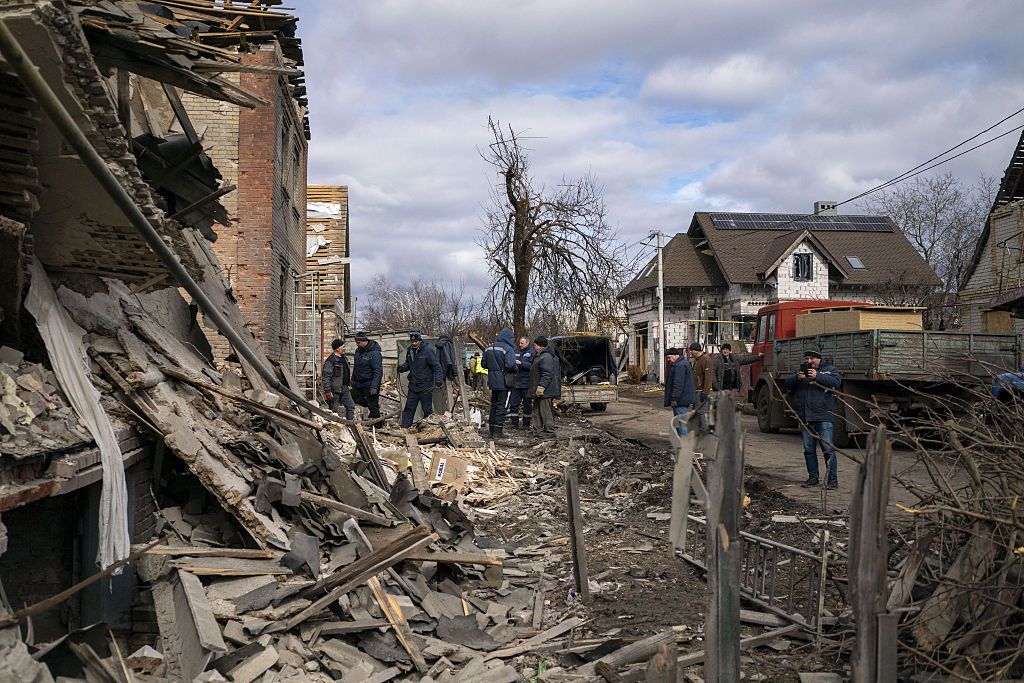
Russia drops record number of deadly glide bombs on Ukraine, steps up aerial attacks
📖 Full Retelling
📚 Related People & Topics

Russia
Country in Eastern Europe and North Asia
Russia, or the Russian Federation, is a country in Eastern Europe and North Asia. It is the largest country in the world, spanning eleven time zones and sharing land borders with fourteen countries. With a population of over 140 million, Russia is the most populous country in Europe and the ninth-mo...

Ukraine
Country in Eastern Europe
# Ukraine **Ukraine** is a country located in Eastern Europe. It is the second-largest country in Europe by area, after Russia. Known for its extensive fertile plains, the nation serves as a critical global exporter of grain and is considered a middle power in international affairs. ## Geography a...
Entity Intersection Graph
Connections for Russia:
Mentioned Entities
Deep Analysis
Why It Matters
This escalation matters because glide bombs allow Russia to strike Ukrainian positions from greater distances with improved accuracy while reducing aircraft vulnerability to air defenses. It directly affects Ukrainian military forces facing increased bombardment, civilian populations near frontlines experiencing intensified attacks, and Western allies who must reconsider air defense support strategies. The intensified aerial campaign could significantly alter battlefield dynamics by enabling Russia to degrade Ukrainian defenses more effectively before ground assaults.
Context & Background
- Glide bombs are conventional bombs fitted with wings and guidance systems that allow them to be launched from aircraft outside enemy air defense ranges
- Russia has been increasingly using these weapons since early 2023, with the KAB-500 and KAB-1500 series being commonly deployed variants
- Ukraine's air defense systems have struggled to counter these weapons effectively due to their launch distance and relatively small radar cross-section
- The increased use coincides with Russia's capture of Avdiivka in February 2024 and subsequent attempts to advance in eastern Ukraine
- Western sanctions have limited Russia's precision-guided munition production, making glide bombs an attractive alternative using older bomb stocks
What Happens Next
Ukraine will likely intensify requests for advanced air defense systems like Patriots and seek countermeasures specifically designed against glide bombs. Russia will probably continue increasing glide bomb production and deployment, potentially expanding targets to include rear-area logistics and infrastructure. NATO members may accelerate delivery of promised F-16 aircraft to Ukraine (expected late 2024) to challenge Russian air superiority. The coming weeks may see either Russian territorial gains if Ukrainian defenses degrade, or stabilized lines if Ukraine adapts effectively to the new threat.
Frequently Asked Questions
Glide bombs have wings and guidance systems that allow aircraft to release them from 50-70 km away, keeping planes safer from air defenses. They can strike with greater accuracy than unguided bombs while being cheaper than cruise missiles. This combination makes them particularly effective for sustained bombardment campaigns.
Current Ukrainian air defense systems have limited range against low-altitude targets at the distances from which glide bombs are launched. The bombs present small radar signatures and fly unpredictable paths, making interception difficult. Ukraine lacks sufficient long-range systems positioned close enough to frontlines to effectively counter the launch aircraft.
If sustained, increased glide bomb attacks could degrade Ukrainian defensive positions, enabling Russian ground advances. This could force Ukraine to withdraw artillery and supplies further from frontlines, reducing their effectiveness. However, Western provision of advanced aircraft or specialized countermeasures could neutralize this advantage in coming months.
Production capacity constraints may limit how many guidance kits Russia can produce monthly. Weather conditions affect their accuracy, and they remain vulnerable to electronic warfare disrupting their guidance systems. Additionally, using them requires air superiority that could be challenged once Ukraine receives F-16 aircraft.
Glide bombs cause extensive damage with 500-1500kg warheads, destroying buildings within large radii. Their increased accuracy near frontlines still results in civilian casualties due to proximity of residential areas to military targets. The psychological impact is significant as the bombs approach silently until the final moments before impact.