
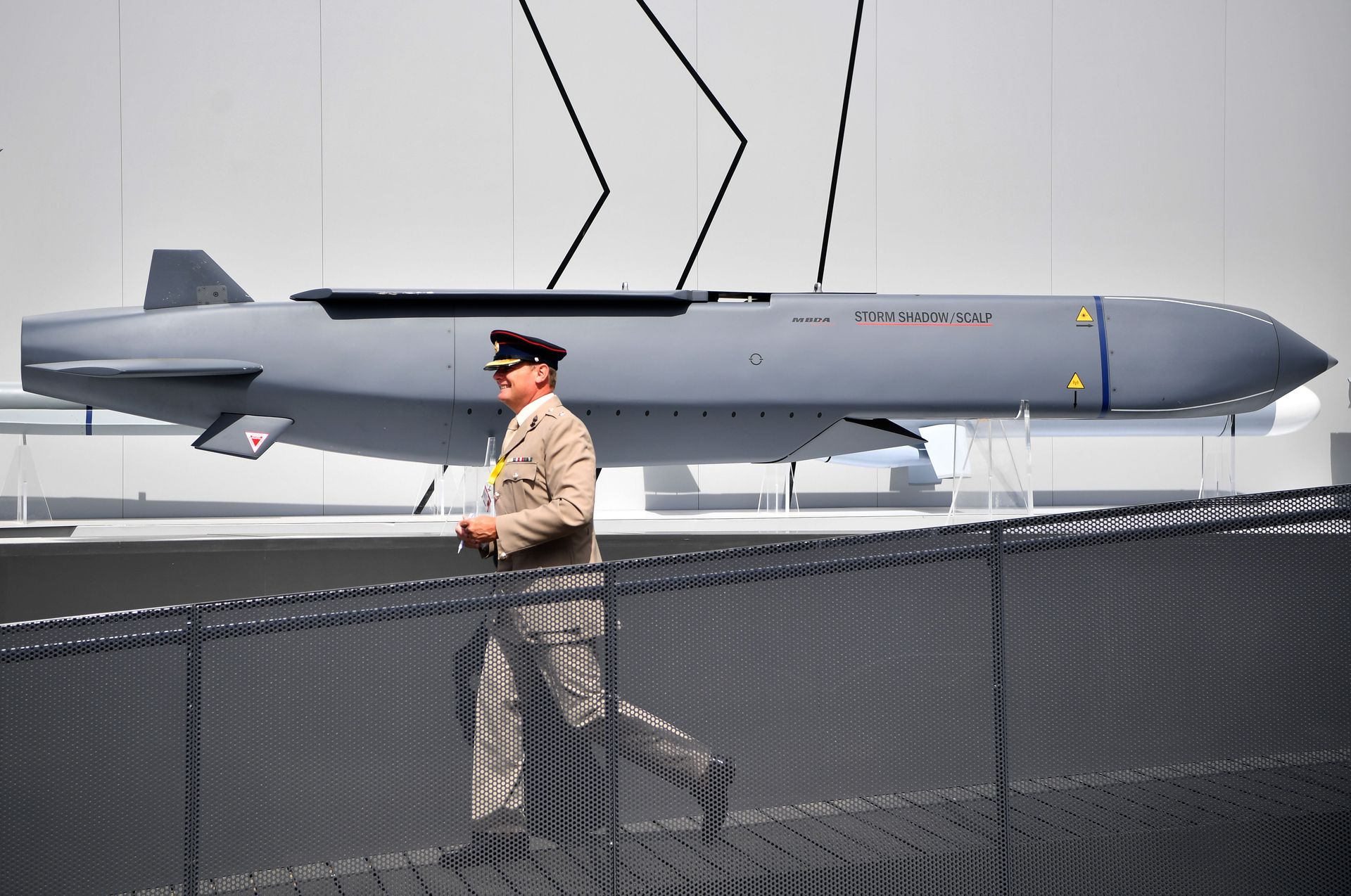
'Self-defense' — Russia blames UK for Storm Shadow attack, London refuses to bend
#Russia #UK #Storm Shadow #self-defense #missile attack #diplomacy #military support
📌 Key Takeaways
- Russia accuses the UK of involvement in a Storm Shadow missile attack, labeling it as 'self-defense' justification.
- The UK firmly rejects Russia's allegations and refuses to concede or alter its stance.
- The incident highlights escalating tensions between Russia and Western nations over military support in conflict zones.
- The dispute centers on the use of advanced weaponry and international accountability in warfare.
📖 Full Retelling
🏷️ Themes
International Conflict, Diplomatic Tensions
📚 Related People & Topics

Storm Shadow
Franco-British cruise missile
The Storm Shadow is a Franco-British low-observable, long-range air-launched cruise missile developed since 1994 by Matra and British Aerospace, and now manufactured by MBDA. "Storm Shadow" is the weapon's British name; in France it is called SCALP-EG (which stands for "Système de Croisière Autonome...

Russia
Country in Eastern Europe and North Asia
Russia, or the Russian Federation, is a country in Eastern Europe and North Asia. It is the largest country in the world, spanning eleven time zones and sharing land borders with fourteen countries. With a population of over 140 million, Russia is the most populous country in Europe and the ninth-mo...

United Kingdom
Country in northwestern Europe
The United Kingdom of Great Britain and Northern Ireland, commonly known as the United Kingdom (UK) or Britain, is a country in northwestern Europe, off the coast of the continental mainland. It comprises England, Scotland, Wales and Northern Ireland, with a population of over 69 million in 2024. Th...
Entity Intersection Graph
Connections for Storm Shadow:
Mentioned Entities
Deep Analysis
Why It Matters
This incident matters because it represents a dangerous escalation in the Ukraine conflict, with Russia directly accusing a NATO member of involvement in attacks on its territory. It affects UK-Russia diplomatic relations, potentially drawing the UK deeper into the conflict and raising risks of broader NATO-Russia confrontation. The situation also impacts European security dynamics and could influence Western military aid policies toward Ukraine.
Context & Background
- The UK has been one of Ukraine's strongest military supporters since Russia's 2022 invasion, providing training, intelligence, and advanced weaponry including Storm Shadow cruise missiles
- Russia has repeatedly warned Western nations against providing long-range weapons to Ukraine, claiming such support makes them participants in the conflict
- Storm Shadow missiles have a range of approximately 250km, allowing Ukraine to strike targets deep behind Russian lines in occupied Ukrainian territory
- Previous Russian accusations against Western nations have included claims of direct NATO involvement in planning Ukrainian military operations
What Happens Next
Expect increased diplomatic tensions between Moscow and London, with possible retaliatory measures from Russia including expulsion of UK diplomats or cyberattacks. NATO will likely discuss the accusations at upcoming meetings, while the UK may face pressure to clarify its role in Ukrainian targeting decisions. Russia could use this incident to justify further escalation in Ukraine or to test NATO's response thresholds.
Frequently Asked Questions
Storm Shadow are long-range cruise missiles with precision strike capability provided by the UK to Ukraine. Their significance lies in their ability to hit targets up to 250km away, allowing Ukraine to strike Russian command centers, supply depots, and infrastructure deep in occupied territories.
Russia likely blames the UK because it supplied the missiles and may have provided targeting assistance. This accusation serves Russia's narrative that NATO members are direct combatants, potentially justifying retaliatory measures and testing Western unity in supporting Ukraine.
Russia claims the right to 'self-defense' against what it portrays as direct Western aggression. This framing attempts to justify potential retaliatory actions against UK interests as legitimate defensive measures under international law.
Other Western nations may become more cautious about providing advanced weapons or intelligence support, fearing similar accusations from Russia. However, it could also strengthen NATO solidarity if members perceive Russia's threats as attempts to divide the alliance.
The main risks include direct military confrontation between Russia and NATO forces, expanded cyber warfare, attacks on Western diplomatic facilities, or Russia targeting UK commercial interests globally. There's also danger of miscalculation leading to unintended conflict escalation.