
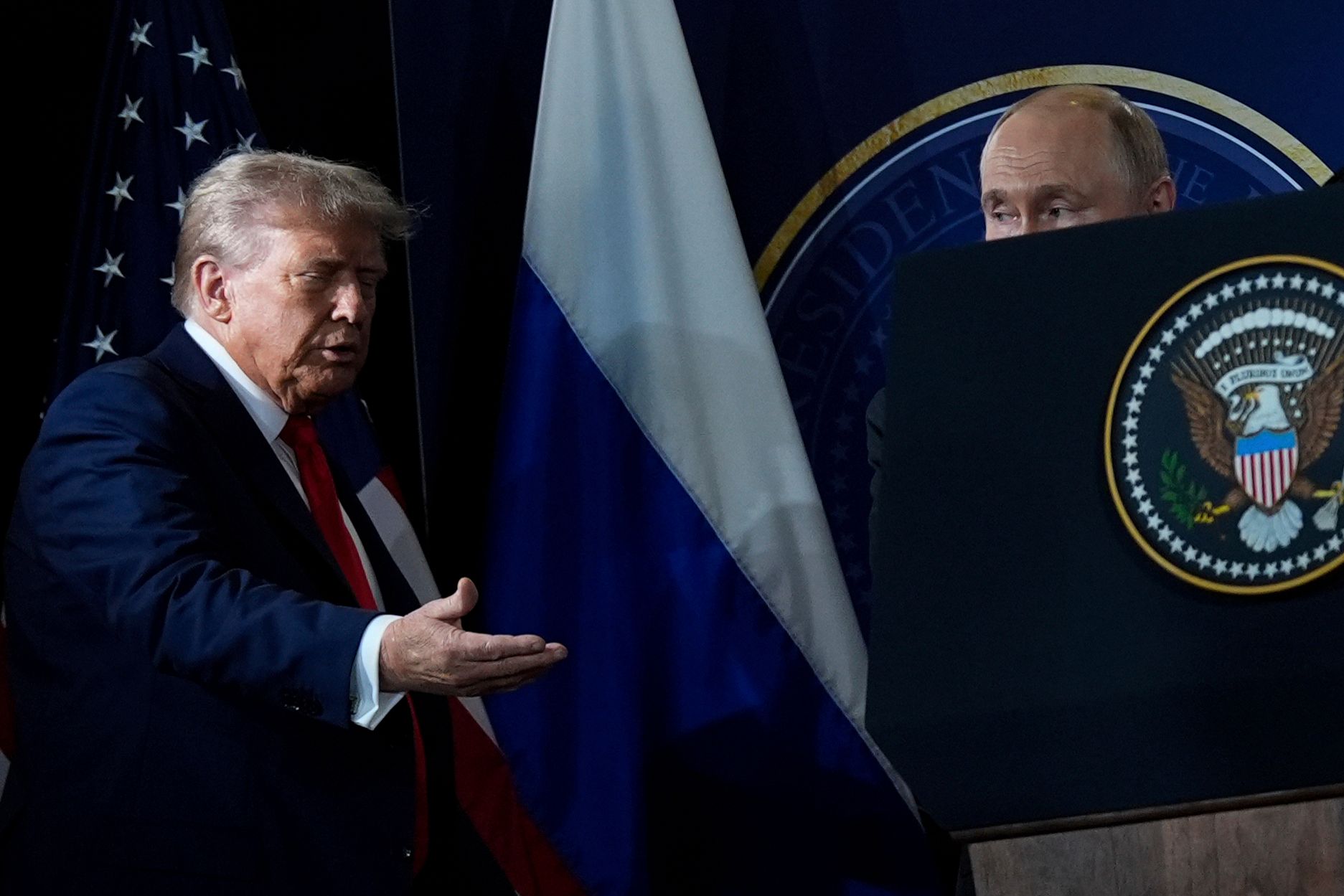
Trump's latest move hands Putin 'jackpot' as US eases Russian oil sanctions
#Trump #Putin #Russian oil #sanctions #US policy #energy #geopolitics #revenue
📌 Key Takeaways
- The US has eased sanctions on Russian oil under Trump's administration.
- This policy shift is described as a major win for Putin.
- The move could increase Russian oil revenues and global market influence.
- It reflects a significant change in US foreign policy towards Russia.
📖 Full Retelling
🏷️ Themes
Sanctions, Energy Policy
📚 Related People & Topics

Donald Trump
President of the United States (2017–2021; since 2025)
Donald John Trump (born June 14, 1946) is an American politician, media personality, and businessman who is the 47th president of the United States. A member of the Republican Party, he served as the 45th president from 2017 to 2021. Born into a wealthy New York City family, Trump graduated from the...

Vladimir Putin
President of Russia (2000–2008; since 2012)
Vladimir Vladimirovich Putin (born 7 October 1952) is a Russian politician and former intelligence officer who has served as President of Russia since 2012, having previously served from 2000 to 2008. Putin also served as Prime Minister of Russia from 1999 to 2000 and again from 2008 to 2012. He has...

Petroleum industry in Russia
One of the largest in the world
The petroleum or oil industry in Russia is one of the largest in the world. Russia has the largest reserves and was the largest exporter of natural gas. It has the sixth largest oil reserves, and is one of the largest producers of oil.
Entity Intersection Graph
Connections for Donald Trump:
Mentioned Entities
Deep Analysis
Why It Matters
This development matters because it significantly alters the economic pressure on Russia amid its ongoing war in Ukraine, potentially providing Moscow with billions in additional revenue. It affects global energy markets by increasing Russian oil supply, which could lower prices but also reduce Western leverage. European allies who maintained sanctions will face diplomatic strain as U.S. policy diverges. Energy companies and traders will need to navigate changing compliance rules while consumers may see mixed effects at the pump.
Context & Background
- The U.S. and EU imposed sweeping sanctions on Russian oil exports following the 2022 invasion of Ukraine, including price caps and import bans.
- Russia has been the world's second-largest oil exporter, with energy revenues comprising approximately 45% of its federal budget.
- Previous sanctions aimed to limit Russia's war funding while preventing global price spikes through carefully structured exceptions.
- The U.S. had led international efforts to maintain pressure through the G7 price cap mechanism of $60 per barrel.
- European nations completely phased out Russian seaborne crude imports by December 2022, though some pipeline flows continue.
What Happens Next
Oil markets will likely see increased Russian crude shipments within weeks, potentially lowering global prices by 3-5%. The EU will face pressure to reconsider its sanctions regime ahead of their scheduled review in January 2025. Congressional opponents may attempt to pass legislation reversing the policy change, though success would require bipartisan support. Russia will probably use additional revenue to bolster military production and social spending ahead of their 2025 budget cycle.
Frequently Asked Questions
Prices will likely decrease moderately as more Russian oil enters global markets, but the impact may be limited by OPEC+ production cuts and strong Asian demand. Brent crude could drop $2-4 per barrel within a month of implementation.
The administration cites reducing inflation and securing energy supplies as primary motivations, though critics argue it undermines Ukraine. Domestic political considerations around election-year gasoline prices likely influenced the timing.
Most EU members will probably maintain current restrictions due to legal commitments and political consensus, but some Eastern European nations dependent on Russian pipelines may advocate for adjustments. The EU's unified position will face testing.
Analysts estimate $15-20 billion annually if current export volumes increase by 10-15%, though actual gains depend on global prices and transportation costs. This represents roughly 5-7% of Russia's expected 2024 energy revenues.
Ukrainian officials warn it will prolong the conflict by strengthening Russia's economic resilience. Military analysts suggest it may delay Ukraine's counteroffensive capabilities by 6-9 months due to increased Russian defense spending.