
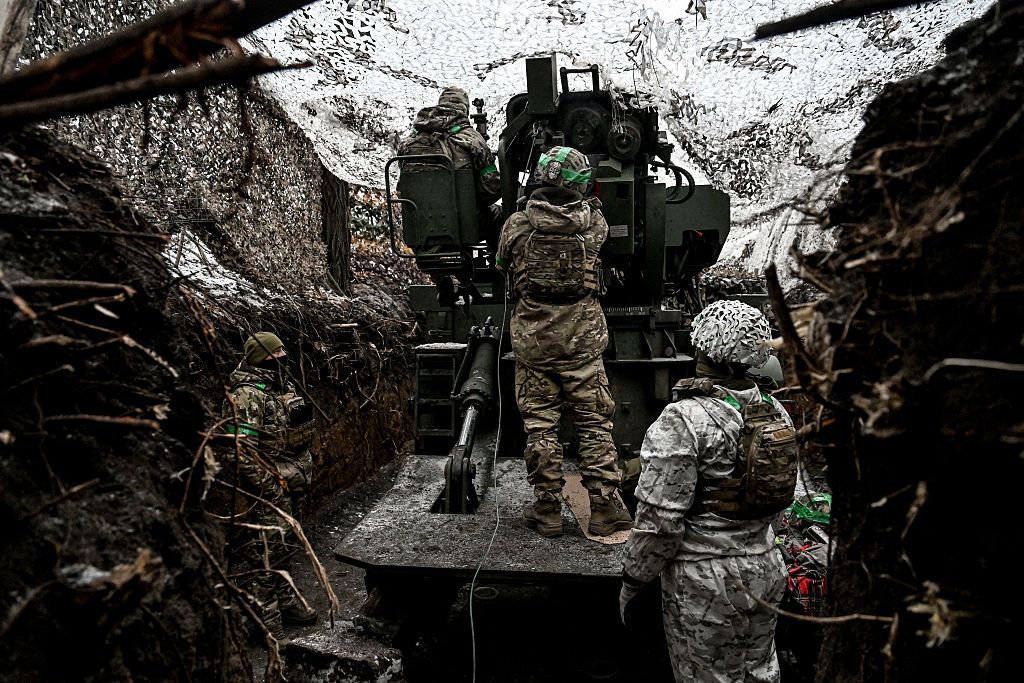
Ukraine strikes Russian command posts, logistics hubs in occupied territories, General Staff says
#Ukraine #Russia #General Staff #February 20 2026 #Zaporizhzhia Oblast #Kherson Oblast #Crimea #Luhansk Oblast #command post #logistics hub #troop concentration #drone attack #air defense #military logistics #occupied territories
📌 Key Takeaways
- Ukrainian General Staff confirmed strikes on Russian command posts and logistics hubs on February 20, 2026.
- Targets included a drone command post (Zlatopil), logistics warehouses (Bohdanivka, Crimea, Luhansk), repair base (Rozivka), and troop concentrations (Stepnohirsk, Liubymivka, Tendra).
- The attacks are part of Kyiv’s systematic measures to curb Russia’s offensive capabilities.
- Russian Defence Ministry claims 149 Ukrainian drones were intercepted and destroyed on that night.
- Damage assessments and casualty figures remain to be clarified by Ukrainian authorities.
📖 Full Retelling
🏷️ Themes
Military strategy and counter-offensive operations, Occupation and control of territories, Logistics and command disruption, Drone warfare and air defense, Information and intelligence reporting
📚 Related People & Topics

Ukraine
Country in Eastern Europe
# Ukraine **Ukraine** is a country located in Eastern Europe. It is the second-largest country in Europe by area, after Russia. Known for its extensive fertile plains, the nation serves as a critical global exporter of grain and is considered a middle power in international affairs. ## Geography a...

Staff (military)
Management personnel of a military unit
A military staff or general staff (also referred to as army staff, navy staff, or air staff within the individual services) is a group of officers, enlisted, and civilian staff who serve the commander of a division or other large military unit in their command and control role through planning, anal...
Entity Intersection Graph
Connections for Ukraine:
Mentioned Entities
Deep Analysis
Why It Matters
These strikes are critical as they directly target the logistical and command infrastructure necessary for sustaining Russian military operations in occupied territories. By disabling repair bases and drone command posts, Ukraine aims to degrade Russia's ability to coordinate attacks and maintain equipment, potentially shifting the balance on the front lines. The use of drones against deep targets highlights the evolving nature of the conflict, emphasizing long-range precision warfare over traditional trench combat. Furthermore, these operations signal continued Ukrainian resilience and capability to project power into regions annexed or occupied by Russia.
Context & Background
- Russia has occupied parts of Zaporizhzhia, Kherson, Donetsk, and Luhansk oblasts since 2022, following the full-scale invasion and illegal annexation attempts.
- Crimea, annexed by Russia in 2014, serves as a vital logistical hub and staging ground for Russian forces in southern Ukraine.
- Throughout the war, both sides have prioritized striking supply lines, ammunition depots, and command centers to disrupt the opponent's operational tempo.
- Drone warfare has become a central component of the conflict, with both Ukraine and Russia utilizing mass drone swarms to overwhelm air defenses and strike targets deep behind enemy lines.
What Happens Next
The Ukrainian General Staff is expected to release further details regarding the specific damage and casualty figures resulting from these strikes in the coming days. Russia will likely continue to bolster its air defense systems around critical infrastructure in response to the high volume of drone attacks. Retaliatory strikes by Russian forces against Ukrainian energy facilities or military positions remain a high probability. The situation on the ground in Zaporizhzhia and Kherson will likely remain tense as both sides vie for tactical advantages.
Frequently Asked Questions
Command posts are essential for coordinating troop movements and strategy, while logistics hubs provide the ammunition and fuel needed to fight. Destroying these targets creates chaos, disrupts supply chains, and significantly reduces the enemy's combat effectiveness.
These regions are partially occupied and serve as critical front lines or rear areas for Russian forces. Strikes here disrupt Russia's ability to support its front-line troops and challenge their hold on occupied territories.
While intercepting 149 drones prevents damage from those specific munitions, it places significant strain on Russian air defense stocks and systems. Even a few drones getting through to hit high-value targets like command posts can make the overall operation successful for Ukraine.
This date indicates that the conflict has persisted for several years, evolving into a prolonged war of attrition. It suggests that both sides continue to rely on advanced technology and systematic strikes to wear down the other's defenses.