
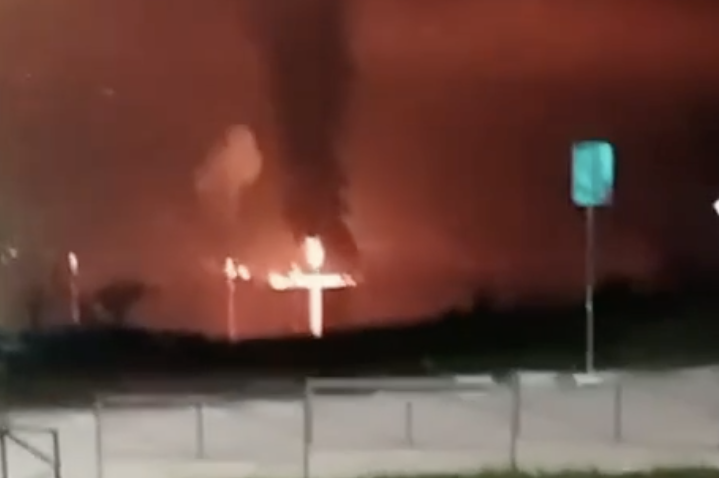
Ukrainian drones reportedly strike major oil terminal in Russian city of Novorossiysk
#Ukraine #Russia #drone strike #oil terminal #Novorossiysk #infrastructure #war
📌 Key Takeaways
- Ukrainian drones attacked a major oil terminal in Novorossiysk, Russia.
- The strike reportedly caused significant damage to the facility.
- This incident escalates the conflict by targeting critical Russian infrastructure.
- It highlights Ukraine's use of drone warfare to strike deep inside Russian territory.
📖 Full Retelling
🏷️ Themes
Military Conflict, Energy Security
📚 Related People & Topics

Russia
Country in Eastern Europe and North Asia
Russia, or the Russian Federation, is a country in Eastern Europe and North Asia. It is the largest country in the world, spanning eleven time zones and sharing land borders with fourteen countries. With a population of over 140 million, Russia is the most populous country in Europe and the ninth-mo...

Novorossiysk
City in Krasnodar Krai, Russia
Novorossiysk (Russian: Новоросси́йск, IPA: [nəvərɐˈsʲijsk] ; Adyghe: ЦӀэмэз, romanized: C̣ămăz) is a city in Krasnodar Krai, Russia. The port of Novorossiysk is one of the largest ports on the Black Sea. It is one of the cities designated as a Hero City by the Soviet Union.

Ukraine
Country in Eastern Europe
# Ukraine **Ukraine** is a country located in Eastern Europe. It is the second-largest country in Europe by area, after Russia. Known for its extensive fertile plains, the nation serves as a critical global exporter of grain and is considered a middle power in international affairs. ## Geography a...
Entity Intersection Graph
Connections for Russia:
Mentioned Entities
Deep Analysis
Why It Matters
This attack on a major Russian oil terminal in Novorossiysk represents a significant escalation in Ukraine's ability to strike strategic Russian infrastructure far from the front lines. It directly impacts Russia's critical energy export capabilities, potentially disrupting global oil markets and reducing Russian revenue funding its war effort. The attack demonstrates Ukraine's growing long-range drone capabilities and willingness to target economic assets, which could lead to retaliatory Russian strikes on Ukrainian infrastructure. This development affects global energy traders, European energy security planners, and military strategists on both sides.
Context & Background
- Novorossiysk is Russia's largest commercial port on the Black Sea and a crucial hub for oil exports, handling approximately 1.5 million barrels per day
- Ukraine has increasingly targeted Russian energy infrastructure since early 2024, including refineries and storage facilities deep inside Russian territory
- Previous Ukrainian drone attacks have damaged Russian refineries, reducing Russia's domestic fuel production capacity by an estimated 10-15%
- Russia has repeatedly warned that attacks on its energy infrastructure constitute 'red lines' that could trigger escalatory responses
- The Black Sea region has been a contested theater since Russia's full-scale invasion, with Ukraine successfully pushing back the Russian naval fleet from its coastal waters
What Happens Next
Russia will likely enhance air defenses around critical energy infrastructure and may retaliate with strikes on Ukrainian energy facilities. International oil markets may see price volatility as traders assess damage and potential supply disruptions. NATO members will monitor for any escalation that could draw them closer to direct conflict. Ukraine may continue similar strikes if they prove effective at degrading Russian war funding, potentially targeting other export terminals like Ust-Luga or Primorsk in coming weeks.
Frequently Asked Questions
Ukraine aims to disrupt Russia's oil export revenue, which funds its military operations. By targeting infrastructure deep inside Russia, Ukraine demonstrates strategic reach and puts economic pressure on the Kremlin beyond battlefield engagements.
Novorossiysk is Russia's primary Black Sea oil terminal, handling about 1.5 million barrels daily. It's crucial for exports to Mediterranean and global markets, making any disruption economically significant for Russian state revenues.
Unlikely, as NATO has consistently avoided direct confrontation with Russia. However, it increases tensions and could lead to enhanced Western military support for Ukraine, particularly air defense systems to protect against potential Russian retaliation.
Ukraine has developed indigenous long-range drones like the UJ-22 and modified Soviet-era jets into drones. These can travel hundreds of kilometers with explosive payloads, though specific models used in this attack remain unconfirmed.
Russia may intensify strikes on Ukrainian energy infrastructure, deploy additional air defenses around critical sites, or attempt deeper strikes on Ukrainian drone production facilities. Naval forces in the Black Sea might also increase patrols.
Any sustained disruption could tighten global oil supplies, potentially raising prices. However, OPEC+ spare capacity and strategic reserves in consuming countries would likely mitigate major short-term market impacts unless multiple facilities are hit.