

30 Years Later, the Unabomber’s Cabin Is a Prized F.B.I. Artifact
📚 Related People & Topics
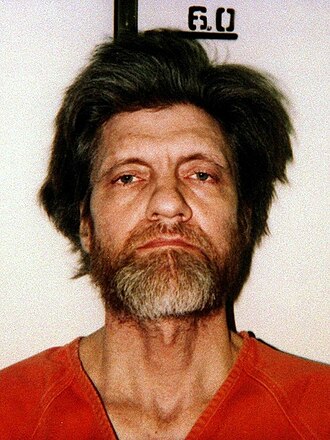
Ted Kaczynski
American domestic terrorist (1942–2023)
Theodore John Kaczynski ( kə-ZIN-skee; May 22, 1942 – June 10, 2023), also known as the Unabomber ( YOO-nə-bom-ər), was an American mathematician and domestic terrorist. A mathematics prodigy, he abandoned his academic career in 1969 to pursue a reclusive primitive lifestyle and lone wolf terroris...

Federal Bureau of Investigation
U.S. federal law enforcement agency
The Federal Bureau of Investigation (FBI) is the domestic intelligence and security service of the United States and its principal federal law enforcement agency. An agency of the United States Department of Justice, the FBI is a member of the U.S. Intelligence Community and reports to both the atto...
Years Later
2002 studio album by Soulja Slim
Years Later is the third studio album by American rapper Soulja Slim. It was released on December 24, 2002. The album was Slim's first release on his own label, Cut Throat Comitty Records, after leaving No Limit in 2002.
Entity Intersection Graph
Connections for Ted Kaczynski:
Mentioned Entities
Deep Analysis
Why It Matters
This story matters because it highlights how law enforcement preserves historical evidence from major criminal cases, serving both as educational tools and reminders of investigative challenges. It affects the FBI's training programs, historians studying domestic terrorism, and the public's understanding of how agencies learn from past investigations. The preservation of such artifacts demonstrates the ongoing relevance of historical cases in contemporary law enforcement training and public awareness.
Context & Background
- The Unabomber, Ted Kaczynski, conducted a 17-year bombing campaign from 1978 to 1995 that killed 3 people and injured 23 others.
- Kaczynski lived in this remote Montana cabin where he built his bombs and wrote his 35,000-word manifesto 'Industrial Society and Its Future'.
- The FBI's investigation (code-named UNABOM) was one of the longest and most expensive in bureau history before Kaczynski's arrest in 1996.
- Kaczynski's manifesto criticized industrialization and modern technology, influencing later anti-technology and environmental extremist movements.
- The cabin was originally stored as evidence during Kaczynski's trial and subsequent life imprisonment before being repurposed for training.
What Happens Next
The FBI will continue using the cabin for training new agents in evidence collection and crime scene analysis. Historical societies and museums may request temporary exhibits featuring the artifact. The cabin's preservation ensures it remains available for future law enforcement education and possibly for researchers studying domestic terrorism cases.
Frequently Asked Questions
The FBI maintains the cabin as a training tool to teach new agents about crime scene investigation and evidence collection techniques. It serves as a physical reminder of one of the bureau's most complex investigations and helps illustrate the challenges of investigating isolated domestic terrorists.
The Unabomber investigation was unprecedented in duration (17 years) and cost, requiring innovative forensic techniques and extensive profiling. It marked a shift in how the FBI approached domestic terrorism cases and demonstrated the importance of behavioral analysis in criminal investigations.
The cabin is stored at the FBI's training facility in Quantico, Virginia, primarily accessible to law enforcement personnel for training purposes. While not generally open to the public, it may be shown to select groups for educational purposes related to criminal justice and investigative techniques.
Kaczynski's anti-technology, anti-industrialization writings have been cited by various extremist groups opposing modernization. His ideas continue to resonate with some environmental and anti-globalization activists, though most mainstream groups reject his violent methods.
Kaczynski pleaded guilty in 1998 to avoid the death penalty and was sentenced to life imprisonment without parole. He died by suicide in his prison cell in June 2023 at the age of 81, ending one of the most notorious domestic terrorism cases in U.S. history.