
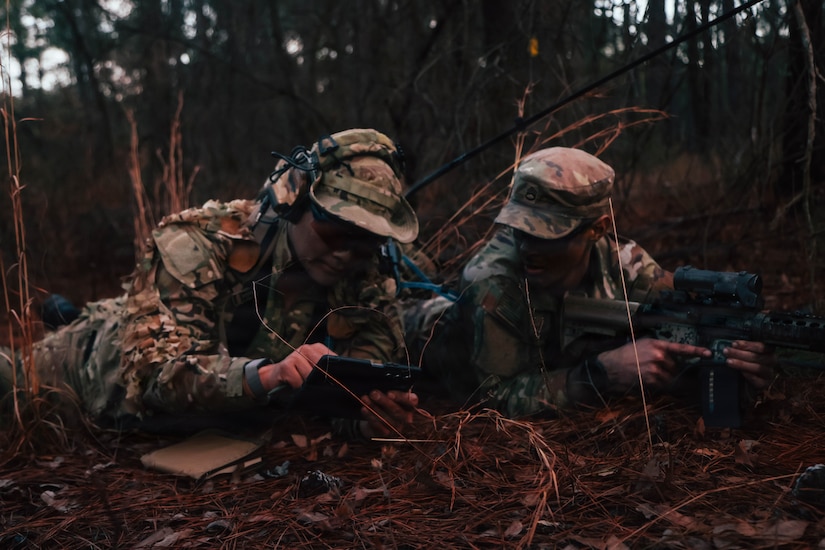
3rd Special Forces Group Pioneers Transformation for Multidomain Operations
#Special Forces #multidomain operations #military transformation #warfare tactics #interoperability
📌 Key Takeaways
- 3rd Special Forces Group is leading a transformation initiative to adapt to multidomain operations.
- The group is pioneering new strategies and tactics for modern warfare challenges.
- This transformation aims to enhance interoperability across different military domains.
- The changes are part of broader efforts to prepare for future combat environments.
📖 Full Retelling
🏷️ Themes
Military Innovation, Operational Strategy
📚 Related People & Topics

Special forces
Military units trained to conduct special operations
Special forces or special operations forces (SOF) are military units trained to conduct special operations. NATO has defined special operations as "military activities conducted by specially designated, organized, selected, trained and equipped forces using unconventional techniques and modes of emp...
Entity Intersection Graph
Connections for Special forces:
View full profileMentioned Entities
Deep Analysis
Why It Matters
This transformation matters because it represents a fundamental shift in how U.S. Special Forces will operate in future conflicts, moving beyond traditional counterterrorism and counterinsurgency roles. It directly affects national security by enhancing the military's ability to counter sophisticated adversaries like China and Russia in contested environments. The changes will impact military personnel through new training requirements and operational concepts, while also influencing defense contractors who develop supporting technologies. Ultimately, this evolution could reshape America's strategic military capabilities for decades to come.
Context & Background
- The U.S. military has been shifting focus from counterterrorism operations in the Middle East to great power competition since the 2018 National Defense Strategy identified China and Russia as primary threats.
- Multidomain operations (MDO) is a U.S. Army concept developed to counter adversaries with advanced anti-access/area denial (A2/AD) capabilities that challenge traditional military superiority.
- Special Forces Groups have historically specialized in unconventional warfare, foreign internal defense, and direct action missions, with 3rd Group focusing primarily on Africa and the Middle East since its reactivation in 1990.
- The Army established its first Multi-Domain Task Force in 2018, initially focusing on long-range precision fires, but has been expanding the concept to other units and capabilities.
- Recent conflicts in Ukraine and potential flashpoints in the Indo-Pacific have demonstrated the need for forces that can operate across all domains (land, sea, air, space, and cyberspace) simultaneously.
What Happens Next
The 3rd Special Forces Group will likely serve as a prototype for similar transformations across other Special Forces Groups throughout 2024-2025. Expect increased joint training exercises with Space Force, Cyber Command, and other service components to develop new tactics. The Army will probably establish formal doctrine and training pipelines for multidomain Special Forces operators by late 2024. Defense contractors will develop specialized equipment for these transformed units, with procurement announcements expected within 12-18 months.
Frequently Asked Questions
Multidomain operations involve synchronizing capabilities across all warfare domains—land, sea, air, space, and cyberspace—to create tactical, operational, and strategic advantages. Unlike traditional approaches that focus on single domains, MDO requires forces to operate across domains simultaneously and rapidly transition between them. This approach is designed to defeat adversaries with sophisticated anti-access systems that would challenge conventional military operations.
The 3rd Special Forces Group likely represents an ideal test case due to its recent operational experience and adaptable structure. As a group that has operated extensively in Africa and the Middle East, it brings valuable unconventional warfare expertise to the multidomain concept. Its selection suggests the Army wants to integrate traditional Special Forces skills with new domain capabilities rather than creating entirely separate units.
Training will expand significantly to include space operations, cyber warfare, electronic warfare, and information operations alongside traditional Special Forces skills. Operators will need to understand how to leverage capabilities across all domains and coordinate with joint force elements. This will likely extend training timelines and require new partnerships with Space Force, Cyber Command, and other specialized units.
These units will likely focus on penetrating contested areas to enable follow-on forces, disrupting adversary command and control systems across multiple domains, and conducting strategic reconnaissance in denied environments. They may specialize in targeting space and cyber infrastructure, coordinating precision strikes across domains, and conducting influence operations. Traditional Special Forces missions like unconventional warfare will be enhanced with multidomain capabilities.
This represents a crucial component of the Army's overall shift toward multidomain capable forces that began with the establishment of Multi-Domain Task Forces. Special Forces transformation complements similar efforts in conventional units and ensures the entire force can operate in integrated ways. The lessons learned from 3rd Group will inform broader Army doctrine and force structure changes planned through 2030.