

5 things to watch as Supreme Court weighs birthright citizenship
📖 Full Retelling
📚 Related People & Topics
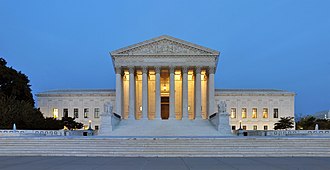
Supreme court
Highest court in a jurisdiction
In most legal jurisdictions, a supreme court, also known as a court of last resort, apex court, high (or final) court of appeal, and court of final appeal, is the highest court within the hierarchy of courts. Broadly speaking, the decisions of a supreme court are binding on all other courts in a nat...
Entity Intersection Graph
Connections for Supreme court:
Mentioned Entities
Deep Analysis
Why It Matters
The Supreme Court's decision on birthright citizenship will fundamentally alter the legal status of millions of immigrants and their children, potentially ending a constitutional guarantee established over 150 years ago. This ruling will have immediate and far-reaching consequences for immigration enforcement, family separation policies, and the broader definition of American citizenship. Legal experts and advocacy groups are closely watching to see if the Court will uphold the 14th Amendment or allow the executive branch to restrict citizenship based on parental status.
Context & Background
- The 14th Amendment, ratified in 1868, explicitly grants citizenship to 'all persons born or naturalized in the United States,' regardless of race or parentage.
- The legal challenge centers on an executive order that would deny citizenship to children born in the U.S. to undocumented immigrants or those on temporary visas.
- This issue was previously settled in the 1898 Supreme Court case *United States v. Wong Kim Ark*, which ruled that a child of Chinese immigrants born in the U.S. is a U.S. citizen.
- The current case involves a conflict between the executive branch's interpretation of immigration law and the text of the Constitution.
What Happens Next
The Supreme Court is expected to issue a ruling by late June 2025, likely along ideological lines. If the Court rules in favor of the administration, the policy could take effect within weeks, requiring states to adjust birth certificate issuance immediately. Conversely, a ruling upholding the 14th Amendment would likely be a 6-3 decision, effectively blocking the executive order and preserving the status quo for the foreseeable future.
Frequently Asked Questions
Birthright citizenship is the constitutional right granted to anyone born on U.S. soil, regardless of their parents' immigration status, as established by the 14th Amendment.
The 14th Amendment to the U.S. Constitution, specifically Section 1, guarantees citizenship to 'all persons born or naturalized in the United States.'
The Supreme Court confirmed this right in 1898 in *United States v. Wong Kim Ark*, ruling that a child of Chinese immigrants born in the U.S. was a citizen.
If the Court rules against the 14th Amendment, the executive order could take effect immediately, potentially affecting millions of children born in the U.S. in the coming months.