
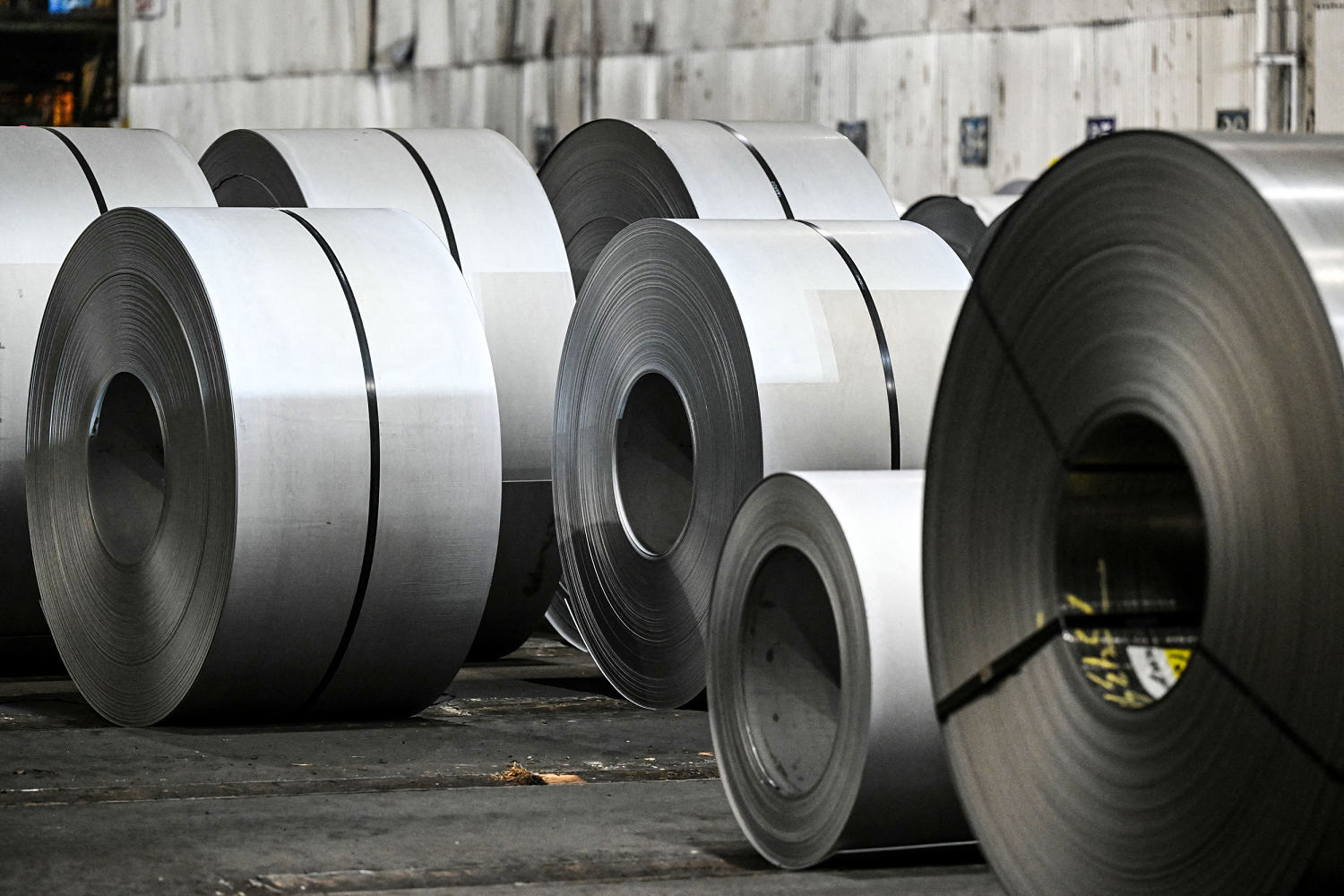
A steel plant manager and an economist walk into a factory. They leave with a story about the U.S. economy.
📖 Full Retelling
WEST MIFFLIN, Pennsylvania — Beth Hammack, clad in a hard hat and safety glasses, strolled alongside red-hot sheets of metal at U.S.
Entity Intersection Graph
No entity connections available yet for this article.
Original Source
A steel plant manager and an economist walk into a factory. They leave with a story about the U.S. economy. A visit to U.S. Steel’s Mon Valley Works Irvin Plant in Pennsylvania highlights the challenges facing the labor market, consumer prices and the Federal Reserve. Add NBC News to Google U.S. Steel expects hiring boost as Nippon deal brings investment 03:28 Get more news on Share Add NBC News to Google March 4, 2026, 9:21 PM EST By Brian Cheung and Maya Huter Listen to this article with a free account 00:00 00:00 WEST MIFFLIN, Pa. — Beth Hammack, clad in a hard hat and safety glasses, strolled alongside red-hot sheets of metal at U.S. Steel’s Mon Valley Works Irvin Plant last week as she looked to get a sense of how the iconic American company was faring. Hammack, president of the Federal Reserve Bank of Cleveland, regularly tours U.S. companies in an effort to better understand the state of the U.S. economy, and few companies have taken on a more symbolic role than U.S. Steel. Once the quintessential example of the national decline in manufacturing, the steelmaker is working on a comeback thanks to a deal last year to be bought by Japan’s Nippon Steel. The deal comes with investment meant to keep its plants operating — and even hiring more workers in the coming years. But Hammack offered a thought that underscored the challenge she and the U.S. economy currently face. With the prospect of thousands of new jobs on the horizon, labor shortages are a cause for concern. So what is a plant manager to do? “If it’s hard here to get the workers, he needs to find them,” Hammack said, talking from the perspective of a U.S. Steel manager. “If he has to pay them more, then that’s going to raise the price, which means that that appliance, that washing machine, that dryer, is going to be more expensive down the line.” Jobs versus inflation. This is the scale that Hammack and 11 other policymakers at the Federal Reserve are constantly trying to balance as they manage the U.S. ...
Read full article at source