
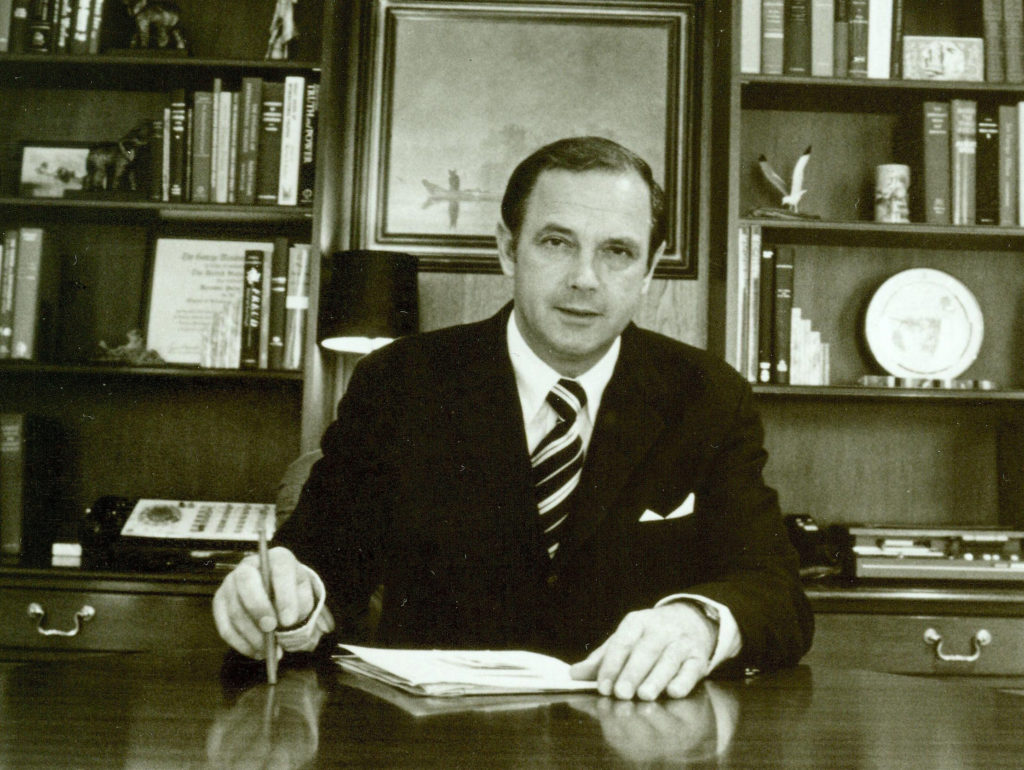
Alexander Butterfield, Nixon aide who disclosed Watergate tapes, dies at 99
#Alexander Butterfield #Watergate #Richard Nixon #White House tapes #political scandal #resignation #testimony
📌 Key Takeaways
- Alexander Butterfield, a key aide to President Richard Nixon, has died at age 99.
- He revealed the existence of the secret White House taping system during the Watergate scandal.
- His testimony in 1973 provided crucial evidence that led to Nixon's resignation.
- Butterfield's disclosure exposed Nixon's attempts to cover up the Watergate break-in.
- He served as deputy assistant to Nixon and later held roles in aviation and diplomacy.
📖 Full Retelling
🏷️ Themes
Watergate Scandal, Political History, Obituary
📚 Related People & Topics

Richard Nixon
President of the United States from 1969 to 1974
Richard Milhous Nixon (January 9, 1913 – April 22, 1994) was the 37th president of the United States, serving from 1969 until his resignation in 1974. A member of the Republican Party, he represented California in both houses of the United States Congress before serving as the 36th vice president un...

Alexander Butterfield
American retired military officer, public official, and businessman (born 1926)
Alexander Porter Butterfield (April 6, 1926 - March 9, 2026) was a retired United States Air Force officer, public official, and businessman. From 1969 to 1973 he served as deputy assistant to President Richard Nixon. On July 13, 1973, during the Watergate investigation, he revealed the existence o...

Watergate scandal
1970s political scandal in the U.S.
The Watergate scandal, or simply Watergate, was a political scandal in the United States involving the administration of President Richard Nixon. On June 17, 1972, operatives associated with Nixon's 1972 re-election campaign were caught burglarizing and planting listening devices in the Democratic N...
Entity Intersection Graph
Connections for Richard Nixon:
Mentioned Entities
Deep Analysis
Why It Matters
Alexander Butterfield's death marks the passing of a crucial figure in American political history whose testimony fundamentally altered the Watergate investigation. His revelation about Nixon's secret taping system provided the 'smoking gun' evidence that proved presidential obstruction of justice, leading directly to Nixon's resignation. This matters because Butterfield's actions demonstrated how one individual's truth-telling can uphold democratic accountability against executive overreach. His legacy continues to influence discussions about government transparency, whistleblower protections, and presidential power limits.
Context & Background
- The Watergate scandal began with the June 1972 break-in at Democratic National Committee headquarters, which was eventually linked to Nixon's reelection committee
- Butterfield served as deputy assistant to President Nixon from 1969-1973 and was responsible for managing the president's daily activities and paperwork
- During July 1973 Senate Watergate Committee hearings, Butterfield revealed under questioning that Nixon had secretly recorded all Oval Office conversations since 1971
- The existence of the tapes was previously unknown even to most White House staff and became the central focus of the investigation
- The Supreme Court's unanimous 1974 ruling in United States v. Nixon forced release of the tapes, revealing Nixon's involvement in the cover-up
- Nixon resigned on August 8, 1974, becoming the only U.S. president to resign from office
What Happens Next
Historical reassessments of Butterfield's role will likely continue as scholars examine his complex legacy as both a loyal Nixon aide and the inadvertent whistleblower. Memorial services and tributes from historians and political figures will highlight his contradictory position in American history. The 50th anniversary of Nixon's resignation in August 2024 may bring renewed attention to Butterfield's testimony and its lasting impact on presidential accountability.
Frequently Asked Questions
Butterfield testified truthfully when directly asked by Senate investigators about recording systems, though he later said he didn't realize the significance of his revelation. As a former Air Force officer, he felt compelled to answer questions honestly under oath, despite his personal loyalty to Nixon.
Butterfield faced professional repercussions, leaving government service and working in private industry. He maintained mixed feelings about his role, expressing regret about contributing to Nixon's downfall while acknowledging the importance of truth-telling to democratic institutions.
The tapes provided irrefutable evidence of Nixon's involvement in the cover-up, including the 'smoking gun' conversation where Nixon ordered the FBI to limit its investigation. Without Butterfield's disclosure, investigators might never have obtained this conclusive evidence of presidential obstruction.
The system automatically recorded conversations in the Oval Office, Cabinet Room, and Nixon's private office, capturing approximately 3,700 hours of conversations between 1971-1973. The system was voice-activated and unknown to most visitors and even many staff members.
Butterfield's military background as an Air Force officer likely influenced his sense of duty to answer questions truthfully under oath. His administrative role gave him unique knowledge of White House operations while keeping him somewhat removed from political decision-making.