
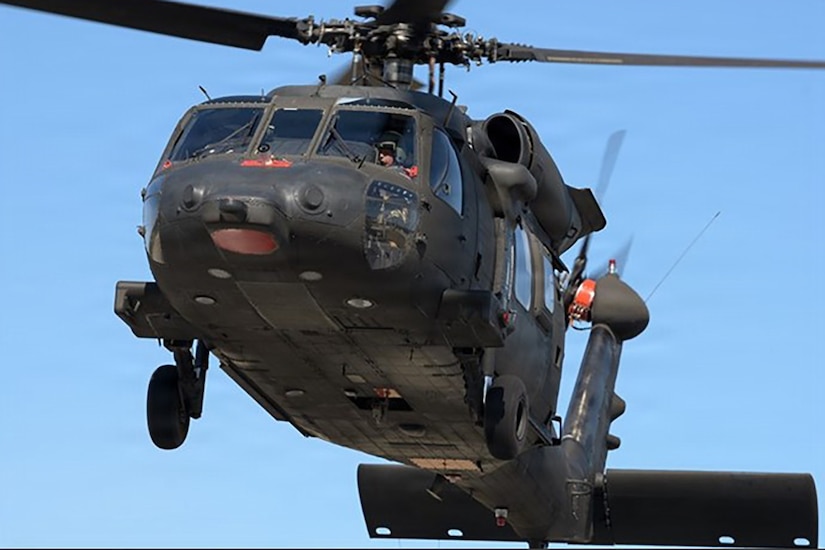
Army Aviation Takes Major Leap With Delivery of First Autonomous-Ready Black Hawk
#autonomous helicopter #UH-60 Black Hawk #Army aviation #military technology #optionally piloted #aviation advancement #defense innovation
📌 Key Takeaways
- The U.S. Army has received its first autonomous-ready UH-60 Black Hawk helicopter.
- This delivery marks a significant advancement in military aviation technology.
- The helicopter is equipped with systems enabling autonomous or optionally piloted operations.
- The development aims to enhance mission flexibility and reduce pilot workload in complex environments.
📖 Full Retelling
🏷️ Themes
Military Technology, Aviation Innovation
📚 Related People & Topics

Army aviation
Aviation-related unit of a nation's army
Army aviation is military aviation that is organized as a sub-branch under the command of an army, separate from a nation's dedicated air force. Army aviation units, sometimes described as air corps, are typically attached as a part of to a ground force and tasked to tactically assist its land warfa...
Entity Intersection Graph
No entity connections available yet for this article.
Mentioned Entities
Deep Analysis
Why It Matters
This delivery represents a significant advancement in military aviation capabilities, potentially reducing pilot workload and enabling operations in contested environments where human pilots face greater risks. It affects Army aviation units by enhancing mission flexibility and survivability, defense contractors involved in autonomous systems development, and future military strategies that may increasingly incorporate unmanned or optionally manned platforms. The technology could eventually influence civilian aviation autonomy as well.
Context & Background
- The UH-60 Black Hawk has been the U.S. Army's primary medium-lift utility helicopter since 1979, with over 4,000 produced.
- The Army has been pursuing autonomous and optionally manned aircraft through programs like the Future Vertical Lift (FVL) initiative and the Autonomous Black Hawk demonstration project.
- Previous milestones include Sikorsky's (now part of Lockheed Martin) Matrix autonomy technology demonstrations on modified S-76 and UH-60 aircraft over the past decade.
What Happens Next
The Army will likely begin testing and evaluation of the autonomous systems in various mission scenarios, potentially leading to further deliveries and integration into operational units. Development of tactics, techniques, and procedures for autonomous operations will follow, with possible fielding within 2-5 years if testing proves successful. International interest may lead to export versions or technology sharing with allied nations.
Frequently Asked Questions
Autonomous-ready means the helicopter is equipped with systems that enable it to fly without direct pilot control for certain missions, though it can still be piloted conventionally. This includes advanced sensors, computing systems, and software that allow for autonomous takeoff, navigation, obstacle avoidance, and landing.
No, this technology is designed to augment human pilots rather than replace them. The autonomous systems can reduce pilot workload during complex missions or dangerous situations, and enable operations when human presence is too risky, but human oversight and decision-making will remain crucial for the foreseeable future.
Unlike purpose-built drone helicopters, this is a modified conventional aircraft that can operate with or without pilots onboard. This provides greater flexibility than dedicated drones, as the same aircraft can perform both manned and unmanned missions depending on requirements.
Key advantages include reduced risk to pilots in combat zones, extended operational endurance since crew fatigue is less limiting, ability to operate in degraded visual environments, and potential for more precise flight operations in challenging conditions.
Yes, concerns include system reliability, cybersecurity vulnerabilities, ethical considerations around autonomous weapons systems, and integration with existing air traffic. The Army will need to address these through rigorous testing, redundancy systems, and clear operational protocols.