
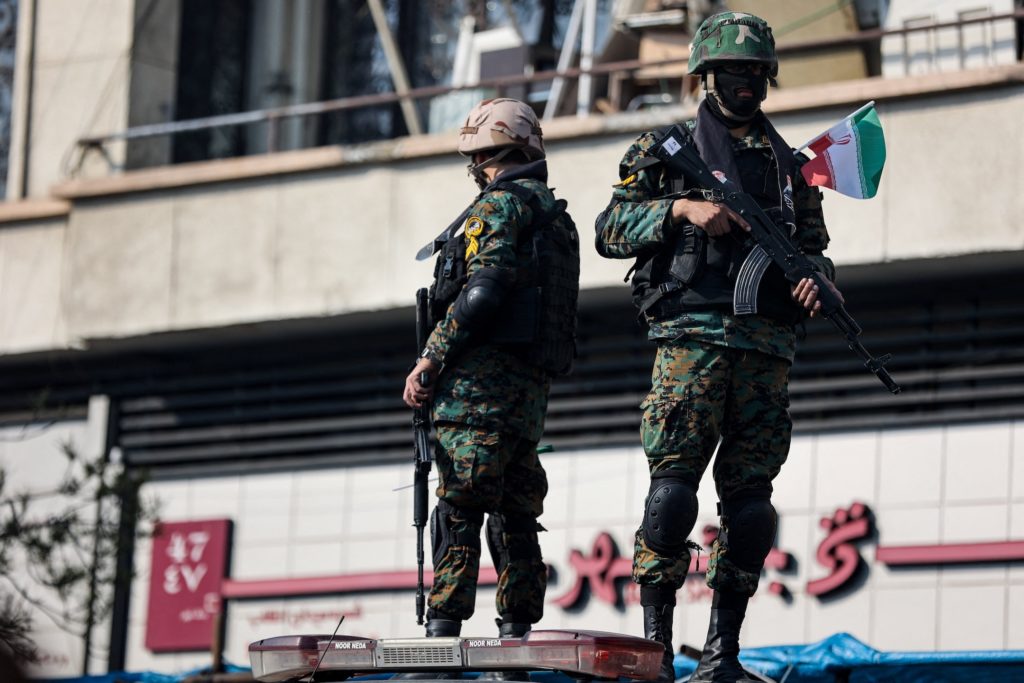
As Iran war deepens, Khamenei's son named new supreme leader
#Iran #Khamenei #supreme leader #succession #war #Ayatollah #regional stability
📌 Key Takeaways
- Iran's Supreme Leader Ayatollah Ali Khamenei's son has been appointed as his successor.
- The succession occurs amid escalating conflict and deepening war in Iran.
- The appointment signals a continuation of the current regime's leadership lineage.
- The change in leadership could impact regional stability and international relations.
📖 Full Retelling
🏷️ Themes
Leadership Change, Regional Conflict
📚 Related People & Topics

Khamenei family
Ruling family of Iran (1989–present)
The Khamenei family is an Iranian religious and political family that has played a prominent role in Iranian politics since the 1980s. The family is of Iranian Azerbaijani and Persian origin and claim to be Sayyids, descended from Ali al-Sajjad, the fourth Shia imam. They have ruled Iran since 1989 ...

Iran
Country in West Asia
# Iran **Iran**, officially the **Islamic Republic of Iran** and historically known as **Persia**, is a sovereign country situated in West Asia. It is a major regional power, ranking as the 17th-largest country in the world by both land area and population. Combining a rich historical legacy with a...

Ayatollah
High-ranking title given to Usuli Twelver Shī'a Muslim clerics
Ayatollah (Arabic: آية الله, romanized: ʾāyatu llāh, lit. 'sign of god') is a title for high-ranking Twelver Shia clergy. It came into widespread usage in the 20th century. Those who hold this title must be men and specialists in Islamic sciences such as jurisprudence (fiqh) and principles (usul), o...
Entity Intersection Graph
Connections for Khamenei family:
Mentioned Entities
Deep Analysis
Why It Matters
This development is critically important because it represents a potential dynastic succession in Iran's highest leadership position, which could fundamentally reshape the country's political structure and future direction. It affects not only Iran's 85 million citizens but also regional stability in the Middle East, global energy markets, and international diplomatic relations. The timing during an escalating war suggests either a consolidation of power or preparation for prolonged conflict, making this transition particularly significant for global security. This succession could influence Iran's nuclear program, regional proxy conflicts, and relations with Western powers for decades to come.
Context & Background
- Iran's Supreme Leader is the highest-ranking political and religious authority in the Islamic Republic, with ultimate authority over all branches of government and the military
- Ayatollah Ali Khamenei has served as Supreme Leader since 1989 following the death of the Islamic Republic's founder, Ayatollah Ruhollah Khomeini
- The Assembly of Experts is constitutionally responsible for selecting and supervising the Supreme Leader, though the process has historically been opaque and influenced by internal power dynamics
- Iran has been engaged in regional conflicts through proxy forces in Syria, Yemen, Iraq, and Lebanon, while facing economic sanctions and tensions with the United States and Israel
- The position of Supreme Leader combines religious authority with political power, requiring the holder to be a senior Islamic jurist (marja') according to Iran's constitution
What Happens Next
Immediate reactions from Iran's political factions, Revolutionary Guard commanders, and religious establishment will determine whether this succession faces internal resistance. Regional allies like Hezbollah and the Houthis will likely reaffirm loyalty to the new leadership, while adversaries including Israel and Saudi Arabia will reassess their security strategies. International responses from the United States, European Union, and United Nations are expected within days, potentially including new sanctions or diplomatic initiatives. The coming weeks will reveal whether this transition stabilizes Iran's wartime leadership or triggers internal power struggles that could affect military operations and nuclear negotiations.
Frequently Asked Questions
The Supreme Leader controls Iran's armed forces, intelligence agencies, judiciary, and state media, while appointing key positions including military commanders, judiciary heads, and half of Guardian Council members. This position also sets overall state policy direction and has final say on all major domestic and foreign policy decisions.
The new Supreme Leader's stance will determine whether Iran pursues nuclear weapons development or returns to diplomatic negotiations. A more hardline successor might accelerate nuclear activities, while a pragmatic leader could seek sanctions relief through renewed talks with world powers.
The new leader's ideological orientation will shape Iran's regional strategy, though continuity is likely given the institutionalized nature of these relationships. Immediate changes are improbable, but long-term shifts in support levels or strategic priorities could emerge based on the successor's worldview and security calculations.
Citizens may experience increased security measures during the transition period, while economic policies could shift depending on the new leader's approach to sanctions and international relations. Social restrictions might tighten or loosen based on the successor's interpretation of Islamic governance principles.
The IRGC holds substantial political and economic power and will be crucial in ensuring a smooth succession. Their support or opposition could determine the new leader's ability to govern effectively, particularly during wartime when military coordination is essential.
Regional rivals like Saudi Arabia and Israel will likely increase security preparedness, while Western nations will analyze the successor's statements for policy signals. China and Russia may seek to strengthen ties with the new leadership, potentially creating new geopolitical alignments in the region.