
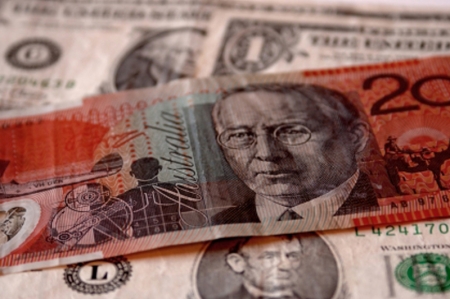
Asia FX muted as Iran jitters persist; Aussie rallies as RBA rate hike bets rise
#Asia FX #Iran tensions #Australian dollar #RBA rate hike #market sentiment #geopolitical risk #currency markets #interest rates
📌 Key Takeaways
- Asian currencies show limited movement amid ongoing geopolitical tensions with Iran.
- The Australian dollar strengthens due to increased expectations of a Reserve Bank of Australia rate hike.
- Market sentiment remains cautious as investors monitor developments in the Middle East.
- RBA policy outlook shifts, influencing currency performance in the region.
🏷️ Themes
Geopolitical Risk, Monetary Policy
📚 Related People & Topics
Australian dollar
Currency of Australia
The Australian dollar (sign: $; code: AUD; also abbreviated A$ or sometimes AU$ to distinguish it from other dollar-denominated currencies; and also referred to as the dollar or Aussie dollar) is the official currency and legal tender of Australia, including all of its external territories, and thr...
Entity Intersection Graph
Connections for Australian dollar:
Mentioned Entities
Deep Analysis
Why It Matters
This news matters because it highlights how geopolitical tensions in the Middle East (Iran) are affecting Asian financial markets, creating uncertainty that suppresses currency movements. It also shows how domestic monetary policy expectations (Australia's potential rate hikes) can create divergence in currency performance even during regional stress. This affects investors, exporters, importers, and central banks across Asia who must navigate both geopolitical risks and shifting interest rate differentials.
Context & Background
- Asian currencies often show muted trading during geopolitical uncertainty as investors seek safer assets like the US dollar
- The Reserve Bank of Australia (RBA) has been among the more hawkish central banks in developed economies, having raised rates multiple times since 2022
- Iran's regional tensions have previously caused oil price volatility that impacts Asian economies differently based on their energy import/export profiles
- Currency markets typically price in expected central bank actions weeks or months before actual policy meetings
What Happens Next
Traders will watch for: 1) Any escalation or de-escalation in Middle East tensions this week, 2) Australian economic data ahead of the next RBA meeting (May 7), 3) Broader Asian central bank reactions if the US Federal Reserve maintains its current rate stance, 4) Potential intervention by Asian central banks if currency movements become too volatile.
Frequently Asked Questions
Asian currencies often trade in narrow ranges during geopolitical uncertainty because investors reduce risk exposure and move to safe-haven assets like the US dollar, Japanese yen, or gold. This reduces trading volume and volatility in regional currencies as market participants await clearer developments.
The RBA might hike rates if Australian inflation remains stubbornly high compared to targets, or if domestic economic data shows stronger-than-expected growth and wage pressures. Australia's economic cycle sometimes differs from other developed economies due to its commodity exports and housing market dynamics.
Iran tensions affect Asian currencies primarily through oil prices (as most Asian economies are net oil importers) and through general risk aversion. Higher oil prices hurt trade balances for importers like India and Thailand, while geopolitical uncertainty makes investors cautious about emerging market assets.
Oil-importing currencies like the Indian rupee, Thai baht, and Philippine peso would be most vulnerable to oil price spikes from Middle East tensions. Meanwhile, commodity exporters like the Indonesian rupiah and Malaysian ringgit might see mixed effects depending on whether commodity price gains offset risk aversion.
Rate hike bets based on market pricing can change quickly with new economic data. Current bets reflect expectations based on recent inflation and employment figures, but these could reverse if upcoming data shows cooling in the Australian economy or if global conditions deteriorate significantly.