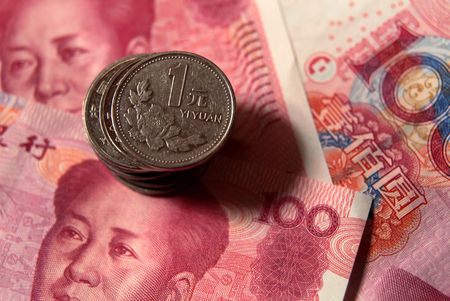
Asian currencies paused their rally due to uncertainty over a reported U.S.-Iran ceasefire.
Initial gains were fueled by reduced geopolitical risk and a weaker U.S. dollar.
Markets are awaiting official confirmation and details of the truce agreement.
Focus is shifting back to U.S. economic data and Federal Reserve policy outlook.
📖 Full Retelling
Most Asian currencies stabilized on Monday after experiencing significant gains last week, as market participants adopted a cautious stance amid uncertainty over the durability of a reported ceasefire between the United States and Iran. The tentative de-escalation in Middle East tensions had previously fueled a broad rally in risk-sensitive assets, but traders are now awaiting concrete confirmation and details of the agreement, leading to a pause in the regional currency advance.
The initial surge in Asian FX, including the South Korean won, Indonesian rupiah, and Malaysian ringgit, was driven by a sharp retreat in the U.S. dollar and Treasury yields. This retreat occurred as investors priced in reduced geopolitical risk premiums following news of the potential U.S.-Iran truce. A calmer Middle East typically supports emerging market currencies by lowering oil price volatility and improving global risk appetite. However, the momentum stalled as official statements from both Washington and Tehran remained ambiguous, with no formal accord publicly signed.
Analysts note that the market's hesitation underscores the fragile nature of geopolitical-driven rallies. The primary focus has now shifted back to fundamental economic drivers and the monetary policy trajectory of the Federal Reserve. Upcoming U.S. inflation data and Federal Reserve meeting minutes are keenly anticipated for clues on the timing of potential interest rate cuts. Until the geopolitical situation clarifies and these key economic indicators are released, Asian currencies are likely to trade in a narrow range, balancing optimism over reduced conflict risks against enduring concerns over high U.S. interest rates and local economic growth.
The Federal Reserve System (often shortened to the Federal Reserve, or simply the Fed) is the central banking system of the United States. It was created on December 23, 1913, with the enactment of the Federal Reserve Act, after a series of financial panics (particularly the panic of 1907) led to th...
The United States dollar (symbol: $; currency code: USD) is the official currency of the United States and several other countries. The Coinage Act of 1792 introduced the U.S. dollar at par with the Spanish silver dollar, divided it into 100 cents, and authorized the minting of coins denominated in ...