
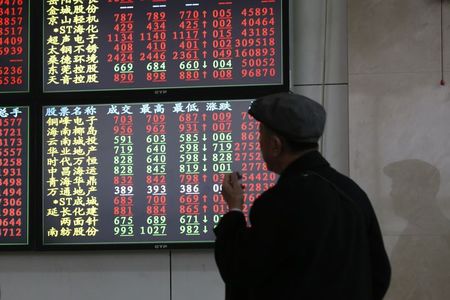
Asia stocks dip as Trump flags Iran war escalation; S.Korea leads losses
📚 Related People & Topics

Iran
Country in West Asia
# Iran **Iran**, officially the **Islamic Republic of Iran** and historically known as **Persia**, is a sovereign country situated in West Asia. It is a major regional power, ranking as the 17th-largest country in the world by both land area and population. Combining a rich historical legacy with a...

South Korea
Country in East Asia
South Korea, officially the Republic of Korea (ROK), is a country in East Asia. It constitutes the southern half of the Korean Peninsula and borders North Korea along the Korean Demilitarized Zone, with the Yellow Sea to the west and the Sea of Japan to the east. South Korea claims to be the sole le...

Donald Trump
President of the United States (2017–2021; since 2025)
Donald John Trump (born June 14, 1946) is an American politician, media personality, and businessman who is the 47th president of the United States. A member of the Republican Party, he served as the 45th president from 2017 to 2021. Born into a wealthy New York City family, Trump graduated from the...
Entity Intersection Graph
Connections for Iran:
Mentioned Entities
Deep Analysis
Why It Matters
This news matters because it shows how geopolitical tensions directly impact global financial markets, affecting investors worldwide and potentially influencing economic stability. The market reaction to Trump's comments demonstrates how political rhetoric can trigger immediate capital flight from riskier assets, particularly in export-dependent Asian economies. This affects not only institutional investors but also ordinary citizens through pension funds, retirement accounts, and broader economic confidence that influences business investment decisions.
Context & Background
- U.S.-Iran tensions have been escalating since 2018 when Trump withdrew from the Iran nuclear deal and reinstated sanctions
- Asian markets are particularly sensitive to geopolitical risks due to their heavy reliance on global trade and energy imports
- South Korea's economy is especially vulnerable to geopolitical shocks given its proximity to North Korea and dependence on Middle Eastern oil
- Previous escalations in the Middle East have typically caused temporary market volatility followed by stabilization unless military conflict actually occurs
What Happens Next
Markets will closely monitor official U.S. statements and Iranian responses over the next 48 hours, with potential for further volatility. Key dates to watch include upcoming OPEC meetings that could address oil supply concerns, and the next Federal Reserve meeting where officials might comment on geopolitical risks to the economy. If tensions escalate further, we may see safe-haven flows into gold, U.S. Treasuries, and the Japanese yen.
Frequently Asked Questions
South Korea's economy is highly export-dependent and vulnerable to oil price shocks, as it imports nearly all its energy needs. Additionally, regional geopolitical tensions often hit Northeast Asian markets hardest due to their complex security situations.
Middle East conflicts typically cause Asian markets to dip due to concerns about oil supply disruptions and shipping security. Export-oriented economies suffer from both higher energy costs and potential disruption to global trade routes.
Investors should monitor official statements from the U.S. and Iranian governments, oil price movements, and any military developments. Also watch for statements from major Asian central banks regarding potential market interventions.
Pure geopolitical shocks without actual military conflict typically cause 1-3 days of volatility before markets stabilize. However, sustained tensions or actual conflict can lead to longer-term market adjustments and sector rotations.