
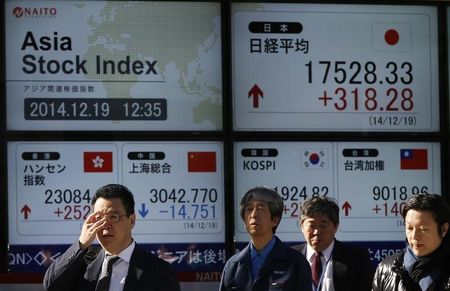
Asia stocks: Nikkei, KOSPI rise over 1% on report of Iran ceasefire talks
📚 Related People & Topics

KOSPI
Korean stock market index
The Korea Composite Stock Price Index (KOSPI; Korean: 한국종합주가지수) is the index of all common stocks traded on the Stock Market Division—previously, Korea Stock Exchange—of the Korea Exchange. It is the representative stock market index of South Korea, analogous to the S&P 500 in the United States. KOS...
Entity Intersection Graph
Connections for Nikkei:
Mentioned Entities
Deep Analysis
Why It Matters
This news matters because it demonstrates how geopolitical tensions directly impact global financial markets, particularly in Asia. The reported ceasefire talks between Iran and other parties could reduce Middle East instability, which affects global oil prices and trade routes. Asian stock markets like Japan's Nikkei and South Korea's KOSPI are sensitive to such developments due to their reliance on imported energy and global trade. Investors and businesses in export-dependent economies benefit from reduced geopolitical risk, while consumers could see relief from potential stabilization in energy costs.
Context & Background
- Iran has been involved in regional conflicts and tensions with Western powers for decades, affecting global oil markets
- Asian stock markets are heavily influenced by external geopolitical events due to their export-oriented economies
- Previous escalations in the Middle East have caused oil price spikes that negatively impacted Asian economies
- Japan and South Korea are major energy importers, making them vulnerable to Middle East instability
- Financial markets often react to rumors and reports of diplomatic progress before official confirmations
What Happens Next
If ceasefire talks progress, we may see further gains in Asian markets and stabilization in oil prices. Official announcements from involved governments are likely within days or weeks. Market attention will shift to implementation details and whether the ceasefire holds. Regional currencies like the Japanese yen and Korean won may strengthen if risk appetite improves.
Frequently Asked Questions
Asian economies like Japan and South Korea are heavily dependent on imported oil from the Middle East. Any instability in the region threatens their energy security and increases costs for businesses and consumers, making stock markets sensitive to such developments.
A 1% rise in indices like the Nikkei and KOSPI represents significant market movement, indicating improved investor confidence. For context, these indices track hundreds of companies, so such gains translate to billions of dollars in increased market value.
Markets often react quickly to rumors and unconfirmed reports, but these moves can be volatile. Prices may reverse if reports prove inaccurate or if subsequent developments differ from initial expectations, highlighting the importance of verified information.
Oil markets would likely see price declines on reduced geopolitical risk, while European and US stocks might also rally. Currencies of oil-importing nations could strengthen, and safe-haven assets like gold might see reduced demand.
Similar market rallies occurred during reports of diplomatic progress in US-China trade talks in 2019 and during initial COVID-19 vaccine announcements in 2020. Markets typically price in reduced uncertainty before full resolutions are confirmed.