
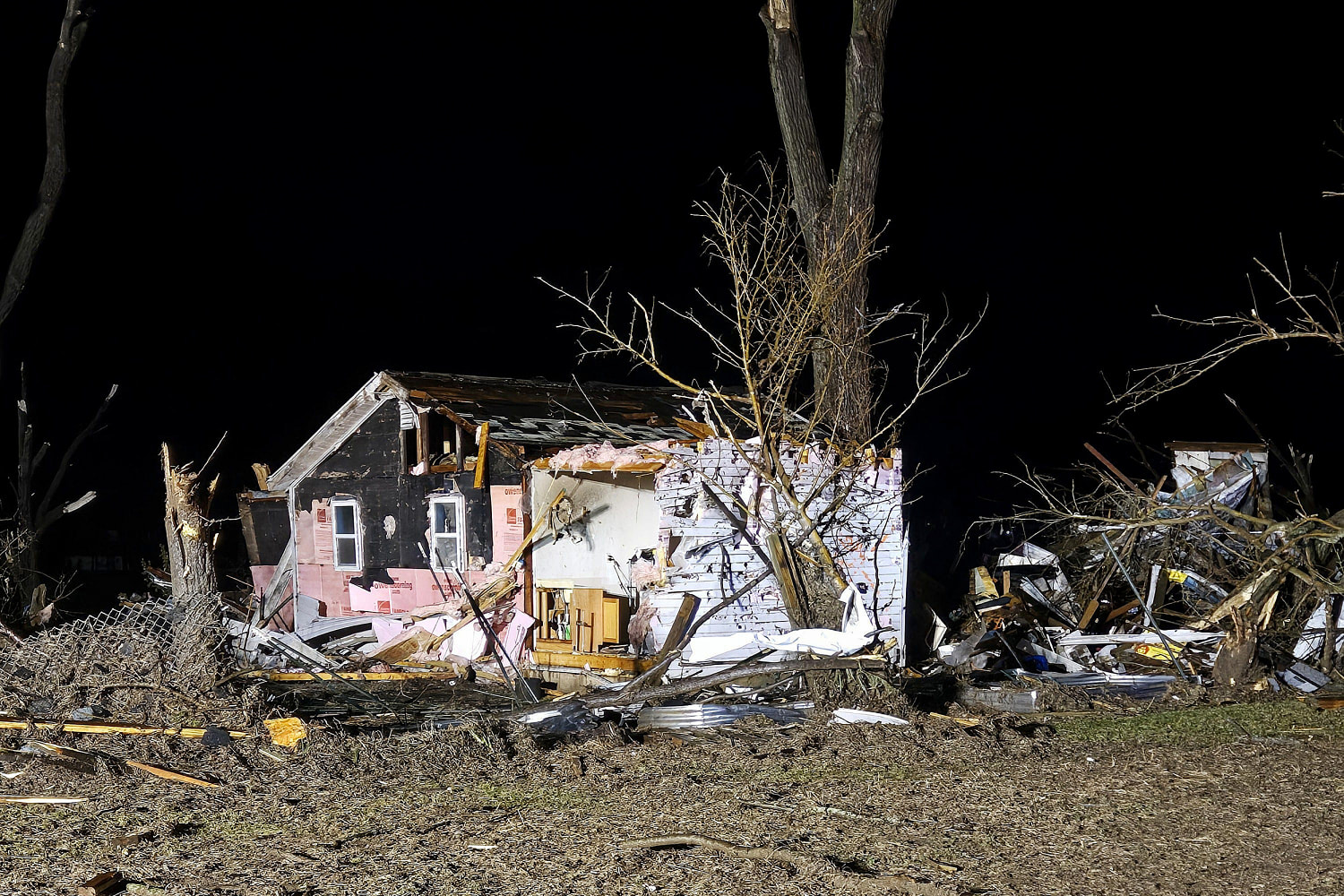
At least 6 people dead as tornadoes rip across Michigan and Oklahoma
#tornado #Michigan #Oklahoma #fatalities #storm damage #emergency response #severe weather
📌 Key Takeaways
- At least six people have died due to tornadoes in Michigan and Oklahoma
- Severe weather caused widespread destruction across both states
- Emergency services are responding to the disaster and assessing damage
- The tornadoes highlight ongoing severe weather risks in the central U.S.
📖 Full Retelling
🏷️ Themes
Natural Disaster, Severe Weather
📚 Related People & Topics

Oklahoma
U.S. state
Oklahoma ( OH-klə-HOH-mə; Choctaw: Oklahumma, pronounced [oklahómma]) is a landlocked state in the South Central and Southwestern region of the United States. It borders Texas to the south and west, Kansas to the north, Missouri to the northeast, Arkansas to the southeast, New Mexico to the west, a...

Michigan
U.S. state
Michigan ( MISH-ig-ən) is a peninsular state in the Great Lakes region of the Upper Midwestern United States. It shares water and land boundaries with Minnesota to the northwest, Wisconsin to the west, Indiana and Illinois to the southwest, Ohio to the southeast, and the Canadian province of Ontari...
Entity Intersection Graph
Connections for Oklahoma:
View full profileMentioned Entities
Deep Analysis
Why It Matters
This severe weather event matters because it represents a significant loss of life and property damage from tornadoes affecting multiple states simultaneously. It impacts residents who have lost homes and loved ones, emergency responders managing rescue operations, and insurance companies facing substantial claims. The event also highlights broader concerns about severe weather patterns and community preparedness in tornado-prone regions.
Context & Background
- Tornadoes are common in the central United States, particularly in an area known as 'Tornado Alley' which includes Oklahoma
- Michigan experiences fewer tornadoes than plains states but still averages about 15 tornadoes per year according to historical data
- The National Weather Service uses the Enhanced Fujita Scale to rate tornado intensity from EF0 (weak) to EF5 (violent)
- Spring and early summer are peak tornado seasons in the United States when warm, moist air from the Gulf of Mexico collides with cooler air masses
What Happens Next
Emergency response teams will continue search and rescue operations in affected areas while damage assessments are conducted. The National Weather Service will send survey teams to determine tornado paths and intensities. Affected communities will begin cleanup and recovery efforts, with temporary shelters established for displaced residents. Insurance adjusters will start processing claims, and local governments may request state or federal disaster declarations for additional assistance.
Frequently Asked Questions
Immediately seek shelter in a basement, storm cellar, or interior room on the lowest floor away from windows. If in a vehicle or mobile home, abandon it for a sturdy building or lie flat in a low-lying area if no shelter is available.
Tornadoes are smaller, more localized rotating columns of air that form from thunderstorms and typically last minutes, while hurricanes are large tropical storm systems that form over oceans and can last for days with much broader impact areas.
Tornadoes typically form when warm, moist air near the ground meets cooler, drier air above, creating atmospheric instability. Wind shear (changing wind speed/direction with height) causes horizontal rotation that can be tilted vertically by thunderstorm updrafts.
Communities should establish warning systems, identify public shelters, conduct drills, and educate residents about safety procedures. Individuals should create emergency kits, develop family communication plans, and stay informed about weather forecasts during severe weather seasons.