
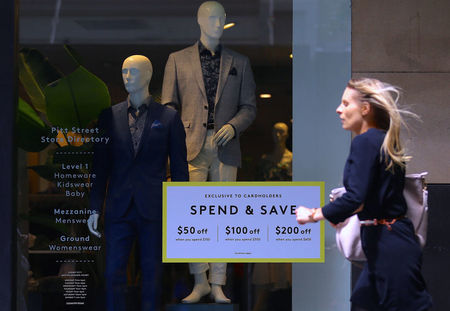
Australia consumer sentiment ticks up in March despite economy concerns - Westpac
#Australia #consumer sentiment #Westpac #March 2024 #economic concerns #inflation #interest rates
📌 Key Takeaways
- Australia's consumer sentiment index rose 0.6% in March, reaching 84.4 points.
- The increase occurred despite ongoing economic concerns among consumers.
- The index remains below the neutral 100-point threshold, indicating pessimism.
- Westpac attributes the slight rise to easing inflation and stable interest rates.
🏷️ Themes
Consumer Sentiment, Economic Indicators
📚 Related People & Topics

Australia
Country in Oceania
Australia, officially the Commonwealth of Australia, is a country comprising the mainland of the Australian continent, the island of Tasmania and numerous smaller islands. It has a total area of 7,688,287 km2 (2,968,464 sq mi), making it the sixth-largest country in the world and the largest in Ocea...

Westpac
Australian multinational bank
Westpac Banking Corporation, also known as Westpac, is an Australian multinational banking and financial services company headquartered at Westpac Place in Sydney. Established in 1817 as the Bank of New South Wales, it acquired the Commercial Bank of Australia in 1981 before being renamed to Westpac...
Entity Intersection Graph
Connections for Australia:
Mentioned Entities
Deep Analysis
Why It Matters
This news matters because consumer sentiment is a key leading indicator of economic health, directly influencing household spending decisions that drive approximately 60% of Australia's GDP. The improvement suggests resilience among Australian consumers despite economic headwinds, which could support retail sectors and service industries. However, the persistence of underlying economic concerns indicates potential vulnerability if conditions deteriorate further, affecting businesses, policymakers, and households planning their budgets.
Context & Background
- The Westpac-Melbourne Institute Consumer Sentiment Index has been tracked since 1974, providing decades of data on Australian household confidence.
- Australia has experienced 13 consecutive interest rate hikes from the Reserve Bank of Australia between May 2022 and November 2023, putting pressure on household finances.
- Previous sentiment readings have shown volatility, with recent months reflecting concerns about cost-of-living pressures, housing affordability, and global economic uncertainty.
- Consumer spending patterns during previous economic downturns have shown Australian households tend to reduce discretionary spending first when confidence declines.
What Happens Next
The Reserve Bank of Australia will closely monitor this data ahead of their next monetary policy meeting in early April 2024. Retail sales data for March will provide confirmation of whether improved sentiment translates to actual spending. Westpac will release their next sentiment reading in April, which will indicate whether this improvement represents a trend or temporary fluctuation.
Frequently Asked Questions
The Westpac-Melbourne Institute Consumer Sentiment Index is a monthly survey measuring how Australian consumers feel about their finances and the economy. It's based on interviews with approximately 1,200 adults and serves as a key indicator of future household spending patterns.
Sentiment can improve due to various factors including easing inflation expectations, stable employment conditions, or government policy announcements. Sometimes temporary relief in specific areas like fuel prices or positive news about wage growth can boost confidence even while broader concerns persist.
Higher consumer sentiment typically leads to increased spending on both essentials and discretionary items, boosting retail sales and service sector activity. Conversely, low sentiment often results in reduced spending, which can slow economic growth and potentially lead to business cutbacks and higher unemployment.
While not specified in the brief article, typical current concerns include persistent inflation, high interest rates affecting mortgage holders, rising living costs, global economic uncertainty, and potential impacts on employment stability. These factors collectively pressure household budgets.