

'Born in the U.S.A.': Bruce Springsteen and ACLU take birthright citizenship to the Supreme Court
📖 Full Retelling
📚 Related People & Topics
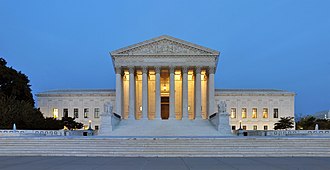
Supreme court
Highest court in a jurisdiction
In most legal jurisdictions, a supreme court, also known as a court of last resort, apex court, high (or final) court of appeal, and court of final appeal, is the highest court within the hierarchy of courts. Broadly speaking, the decisions of a supreme court are binding on all other courts in a nat...

Bruce Springsteen
American rock musician (born 1949)
Bruce Frederick Joseph Springsteen (born September 23, 1949) is an American singer, songwriter, and guitarist. Nicknamed "the Boss", Springsteen has released 21 studio albums spanning six decades; most of his albums feature the E Street Band, his backing band since 1972. Springsteen is a pioneer of ...
Entity Intersection Graph
Connections for Supreme court:
Mentioned Entities
Deep Analysis
Why It Matters
This case challenges the 14th Amendment's birthright citizenship principle, which has been settled law for over 150 years. The outcome could affect millions of children born to undocumented immigrants in the U.S., potentially creating a class of stateless individuals. It also has significant implications for immigration policy, constitutional interpretation, and could trigger broader debates about citizenship criteria. The involvement of high-profile figures like Bruce Springsteen amplifies public attention on this fundamental constitutional question.
Context & Background
- The 14th Amendment's Citizenship Clause (Section 1) was ratified in 1868, stating 'All persons born or naturalized in the United States... are citizens of the United States.'
- Birthright citizenship was established in the 1898 Supreme Court case United States v. Wong Kim Ark, which affirmed citizenship for children born to non-citizen parents legally residing in the U.S.
- Previous challenges to birthright citizenship have been rejected by courts, but recent political movements have sought to reinterpret 'subject to the jurisdiction thereof' to exclude children of undocumented immigrants.
- The U.S. is one of approximately 30 countries that practice unconditional birthright citizenship, alongside Canada and Mexico, while most European and Asian nations have more restrictive policies.
What Happens Next
The Supreme Court will likely decide whether to hear the case in their upcoming term. If accepted, oral arguments would occur in late 2024 or early 2025, with a decision expected by June 2025. Regardless of the Court's decision, the case will likely spur legislative proposals in Congress to either codify or restrict birthright citizenship. State-level initiatives may also emerge attempting to challenge or circumvent the ruling.
Frequently Asked Questions
The case challenges whether children born in the U.S. to undocumented immigrants automatically qualify for citizenship under the 14th Amendment. Plaintiffs argue the phrase 'subject to the jurisdiction thereof' excludes those whose parents entered the country illegally.
Springsteen is participating as a cultural figure whose song 'Born in the U.S.A.' has become symbolic of birthright citizenship. His involvement brings celebrity attention to the ACLU's defense of constitutional principles.
Overturning birthright citizenship would not affect those already granted citizenship, but could create uncertainty about their status if challenged. It would primarily affect future children born to undocumented parents, potentially leaving them without citizenship in any country.
Opponents argue it would violate the 14th Amendment's clear language, create administrative chaos in determining citizenship, and potentially produce a permanent underclass of stateless children. They also contend it would undermine America's historical identity as a nation of immigrants.
Canada, Mexico, Brazil, Argentina, and most Caribbean nations have birthright citizenship. The United Kingdom abolished unconditional birthright citizenship in 1983, while Australia did so in 1986, requiring at least one parent to be a citizen or permanent resident.