
‘Boy Erased’ Author on the “Humiliation” of Supreme Court Gay Conversion Therapy Ruling
📖 Full Retelling
📚 Related People & Topics
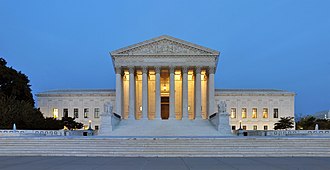
Supreme court
Highest court in a jurisdiction
In most legal jurisdictions, a supreme court, also known as a court of last resort, apex court, high (or final) court of appeal, and court of final appeal, is the highest court within the hierarchy of courts. Broadly speaking, the decisions of a supreme court are binding on all other courts in a nat...
Boy Erased
2018 biographical drama film
Boy Erased is a 2018 biographical drama film based on Garrard Conley's 2016 memoir. It was written and directed by Joel Edgerton, who also produced with Kerry Kohansky Roberts and Steve Golin. The film stars Lucas Hedges as Jared Eamons, a fictionalized version of Conley, the closeted gay son of Bap...

Garrard Conley
American author and LGBTQ activist
Garrard Conley (born 1984 or 1985) is an American author and LGBTQ activist known for his autobiography Boy Erased: A Memoir, recounting his childhood as part of a fundamentalist family in Arkansas that enrolled him in conversion therapy. The book was adapted for the 2018 film, Boy Erased.
Entity Intersection Graph
Connections for Supreme court:
Mentioned Entities
Deep Analysis
Why It Matters
This ruling matters because it directly impacts LGBTQ+ individuals' access to mental health services and legal protections against harmful practices. It affects conversion therapy survivors who may feel invalidated by the legal system, mental health professionals who must navigate new legal boundaries, and LGBTQ+ youth who remain vulnerable to these discredited practices. The decision also signals a shift in how courts interpret religious freedom versus medical ethics, potentially influencing future cases about LGBTQ+ rights and healthcare access.
Context & Background
- Conversion therapy refers to discredited practices attempting to change a person's sexual orientation or gender identity, condemned by major medical associations including the American Psychological Association and American Medical Association.
- The Supreme Court case likely involved First Amendment arguments about whether states can regulate or ban conversion therapy when practitioners claim religious motivations for their services.
- Garrard Conley, author of 'Boy Erased,' survived conversion therapy and his memoir was adapted into a 2018 film starring Lucas Hedges and Nicole Kidman, bringing mainstream attention to the practice's harms.
- As of 2023, 22 U.S. states and numerous municipalities had banned conversion therapy for minors, creating a patchwork of legal protections across the country.
- Previous Supreme Court rulings like Masterpiece Cakeshop (2018) and 303 Creative (2023) have expanded religious exemptions in cases involving LGBTQ+ rights, setting legal precedents for this decision.
What Happens Next
State legislatures in states without conversion therapy bans may face increased pressure to pass protective legislation before the next legislative sessions begin in early 2025. Advocacy groups will likely file new lawsuits testing the boundaries of this ruling in different jurisdictions throughout 2024-2025. Mental health organizations will need to update their guidelines for practitioners by mid-2024 to address the new legal landscape while maintaining ethical standards against conversion therapy.
Frequently Asked Questions
The Supreme Court ruled in favor of allowing conversion therapy practices to continue under certain conditions, likely based on religious freedom arguments. This decision creates legal protections for practitioners who claim religious motivations, potentially limiting states' ability to regulate or ban these practices.
Major medical associations oppose conversion therapy because decades of research show it causes significant psychological harm including depression, anxiety, and increased suicide risk. These practices are based on the false premise that sexual orientation or gender identity can or should be changed, contradicting established scientific understanding.
The ruling likely challenges the enforcement of existing state bans when practitioners claim religious exemptions. States with bans may need to revise their laws or face legal challenges, while states considering bans may encounter new constitutional hurdles based on this precedent.
Organizations like The Trevor Project, Born Perfect, and the National Center for Lesbian Rights provide support for conversion therapy survivors. Many communities offer LGBTQ+ affirming therapy and support groups through local health centers and community organizations.
Yes, in many states parents can still seek conversion therapy for minors, though ethical mental health professionals continue to refuse these practices. The ruling may make it harder for states to intervene when parents choose conversion therapy based on religious beliefs.